What is Failure to Launch Syndrome?

There are many names given to failure to launch syndrome. You can call it Peter Pan syndrome, boomerang generation, or hikikomori, but it simply means young adults are not being able to make the transition to adulthood, and it is a growing phenomenon amongst them.

Seeking the explanations of the name that failure to launch syndrome is called now, in the US Peter Pan syndrome term came into existence after a young boy who never wanted to grow up. In Japan, hikikomori is a more extreme condition where young individuals are willing to live inside the four walls of their bedroom or go on an exile for years before they even hit their late twenties. There are many people in the society who would like to label these people as “loser,” “dropout,” or “man child,” but no matter what other people have to say to people going through failure to launch syndrome, it is more tangled than the simplistic labels might indicate.

The failure to launch syndrome cases are increasing at a breakneck pace, and according to a survey in the year 2014, many individuals aged between 25-54 were not interested in taking up a job, or they were neither working towards any goal and in the year 2015, the figure increased by 25%.

If you wonder what are the causes of understanding failure to launch syndrome in people. There are dozens of answers lingering around, including the lack of job availability, raising economy or education debt, but the defining feature of this particular syndrome states that it is simply delaying tasks, stalling, or flat-out refusal to run in the rat race of life. There are little to no intentions of earning a decent incoming or contributing financially to the family

What Are The Causes for Failure to Launch Syndrome

The desire to isolate oneself from the world and rely entirely on parents is the simple definition of Peter Pans, but there are many contributing factors for the individual situation, including family trauma, mental health or personal health issues, overparenting, and more. Let us at Forte Strong assess what are the flags that you can as a parent look out for in your child and know if they need help at the early stage.

Helicopter Parenting

A few parents like to hover around their children and provide them with everything that they require right at that point in time. Upon observation, we have noticed that helicopter parents constantly poke their nose in their child’s business and do things for them that their child has the capability to do. Everything parents do for their children is out of concern, but you should not forget that children are great observers. They notice everything. When you, as a parent, are providing them with everything that isn’t even crucial, they develop habits where they become irritable after not receiving what they seek from nature.
While many parents think that how can they be wronged for providing things to their children and making them happy? The point is that you need to understand what is essential for your child and what is not. Due to this reason, in general, many children are afraid to go on a venture alone and think that they can never be successful in life without their parents.

Substance Abuse

Many children are not lucky enough to have a positive family environment; hence, they cannot be blamed for their inability not to do things to lead a successful life. An unhealthy family system is one of the root causes of substance abuse and becoming a Peter Pan. When there is already a family member abusing drugs in the household, adults with failure to launch syndrome can become less noticeable, soaking them deeper into the condition.
As already mentioned, children are very observant, and it does not take time for them to adapt to habits that they regularly see. Young adults suffering from chemical addiction experience diminished cognitive ability and emotional stability. This provides them with a strong urge to stay at their parent’s place.
It is not only the failure of launch syndrome, but anyone suffering from addiction leads a very unmanageable life. There is increased anxiety with each passing day, including emotional turmoil.

Autism & Asperger’s

There is no doubt that even successful adults find the real-life juggling hard at times, but they still hustle their way out, but for many adults, the mere thought of struggling to make a livelihood is daunting. Young adults with autism spectrum, Asperger’s Syndrome (AS), or High Functioning Autism (HSA) often find it extremely hard to transition into hard-working adults.
Young adults on a spectrum are emotionally young according to their chronological age and have very little motivation to try new things in their life; hence they always want to switch back to things that make them comfortable. Apparently, it is behaving in a familiar situation to something, and it gives them power over choosing a frightening life transition.

Mental Illness

People suffering from mental health issues already find it extremely hard to adapt to new changes. Leaving their comfort zone is grippingly scary, even if they desire to lead an independent life. Young adults experiencing depression, anxiety, ADHD, or PTSD are likely to stick to their old schedule and may try to live a different life but show significantly less willingness.

It is hard to say the symptoms people exhibit when they are experiencing failure of launch syndrome because everyone displays a different set of behaviors. But upon observation, the above mentioned are a few of the frequently noticed reasons.

What Are The Common Symptoms of Failure To Launch Syndrome

Many people would like to tag individuals suffering from failure to launch syndrome as “lazy,” but in all honesty, they are struggling in their ways, more than you think they are. There are chances that young adults are able to explain the reason for their struggle, but their problems must be targeted as soon as possible to mitigate their symptoms right on time.

The symptoms can range in intensity and can include the following:
• No aim
• No direction of life
• Shallow motivation
• Narcissism
• Not able to take responsibility
• Having high expectations from people but not able to perform well on their expectations
• Not persistent
• Procrastination
• No stress management ability

How To Handle Failure to Launch Syndrome

A professional in mental health can assist people who are struggling to make the process of transitioning to adulthood and examine the root causes to create essential elements that help them in moving onto the next level. These elements consist of belief in oneself, self-confidence, determination, perseverance, goal setting, and balancing independently-based decision-making while drawing upon external resources.

Here are five forms of therapy to treat the syndrome of failure to launch syndrome:

• Cognitive Behavioral Therapy (CBT): Develops healthy thought patterns and addresses negative automatic thoughts about increasing responsibilities.
• Acceptance and commitment therapy, including mindfulness training: Can increase your capacity to be in the present moment vs. staying in the past or thinking in the future. It helps identify values and develop concrete steps to achieve the values you matter.
• Biofeedback and Neurofeedback: Helps you identify and alter your physical responses to stress and anxiety, positively impacting how you think and feel.
• Guidance for careers helps find and identify interests while increasing accountability and creating strategies to achieve your educational or work objectives.
• Therapy for families: Addresses the family as a whole and interactions patterns within the family, which will help strengthen relationships and lessen the degree of interdependence.

The primary element in the efficacy of therapy for individuals isn’t the kind of therapy. However, the connection between the counselor and the young adult looking for support. A good therapist listens, comprehends, and helps you become more aware of yourself and is there to assist you in overcoming obstacles and reaching your goals.

When to Seek Help for Failure to Launch

It is draining for the aging parents to take care of their child with failure to launch syndrome, and it puts the child under stress and their parents. Parents of young adults who are wondering about when is the right time to get help for their kids. There are various ways to help your child from failure to launch syndrome.

It is essential to remember that it’s not too late to get out of the rut regardless of how stuck you are. Getting to the root of your child’s problems with their clinical and breaking bad communication patterns and ensuring your child receives the proper treatment so that their brain can be regulated enough to be attentive and take action is how you can overcome the failure to launch syndrome. Forte Strong is a failure to launch syndrome expert, and with our 5 step approach, we aim to connect, discover, coach, challenge, and repeat so that the young adult can build confidence and adapt to new habits steadily.

We also offer opportunities to build self-esteem as well as form a bridge between the outside world and the inner world while building social opportunities to develop social skills and establish healthy relationships. Offering proper assistance in establishing time management and organizational routines to assist in the shift to living more autonomously, we help young adults manage the various aspects of life.

Stats on Failure to Launch, you’re not alone!!!

In the past we’ve talked about some of the reasons behind why more young men are experiencing failure to launch.  In our efforts to continue to be on top of how we can best help our students, we have gathered stats and more information for you as parents to consider.  A recent article published by the New England Journal of Higher Education gives some enlightening clues as to why failure to launch is becoming a national epidemic.  So without further ado, here we go:

* Beginning in elementary school, boys earn lower grades, receiving 70% of the D’s and F’s, while girls earn 60% of the A’s

* More than one million teens drop out of school every year and 80% of them are male.

* Nationwide, only 65% of males graduate from high school, compared with 72% of females.

* Only 43% of men are likely to graduate from college, compared with 60% of women.

Go To Jail

The New England Journal of Higher Education goes on by saying,

In addition to these bleak educational statistics, almost nine out of ten alcohol and drug violations are perpetrated by males; 95% of juvenile homicides are committed by boys; and 56% of men ages 18 to 24 live at home with their parents.  The bottom line: Young men are becoming less educated, less employable, less appealing as potential husbands and a greater burden to themselves and others.

Over the next five blog posts we will discuss five of the biggest reasons as to why Failure to Launch is occurring in staggering numbers with our young men today.  These five reasons are discussed by Dr. Leonard Sax in his book Boys Adrift and are the source for the above mentioned Scholarly Journal articles’ basis.  These facts and figures are meant to help parents discover some of the root causes and relevant issues that our young men are facing today, and how Forte Strong, as a failure to launch program can help these young men develop the confidence and leadership that they need to be successful, happy and independent.  Our goal is to help educate parents about this failure to launch epidemic, increase the number of strong and independent young men and help curb the growing statistics of young men who are failing out of college. Until next time!

Best,

-The Forte Strong Family


About the Author

Matthew Arrington grew up in Southern California and has a deep fondness for the ocean and water in general. He’s lived in most of the western united states and attended school in Oregon, where he earned a few degrees in business including, marketing, leadership and organizational management and a Masters in Business. Matt has a huge passion for working with young men to increase their chances of success and credits his current success to the many positive male role models that helped him grow into manhood.

Becoming a Leader

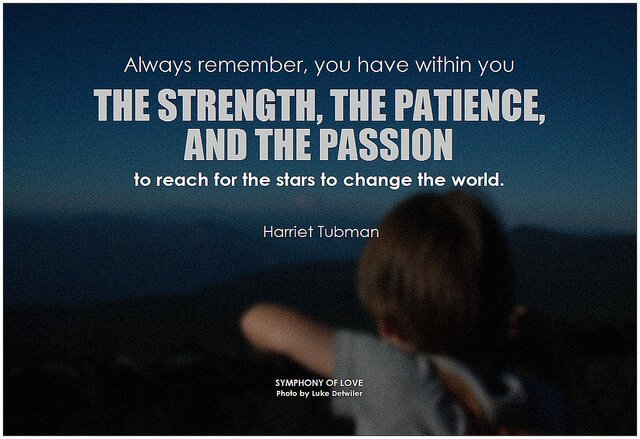
Many people stress the importance of being a good leader.  But where does it start?  Are good leaders born or trained?  Whats the secret formula to becoming a good leader?  Many different people rise in the ranks of leadership through different paths, but at Forte Strong we teach our students the fundamentals of leadership.  Leadership starts inside and it is important to understand oneself before they can be an effective leader to others.

Dr. Nancy Huber, author of the book Leading from Within suggests four leadership traits (choices) that are essential to a leader:
strength patience passion
Passion – Purpose and passion go hand in hand. To be an effective leader, you must first care. When you care deeply, you have a passion that is more than simply the spark that gets you started, it is the fire inside that will sustain you. It is a commitment so compelling that your whole self — body, mind, and spirit — are engaged. Passion is not the same as a single-minded determination to get what you want or to create the changes you think should be made. Rather, passion for a higher purpose is characterized by an openness to possibilities and the innate belief that people want to work together to create the best future imaginable. Passion plus possibilities gives you courage!


Authenticity – To be authentic is to be genuine. From my perspective, this means being who you are, all the time. To be authentic frees us to be everything we were meant to be! We admit our shortcomings to ourselves, recognize our strengths, and live who we are. When someone feels the need to behave in a particular way while at work and not be the person they know themselves to be at home or with friends, something has to give. The result is either an implosion or an explosion of the self. I believe that much of the disconnectedness we sometimes feel grows out of a need for authenticity. We long for genuine, trustworthy interaction where we live and work, and we experience fulfillment when our relationships with others are honest, grounded in the truth of who we are.


Credibility – If you are to have credibility, you must do what you say you will do. Your reputation as a credible person develops as a direct result of the trust others have in you to follow through, acting on what you have committed yourself to do. From my perspective, credibility begins with being authentic and is manifested in the actions you promise AND deliver. It is being accountable for what you say you will do. Whereas authenticity is grounded in personal integrity, credibility is grounded in interpersonal integrity.


Ethics – Ethical leaders have at the center of their belief system a high regard for human worth and dignity. They make decisions and take action in accordance with these deeply held values and beliefs. Service to others and a commitment to the greater good for more people is the essence of what it means to be ethical. Being ethical is a choice you make when passion, authenticity, and credibility are aligned with a belief system which is grounded in service to the global community.”

We coach our students to understand themselves and be comfortable in their own skin.  By understanding who they are, they’re able to communicate more effectively, make sound decisions, be an example to others and accomplish difficult tasks on their own. Being a leader is not something that only the few possess. It can be learned, developed and honed. Click Lead the Way to find out how.

-The Forte Strong Family


About the Author

Matthew Arrington grew up in Southern California and has a deep fondness for the ocean and water in general. He’s lived in most of the western united states and attended school in Oregon, where he earned a few degrees in business including, marketing, leadership and organizational management and a Masters in Business. Matt has a huge passion for working with young men to increase their chances of success and credits his current success to the many positive male role models that helped him grow into manhood.

Failure to Launch? Build Your Self Esteem!

One of the biggest things we see when dealing with the failure to launch epidemic is a correlation with low self esteem.  This is not always the case though.  Sometimes we see confident, bright young men just taking advantage of a good situation free of rent, utility, & food payments.  But lets say you fall into the first category, low self esteem.  It is not unusual to see good but shy young man afraid to leave the nest as result of being a tad unsure of themselves.  This is a normal situation that most have felt at some point or another during their transition into adulthood.

On top of all of that, society bombards these young men with the lives of the so-called “successful”;  movie stars, music artists, pro athletes and other elite lifestyles that they are expected to become if society is to deem them as successful.  The media tends to saturate us with ideas that inform us in a not-so-subtle manner that if we don’t meet certain criteria we are falling behind.  This can contribute to feelings of inadequacy in young men.  Dr. Barbara Becker Holstein, author of the book The Enchanted Self believes that “…each person has to document his or her own positive talents and strengths.”  Dr. Holstein further explains that what society tells us and shows us “… are external measures. Each of us needs to develop a sense of self-worth, a capacity for positive self-regard that comes from within.”

confidence

So how do we go about building one’s self esteem?  As we mentioned in a previous article, this can be done in a variety of ways.  At Forte Strong, we believe that the first step is to understand what one’s strengths truly are.  Our students receive a strength assessment upon arriving that is then used to build what we call a “Confidence Resume®”.  One of the important features this Confidence Resume® provides our students is a detailed list outlining and describing the unique talents and strengths that are particular to them.  This vital tool is then used to give them a clear understanding of what strengths and talents they can apply every single day to accomplish their goals, no matter how big or how small.  The Confidence Resume® is also used as a safety net of sorts to help prevent young men from spiraling into a depression when they become discouraged.  So, you didn’t get that job, that raise, that position… so what! Those things don’t define you nor do they decide your worth. Instead, we take a different approach… we take a step back, we see the situation for what it is and we revisit their Confidence Resume® reminding them once again of their potential!  This approach has been very effective at reestablishing the confidence and positive outlook these young men need to bounce back from the disappointments of life.

Remember, a clearer understanding of your strengths equates to a higher degree of self-esteem, self-respect and self-confidence which ultimately translates into success.  This is what we do at Forte Strong.  It may take time, but we can help you get there!


About the Author

Matthew Arrington grew up in Southern California and has a deep fondness for the ocean and water in general. He’s lived in most of the western united states and attended school in Oregon, where he earned a few degrees in business including, marketing, leadership and organizational management and a Masters in Business. Matt has a huge passion for working with young men to increase their chances of success and credits his current success to the many positive male role models that helped him grow into manhood.

Help Yourself by Helping Others

A large part of the Forte Strong program involves helping others.  Volunteering, community involvement, service, providing aid, etc…  There are many different terms for serving those in our community.  To understand why this is such an important aspect of our lives, or why it should be important, lets look at a local service capacity that you might be familiar with; your local fire station.  If you live in a smaller or rural town, chances are your fire response team is comprised of a group of local volunteers.  Although they might receive training from the state or federal govt. free of charge, it’s to assist their local community through hours of training and take time away from their own busy schedules.  You might not think this is a big deal…until your house catches on fire.  Think of how grateful you would be if a group of volunteer firefighters showed up at 3:00am in the morning to save you, your family and your possessions from harm!

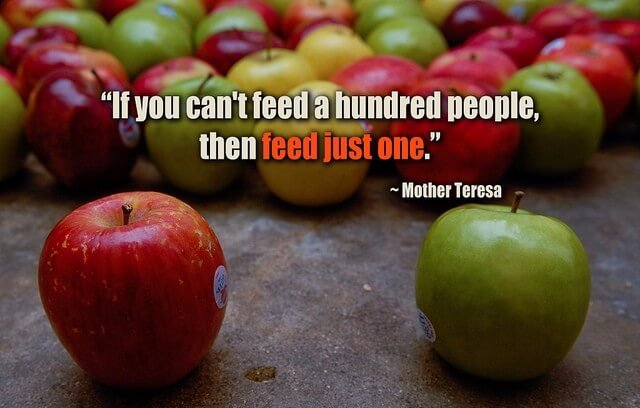
The great thing about serving others is that we never now how our support may impact their lives.  It might be a small act of kindness on our part, but could mean the world to the person on the receiving end.  Take a local soup kitchen for example.  They contribute their time to feed and comfort people that would otherwise go hungry.

feed hundred people mother theresa

Mental Health America (formerly the National Mental Health Association) writes an article that supports this concept:

“Research indicates that those who consistently help other people experience less depression, greater calm, fewer pains and better health. They may even live longer.

Consider some recent research:

  • Students who performed five acts of kindness a day increased their happiness
  • Providing emotional support to others significantly decreased the harmful health effects of certain kinds of stress among older people
  • People who donated money to charity got a boost in a feel-good part of the brain, as revealed in brain imaging research
Doing Good Can Make You Feel Good.  It might:
  • remind you that you’re relatively lucky
  • help you feel needed and effective
  • make you feel connected to others
  • take your mind off your own worries for a while
  • make you feel generous
  • add a sense of purpose and meaning to your life”
There are many ways you can volunteer, some of which take only a small investment of time.  Another important reason the Forte Strong family gives back to our community is that it provides more opportunities for our students.  Those dealing with failure to launch will find it much easier to talk to someone whom they’ve met, who has seen them work, and already has an idea of their potential.  These networks can and do lead to jobs, internships, leadership positions and many other opportunities which will help them succeed.  At Forte Strong we all do our part to help make OUR world a better place!  🙂


-The Forte Strong Family

About the Author

Matthew Arrington grew up in Southern California and has a deep fondness for the ocean and water in general. He’s lived in most of the western united states and attended school in Oregon, where he earned a few degrees in business including, marketing, leadership and organizational management and a Masters in Business. Matt has a huge passion for working with young men to increase their chances of success and credits his current success to the many positive male role models that helped him grow into manhood.

Exercise Helps Deal With Failure To Launch

When a young adult is struggling with failure to launch syndrome, many parents ask what the sure-fire way is to help their son become independent.  Unfortunately there is not a single answer that will rectify their situation, but a combo of different things that are proven to help the overall picture.  One of the things that we have seen to produce some of the most rapid results is adopting a regular exercise program into their daily schedule.  A recent article published by the Mayo Clinic explains a few benefits of regular exercise.

exercise by bicycle

“The health benefits of regular exercise and physical activity are hard to ignore. And the benefits of exercise are yours for the taking, regardless of your age, sex or physical ability.

  1. Exercise controls weight: Exercise can help prevent excess weight gain or help maintain weight loss. When you engage in physical activity, you burn calories. The more intense the activity, the more calories you burn.
  2. Exercise combats health conditions and diseases:  …being active boosts high-density lipoprotein (HDL), or “good,” cholesterol and decreases unhealthy triglycerides. This one-two punch keeps your blood flowing smoothly, which decreases your risk of cardiovascular diseases. In fact, regular physical activity can help you prevent or manage a wide range of health problems and concerns, including stroke, metabolic syndrome, type 2 diabetes, depression, certain types of cancer, arthritis and falls.
  3. Exercise improves mood:  Need an emotional lift?  A workout at the gym or a brisk 30-minute walk can help. Physical activity stimulates various brain chemicals that may leave you feeling happier and more relaxed. You may also feel better about your appearance and yourself when you exercise regularly, which can boost your confidence and improve your self-esteem.
  4. Exercise boosts energy:  Regular physical activity can improve your muscle strength and boost your endurance. Exercise and physical activity deliver oxygen and nutrients to your tissues and help your cardiovascular system work more efficiently. And when your heart and lungs work more efficiently, you have more energy to go about your daily chores.
  5. Exercise promotes better sleep:  Struggling to fall asleep? Or to stay asleep? Regular physical activity can help you fall asleep faster and deepen your sleep. Just don’t exercise too close to bedtime, or you may be too energized to fall asleep.
  6. Exercise can be fun:  Exercise and physical activity can be a fun way to spend some time. It gives you a chance to unwind, enjoy the outdoors or simply engage in activities that make you happy. Physical activity can also help you connect with family or friends in a fun social setting.”

The bottom line is that physical exercise has many different benefits, some of which may be more important than others.  In Forte Strong we mention that we provide a personal trainer who works with each of our students which is a key component Living in Balance.  Our guys are able to set their own personal fitness goals, whether it be losing weight, gaining weight, training for an event or just overall fitness, we have the team set in place that can help your young adult on his way to a healthier and more balanced life!

-The Forte Strong Family


About the Author

Matthew Arrington grew up in Southern California and has a deep fondness for the ocean and water in general. He’s lived in most of the western united states and attended school in Oregon, where he earned a few degrees in business including, marketing, leadership and organizational management and a Masters in Business. Matt has a huge passion for working with young men to increase their chances of success and credits his current success to the many positive male role models that helped him grow into manhood.

Establishing Boundaries With Your Struggling Young Adult

Below is an excerpt from Allison Bottke, author of the much talked-about book Setting Boundaries with Your Adult Children.  The following example depicts somewhat of a “fire” scenario where a struggling young adult is stuck in a rebellious and rescuing mode. Although this scenario might not apply to your unique situation, useful information can still be extrapolated from its concept.  Whether your struggling young adult is in this mindset or not, take what you find helpful and apply it.

“Enabling parents know that we live either smack dab in the middle of crisis or we’re simply in between crises, waiting for the other shoe to drop. Every time the phone rings at night, we are catapulted to a place of despair. Will it be our adult child in a drunken stupor, will it be the police, or will it be the morgue?

Let’s look at these two ways we live and what we need to do to implement the decision we’ve made to stop enabling and set boundaries for our adult children.

  1. In between crises. Without a doubt, this is the best time to put our decision into motion. We would be wise to develop our action plan during this time, then present it to our adult children and get out of the way.
  2. In crisis mode. This is a harder time to implement your decision, but it can also show an immediate effect. If, for instance, your adult child has been arrested, do not intervene this time. If your adult child lives at home and is involved in anything related to drugs, alcohol, crime, violence, unacceptable behavior, or any type of illegal activity whatsoever, insist on his immediate departure from your home. Call the authorities if necessary. He can choose to go to rehab or to a friend’s home, or anywhere he’d like, including living on the street — whatever he decides — but it is not your responsibility to find somewhere for him to go.Remember, if he has broken the law, you may be considered an accessory to his crime. Calling the police will be one of the hardest things you’ll ever have to do, but it may be necessary.

If your adult child lives outside the home and is calling for money or a place to live, or is requesting (in many cases, begging) for your signature on a contract or rental agreement, do not give it to him.

There’s an old saying, “You can’t paddle another man’s canoe for him.” We’ve been paddling our adult children’s canoes for far too long. It’s time they learned how to paddle for themselves.

Knowing that we need to change and taking the steps necessary to make changes are, sadly, often two entirely different things.”

Taken from: Setting Boundaries with Your Adult Children. Copyright © 2008 by Allison Bottke. Published by Harvest House Publishers, Eugene, OR.
At Forte Strong we help teach young men how to “paddle their own canoe”.  Sure, it takes effort but that effort will be the very difference between an independent son or dependent one. The fact is, if you don’t know how to paddle your own canoe, you’ll go anywhere the wind takes you!
-The Forte Strong Family

About The Author

Brook Price dedicated himself to helping others early in his life. He grew up in Sunny Orange County California, then joined the Marine Corps at the age of 21 serving five and half years as a helicopter crew chief and then as chief accountant. His journey with this type of work began when he volunteered as a Young Marines Instructor during his time in the Marines, helping kids get off the street, improve their lives and develop as a leader. After his tour Brook left the Marines to pursue a career in experiential therapy by attending Southern Utah University where he majored in outdoor recreation with a minor in psychology.

Brook has seventeen years experience working for a variety of different therapeutic and transitional programs across the nation. His thirst for knowledge drove him to learn and study successful therapeutic models and programs across the country, most notably Outward Bound. Brook has experience working with therapeutic, residential, military, wilderness and transitional programs for adults and adolescents.

Is my son addicted to video games?

young man playing video gamesThis is a popular question we hear a lot.  “Is my son addicted to video games /computer games?  How can I tell?  What do I do?”  According to dictionary.com, the definition of addiction is as follows:  “The state of being enslaved to a habit or practice or to something that is psychologically or physically habit-forming… to such an extent that its cessation causes severe trauma.”  Is it possible to be addicted to video games?  You bet, just like people can be addicted to drugs, food, sex or gambling.  Addiction in any form will eventually cause problems and begin to effect all areas of your life, to include your physical, emotional, mental, social, and spiritual well-being. In order for us to create and maintain a life of happiness, meaning and purpose we need balance.

Playing video games is not necessarily a bad thing as long proper boundaries are put in place to prevent it from becoming habit forming.  Studies have shown that video game addiction is indeed real and growing. It’s effects not only center around the age of adolescence but now extend well into adulthood.  As a result no one is completely safe from its influence including parents who have lost their jobs, some even receiving prison time for child neglect, all due to video game addiction.

Here are some warning signs to watch out for.  For young adults or adolescence, you may begin to feel as if they spend the entire day in their room.  A gradual lack of interest in visiting friends, getting out or attending social gatherings may soon develop.  Studies show that this kind of behavior will eventually limit social skill development and the ability for these adolescence to function appropriately in normal social settings down the road.  Other warning signs include fatigue (due to lack of proper sleep), poor grades, lying, or agitation and cranky behavior.

At Forte Strong strong we understand the severity of your situation. We help your struggling young adult regain the balance that is missing in his life by incorporating a multifaceted approach that replaces bad habits with healthy ones.  A few ways we do this is by reinforcing the body’s natural sleep patterns, adopting physical exercise, introducing fun social activities and exploring healthy alternatives to playing video games.  As your son discovers a variety of positive ways to fill the gaps that video games were falsely providing we begin to reintroduce video games into his balanced lifestyle as a fun, non-abusive option to our recreation.


About The Author

Brook Price dedicated himself to helping others early in his life. He grew up in Sunny Orange County California, then joined the Marine Corps at the age of 21 serving five and half years as a helicopter crew chief and then as chief accountant. His journey with this type of work began when he volunteered as a Young Marines Instructor during his time in the Marines, helping kids get off the street, improve their lives and develop as a leader. After his tour Brook left the Marines to pursue a career in experiential therapy by attending Southern Utah University where he majored in outdoor recreation with a minor in psychology.

Brook has seventeen years experience working for a variety of different therapeutic and transitional programs across the nation. His thirst for knowledge drove him to learn and study successful therapeutic models and programs across the country, most notably Outward Bound. Brook has experience working with therapeutic, residential, military, wilderness and transitional programs for adults and adolescents.

Helping vs. Enabling. Whats the difference?

Ok, today we are going to start off on a hot topic, but a very important issue that needs to be addressed.  The big question that many have asked themselves or, rather, SHOULD ask themselves is:  Am I helping or enabling?  First of all lets look at the difference between the two.  HELPING is assisting someone with a situation, task, etc…that they are incapable of doing themselves.  ENABLING is doing something for someone who is fully capable of doing it themselves.  Keep this in mind when you are involved with your struggling young adult.

For example:  I recently had to replace a broken serpentine belt in my vehicle.  I knew how to do it but was unable to lift the pulley down AND  at the same time slide the belt through the maze of pulleys on the engine.  I went across the street to my friend Dave’s house (Dave is a mechanic btw) and asked if he could give me a hand.  Dave was able to put pressure on the pulley allowing me to adjust and put the belt where it was supposed to go.  This is a basic example of someone (Dave) helping rather than enabling.  Conversely, if I were to ask Dave to come “help” me but I sat and watched him do the whole thing (assuming it wasn’t a two person job) he would have been enabling me.

As a parent it can be difficult to determine whether you are helping or enabling.  After all, the first instinct you have as a parent is to provide for your children, and  society tells us that really good parents give their kids the opportunities and things that they never had growing up.  But that is where we need to stop and think.

A recent article tells us the story of Jared.  Jared is a 25 year old man who works a good construction job full time and makes a good income.  He still lives at home with his parents though, and spends most of his free time playing video games and watching tv.   Jared’s parents are responsible for the mortgage, food, paying utilities, doing chores around the house etc…while Jared sits on the couch or in his bedroom and enjoys a life without much responsibility.  He is fully capable of providing for himself but doesn’t see the need as to why he should be living on his own.  Because of the money he saves, it is usually spent on buying new video games, clothes, movies, long vacations or whatever he wants.  Jared’s parents are enabling him because he is in good health, fully capable of providing for himself and living on his own as an adult.  Jared is essentially experiencing “Failure to Launch”

Take a moment and look at the situations involving your son and ask yourself this question,  “Am I helping or enabling?”  In the future, when you find yourself contemplating whether you should help your son or not, first ask yourself the question, “Am I helping or enabling?” then make your decision. This will take some time to master and at times it will involve some tough love, but in the end it will strengthen the bond between you.  As always, we invite you to take a look at Forte Strong  for more info and tips on how to help your son unlock his potential.


About The Author

Brook Price dedicated himself to helping others early in his life. He grew up in Sunny Orange County California, then joined the Marine Corps at the age of 21 serving five and half years as a helicopter crew chief and then as chief accountant. His journey with this type of work began when he volunteered as a Young Marines Instructor during his time in the Marines, helping kids get off the street, improve their lives and develop as a leader. After his tour Brook left the Marines to pursue a career in experiential therapy by attending Southern Utah University where he majored in outdoor recreation with a minor in psychology.

Brook has seventeen years experience working for a variety of different therapeutic and transitional programs across the nation. His thirst for knowledge drove him to learn and study successful therapeutic models and programs across the country, most notably Outward Bound. Brook has experience working with therapeutic, residential, military, wilderness and transitional programs for adults and adolescents.

Forte Strong Addresses “Failure To Launch Syndrome” Pt 2…

Last week, we gave parents a better understanding of why Failure To Launch occurs from a son’s perspective.  Now, lets take a look at why it’s so difficult and sometimes debilitating from a parent’s perspective.

1. Fear:  Lets be honest… whether you believe it or not, your parents are concerned for your well being.  They are scared for you.  You might ask yourself, “Why?”  Well, its simple.  They’re afraid you’ll fail, get disappointed, be let down, remain stuck and become unhappy.  Now parents, although these may be valid concerns what you have to realize is that these are NECESSARY STEPS that each of us NEED to experience to progress and grow in life.  Your young sons need to fail.  That is how they learn and progress and grow.  Sure, they may be able to learn from some of your failures, but they also need to experience them on their own too.

2. Lack of progression/experience:  Ok guys….  If you are at home and not progressing in life you are just idling.  And remember, an idling car doesn’t take you anywhere, it only pollutes the environment!  So don’t idle at home and “smog” up your relationships.  Get going!  Travel, see and do things!  The country is beautiful, but you can only experience it if you take the road trip!  Even if you don’t know where you’re going, at least you’re moving.  You know how many young adults start college without knowing exactly what they’re going to do in life?  About 90%. It’s ok… you’re not the minority!

3. Bad parents:  If you are not progressing in life your parents can feel downtrodden.  You may have heard them explain to you growing up that what you do reflects upon the family.  Well, to a certain degree they’re right.  And by NOT progressing they may feel like they haven’t given you the necessary tools to succeed in life.  This can be difficult to live with as a parent day in and day out.  They think, “What could I have done different?  What did I miss?”  What you’ll soon realize is that NOBODY is perfect.  Not even your parents!  We will all continue to learn in life until our dying breath and you can only blame your parents for so long.  Even if you didn’t grow up with the “perfect” parents, so what?  None of us did!  The great thing is, your an adult now and you can make your life how you want it!

4. The Generation Gap:  Ok, guys and parents, this one is for both of you.  Generation gaps continue to put a wedge between the ideals of parents and their sons.  Parents, you might expect your son to act as you did when “he was your age”.  You have to remember that the norms of our society are constantly changing and shifting, so what was expected of you when you were Johnny’s age, isn’t necessarily the norm today.  And that is what Johnny is living with in today’s world.  Is Johnny’s generation more of an entitled generation?  That may be true for some… but realize that though times have changed, their not any easier, though it might feel that way.  For example, what is considered as “appropriate” now on nighttime television would probably have received an “R” rating in theaters 25-30 years ago. These are the difficult choices this generation must make.  And for some of you guys, you need to step outside of your “gimmie” generation.  NO ONE OWES YOU ANYTHING.  The sooner you realize this, the quicker you’ll be able to move on.  Remember, you need to stake your claim with life.  You are the only one who CAN take you in the direction you want to go.  So get moving!

Now that we’ve touched on a few of the reasons as to why Failure To Launch is so difficult for parents, perhaps it will give you guys some insight as to why your parents are so concerned for you.  Parents, its important to look at things from your son’s point of view too.  By switching places, relationships can become more cohesive and compromises can be reached.  As the famous proverb states, “To understand a man, you must walk a mile in his shoes, whether they fit or not.”  Thanks for reading, and if you would like to share your thoughts, feel free to leave some comments below.

-The Forte Strong Family


About The Author

Brook Price dedicated himself to helping others early in his life. He grew up in Sunny Orange County California, then joined the Marine Corps at the age of 21 serving five and half years as a helicopter crew chief and then as chief accountant. His journey with this type of work began when he volunteered as a Young Marines Instructor during his time in the Marines, helping kids get off the street, improve their lives and develop as a leader. After his tour Brook left the Marines to pursue a career in experiential therapy by attending Southern Utah University where he majored in outdoor recreation with a minor in psychology.

Brook has seventeen years experience working for a variety of different therapeutic and transitional programs across the nation. His thirst for knowledge drove him to learn and study successful therapeutic models and programs across the country, most notably Outward Bound. Brook has experience working with therapeutic, residential, military, wilderness and transitional programs for adults and adolescents.