Excessive Screentime: A Guide for Overcoming an Addiction to Cellphones

Today’s world is run by technology, so much so that it is easy to become dependent on our devices. In this day and age, advancements are happening nearly every day. We can access the world at our fingertips, which means technological distractions are easily accessible.

Cell phones are extremely handy and make life more convenient. In just a matter of seconds you can find a map, look up restaurants, or connect with other people. But it doesn’t take much for our mobile devices to become harmful and possibly lead to addiction.

Not all cellphone users are addicts, but when the person physically and mentally struggles with turning it off or putting it away then there’s a serious issue. Becoming reliant on mobile devices risks the ability to have a healthy lifestyle. It’s not bad to have some screentime, but the day shouldn’t be taken up with all screentime.

The Danger of Cell Phones

Smartphones contain everything the world has to offer: social media, games, the internet, and more. You may have heard the joke, “there’s an app for everything.” This statement isn’t far from the truth, but when you have nearly everything in the palm of your hand there’s a risk of not being able to let go.

Spending too much time on a screen is not too far from spending all your time. Quality of life is at risk with excessive cellphone use as other aspects of life suffer. There’s a give and take when it comes to using smartphones. When the phone takes large quantities of time then other things like relationships, education, and even health are compromised.

For most, the first action of every morning is reaching for their phone. It’s common to delay getting out of bed to scroll through messages, posts, and more. When Pew Research Center did a study on teens and cellphone use, they reported that 44% of teens check their phone right after they wake up.

This mentality of constantly needing to check your phone—whether it be for notifications or curiosity—is a gateway to an addiction to mobile devices. According to CNN Health, 80% of teenagers check their phones hourly while 50% feel they are addicted to their devices.

Unfortunately, cell phone addictions are common. Screentime can quickly swallow up the entire day as it is easy to spend continuous hours watching videos, playing games, and scrolling through social media platforms.

But how do you know if you or a loved one are spending too much time on a cellphone?

Signs of Addiction

There are many symptoms of a cellphone addiction, which all can negatively impact livelihoods. Whether it be yourself or a loved one, understanding the signs of addiction is the first step to overcoming it.

Watching for irregular behavior or performance helps to identify the existence of addictive attitudes. Cellphone addicts can show a variety of symptoms in various ways, but they all result in other aspects of life being affected.

Attachment

A clear sign of addiction is an attachment to their device(s). Being unable to put their phone down or resist temptation to check their notifications shows addictive behavior. Smartphone addicts are often reaching for their phone, staring at their screens, and usually tuning out the world around while engaging with their device.

The question to ask is: how often is the day spent on a mobile device? If the entirety of leisure time is spent on a cellphone, there is a probability of addiction. Smartphone usage is okay every now and then, but the day should not be spent only using the phone. If they are physically and mentally struggling with letting go of their cellphone—unable to find other modes of entertainment—they are demonstrating addictive behavior.

Addicts can spend hours at a time on their devices, unaware of the clock ticking by.

This can affect them physically as they are often losing sleep, staying up all night on their device. Sleep schedules can become irregular and they can be acting more lethargic during the day. A lack of sleep can also lead to other health issues as they can be more prone to developing sickness.

A cellphone attachment could mean it is difficult for them to find pleasure in other activities. The mind may be unable to dissociate from their mobile device, meaning they could be often thinking of their phone when it is not being used.

Being attached to a cellphone can lead to a risk of life, to not only the user but also for others. Statistics show that each year more than 350,000 injuries are caused by texting and driving. Those suffering from a cellphone addiction are more likely to find themselves in an accident by not being able to ignore their mobile device.

A smartphone attachment is dangerous as it could lead to an inability to accomplish other tasks without the use of their phone. This can result in a technological dependency while other life factors—such as health and wellness—suffer.

Agitation

Cellphone addicts often showcase negative behaviors when separated from their mobile device(s). Either through misplacement or confiscation, if removed from their phone they could exhibit frustration, anger, violence in extreme cases, and other symptoms.

Like other addictions, withdrawal symptoms can happen once it’s taken away. Signs of withdrawal could include depression, stress, anxiety, and irritability. The length of withdrawal has no effect on symptom intensity as an hour or two could affect those addicted.

The agitated behavior toward a loss of their device can result in a disruption of family/friend relationships as well as have other negative impacts on their life. When separated from their cellphone, their emotional reactions could have damaging effects.

Mental Health

One of the harmful effects of cell phone use is the weight it puts on mental health. A common effect of smartphone usage is exposure to toxic media. Apps like Instagram or Twitter can house unhealthy content that leave harmful impacts on mental health.

Those who have excessive amounts of screentime are more prone to witness, be victims of, or commit cyberbullying. With the various chat platforms on the internet or in apps, cyberbullying is becoming harder to avoid. This can put a toll on mental health as self-esteem and other psychological elements are affected.

A decline in mental health could result in an emotional distance from school and family relationships. Other signs can be loss of appetite, lack of motivation, and oversleeping.

Who’s at Risk for Addiction?

Anyone can develop an addiction to smartphones: adults, teens, and children. To prevent addictive behaviors, it is recommended to limit technology use. This is especially for children as they are more susceptible at a young age.

Teenagers are more prone to develop an addiction as their lives often revolve around technology. Their education consists of device usage with smartboards, tablets, and computers. Most need access to the internet to complete their schoolwork, but not all technology use is bad or harmful. Technology can be beneficial for educational purposes, but leisure time should be watched carefully when it comes to smart devices.

Studies have shown how addicts depend on smartphones to gain control, avoid fears, or obtain independence. Those who suffer from anxiety and depression are at risk for developing a phone addiction as they often use mobile devices as an outlet to relieve their mental symptoms.

Steps to Overcoming Addiction

Support from loved ones is a key factor for overcoming addiction as the process is often difficult for the addict while they yearn to use their phone. There are various methods to assist an addict in overcoming their cellphone attachment to help break their unhealthy habits.

Healthy Usage

It’s important for addicts to understand how to use their phones in a healthy manner. It is crucial to communicate with them that cellphone usage can be good, if not overused. Educating them on the proper ways to use and not use mobile devices can encourage them to start making a change.

Some addicts are in denial, not realizing their habits are harmful. Informing them of the difference between health and non-healthy cellphone behaviors helps to conquer this state of denial and it opens the door to overcoming their addiction.

It’s good to still let them feel in control when it comes to their devices, but helping them understand the dangers of overuse and the tools to prevent it will assist them in making the right choices.

Boundaries and Schedules

Limiting cellphone use by setting boundaries and establishing schedules aids in teaching the addict healthy ways to use their phone. Having a consistent routine helps to rebuild healthy habits and train out unhealthy behaviors.

Screentime schedules help the addict track their screentime and helps them to not overuse their mobile device. Sleeping habits can improve as a phone bedtime is implemented. Once they are spending their nights in bed sleeping rather than on their phone, you can see their overall health and well-being get better as their body has a chance to replenish each night.

Designating certain areas of the home aids the addict in refraining from their smartphone. For example, setting the kitchen as a No Phone Zone encourages the addict to avoid using their phone while eating. This can promote a healthier dietary lifestyle and allow for further human interactions as mobile devices can be a distraction during family dinners.

Good Example

Like the saying, “Monkey See, Monkey Do,” people follow by example. An addict can easily use the excuse, “but everyone else is doing it” to continue their unhealthy behavior. Surrounding the addict with healthy examples encourages them to retrain their habits and commit to their screen-free life.

If the addict is the only one following the boundaries and screentime schedules, it’s more difficult for them to follow through. Having friends and family—and those who may have an influence on the addict—can motivate them to keep to their new healthy cellphone lifestyle.

Other Activities

Having a reason to not depend on a cellphone is a great outlet for overcoming addiction. Giving encouragement for finding other modes of entertainment during their free time not only lets the addict get off of their phone, but it also works as a method of distraction to keep their mind off of their mobile device.

This can also have physical benefits as the addict begins to participate in healthier activities. Suggesting an activity like an occasional bike ride not only eliminates any excuse to spend time on a phone, but it also promotes a healthier lifestyle of physical activity. As they become more active, they can experience health benefits that could make them feel stronger and happier.

Conclusion

Developing a cellphone addiction is simpler than overcoming one, but with the help and support of close family and friends cellphone behaviors can improve. Cellphones are helpful as they make our lives easier, but it’s important to understand how our time should also be spent elsewhere.

Although addictive behavior may not be noticeable right away, learning to recognize the signs and understand the tools to overcome can help lifestyles become healthier. Quality of life can be affected through excessive screentime, but any negative effects of addiction can be reversed if healthy cellphone use is implemented.

Harmful habits can quickly take control. Although it would be difficult, retraining habits are not impossible. Forte Strong aims to help men gain an independence from technology while promoting positive habits for a healthy life balance.

3 Ways to Help Your Son Achieve Independence: Part 4

Last week, in Part 3 of our series “3 Ways to Help Your Son Achieve Independence” we discussed the 2nd “E” factor: Engagement. We also talked about the 3 c’s that are absolutely instrumental in keeping your son engaged. In Part 4 of this series we will talk about the 3rd “E” factor: Education. Education ranks #3 on our list and for good reason, because if you can master the first two “E” factors (Environment & Engagement) you’re already winning the war against failure to launch. However, incorporating Education into your battle strategy can help you ensure victory. With that said, let’s talk about Education.

The most important ingredient in a great education

recipeThe most important and an essential ingredient to a good education would undoubtedly be a great teacher, wouldn’t you agree? But wait you ask, isn’t the curriculum the most important part? The answer is no. Yes, a great curriculum is extremely important and yes it’s also an essential part of learning, but a great curriculum has little to no impact without a great teacher! It should come as no surprise that for the last 70 plus years studies have consistently shown that teachers are the number one reason why a student or classroom will either succeed or fail regardless of the curriculum or educational model used. If you don’t believe me, listen to Camilla Benbow who is the dean of one of the top-ranked education schools in the entire country.

‘Of those elements that are within the control of schools, teachers are the most important determinant of how much students achieve. Family and personal attributes of students have the greatest effect on achievement. But among the elements of schooling that promote performance, teachers have the most impact by far.’  -Benbow


The right teacher is the key, especially with failure to launch syndrome

Yes, the teacher makes all the difference and guess who the teacher is? You! So, if you’re the teacher, then home would be the classroom. But remember, before you teach, your classroom must be in order and if you’re wondering how to do that, read Part 2 of this series and get reacquainted with the 1st ‘E’ factor, Environment.  So, are you a great teacher? If you’re reading this then I’m assuming you’re not quite there yet but you want to be, yes? Well, if you want to be a great teacher, then I suggest you go back and read part 2 and part 3 of this series. Am I sounding like a broken record yet? Good! By now I should have drilled it in your head how important Environment and Engagement are in this process. Of course, great teachers are also great learners. That’s right, great teachers love to learn and it’s their own insatiable appetite for learning that quickly rubs off on their students, getting them excited in the process. If confidence in your own ability to become a great teacher is beginning to wane, let me take this moment to reassure you that you have what it takes. How do I know? Why else would you be reading this article if you didn’t care for your son and also love to learn? Now that we’ve established you have what it takes to be a great teacher, let’s move on. We’ve talked about the classroom (home) and the teacher (you),  now let’s talk about the curriculum shall we?


Recipe for a ‘failure to launch’ curriculum


Now, before you start hyperventilating from the mere thought of taking on such a monumental task as developing a curriculum dedicated to ‘failure to launch’ that will essentially cover hundreds of different topics all designed to help your son achieve independence… stop, take a deep breath and relax. Truth is, you don’t need to worry about constructing the perfect curriculum worthy of a nobel prize nomination… in fact, I recommend you don’t. Why you ask? We’ll because the best teachers don’t follow a rigorous unforgiving curriculum, no matter how good it might look on paper. The best teachers use a flexible curriculum that allows them to engage their students in real time, while still challenging them to think outside the box, take healthy risks and ultimately problem solve. Now I want you to think back for a moment when you were in school… a long, long time ago. Who was your favorite teacher? Was it the braniac know-it-all that could recite the periodic table by heart? How about the muscular hunk that just so happened to double as the swim coach? What about the chill, easy going hippie that really didn’t care if you even came to class? Or was it the teacher who challenged you, believed in you and genuinely cared about you. You know, the one who made you feel as though he or she designed each lesson around you.  Hmm… I wonder who your favorite was? how_much_you_careLet’s face it, the wise-old adage, “No one cares about how much you know, until they know how much you care” is true. So, how do you show your son you care? If you don’t know the answer… then you guessed it, re-read part 2 & 3 of this series! Back to the topic at hand. How can you develop a great failure to launch curriculum? Well, it’s a lot like baking a cake, you need to add the right ingredients at the right time if you expect anyone to eat it. So without further ado, let’s get baking!

 

Using the 7 staples to achieve independence

Now, every cake whether it be a strawberry cake, a carrot cake, a coffee cake or a chocolate cake share the exact same essential ingredients, namely: eggs, flour and sugar. These are staples found in every cake and for the most part, do not change. The same holds true when developing a successful failure to launch curriculum. Stick with the staples… the things that do not or rather should not change. When setting up a dynamite ‘failure to launch’ curriculum, remember the acronym P.E.R.S.I.S.T. which stands for Practice, Results, Exemplify, Step by Step, Individualized, Simplistic and Timely. Let’s discuss each in detail.


Practice: 

Yes, this one will take time but anything worth mastering does. Now, you don’t need to wait around for your son to come home to practice teaching, you can practice on others too. Family, friends, co-workers, even the dog (you’ll understand why in next week’s post). Only practice will help you get more comfortable with teaching so it eventually becomes natural and effortless. Teaching is most effective when your son doesn’t know there’s actual teaching going on, which means you need to think outside the box. You can’t approach this like you would a traditional classroom and lecture. He needs to know you care first, so build on the relationship and go from there. Remember to be honest and transparent from the get go. Young people have a knack for uncovering hidden agendas and discovering ulterior motives and you’ll definitely lose trust if you go about it this way. Instead of trying to take him for a ride, let him take you for one. The best way to do this is to practice listening first and talking second. Always look for those little teaching moments and take full advantage of those moments when they come. If you’re listening, you’ll recognize these moments when they happen.

Tip: Steer clear of lecturing… no one wants to listen to someone give advice that was unsolicited to begin with. Listening and asking the right questions will do the talking for you… trust me.

“Before I came here I was confused about this subject. Having listened to your lecture I am still confused. But on a higher level.” -Enrico Fermi

Exemplify:

good_exampleExemplify… it’s often overlooked and underrated, but it’s one of the most important tools in a parents toolbox. Unfortunately the “Do as I say, Not as I Do” approach is far too common these days which really creates some havoc at home. If you want to have some influence with your son, you’re going to need to “teach by example”… which is, without a doubt the highest form of teaching, period. Believe it or not, this essential ingredient is often the hardest for people. Why? Because it’s easy to say one thing and do another and most of the time people don’t even recognize when they’re doing it. Its called hypocrisy and it will destroy your credibility faster than beans through a cowboy, so don’t do it. With that said, we’re all human and all of us are going to fall short some of the time. When that does happen, it’s best to admit you’ve made a mistake. In fact, admitting you made a mistake is a great way of ‘exemplify’, is it not? Before you teach something, be somewhat proficient in what you are teaching and be willing to learn from others including those who may be much younger than you, your son for example… hint, hint. Be objective… there is no such thing as one right way to do things. Encourage ‘healthy’ mistakes and give positive feedback when he’s taking action. Don’t be so quick to give the answer or find the solution to your son’s problems when he’s struggling, when you do, you rob him of the ability to learn how to problem solve. However, this doesn’t mean you can’t help guide him in the problem solving process. How do you do that? By asking questions! By asking questions you challenge your son to come up with his own answers which is the ultimate goal and that is the essence of problem-solving.

Tip: Leading by example is a double-edged sword. If you want him to be strong, you must be strong. If you’re fearful, scared and anxious all the time, he will most likely be fearful, scared and anxious.  You can’t expect your son to believe in his own ability to achieve independence, if you doubt his ability to do so.

“Dad needs to show an incredible amount of respect and humor and friendship toward his mate so the kids understand… Kids learn by example. If I respect Mom, they’re going to respect Mom.” -Tim Allen


Results:

Only use a curriculum that works. It doesn’t matter how many fancy bells and whistles it has if it doesn’t produce the results you want. If handing him a book and telling him to read “A beginners guide to…” doesn’t work, which I don’t recommend…. don’t use it. Try different techniques, methods, approaches and activities… find the best way for him to learn. Once you find out what works, use it and reuse it. If you’re a little unsure as to what constitutes ‘good results’, it can be summed up in one word: ACTION! Why? Because action leads to Experience which is the 4th ‘E’ factor. If your son is taking action, he’s gaining valuable experience and if he’s gaining valuable experience, he’s well on his way to achieving independence. Now, if he’s not taking action don’t rush to judgement so quickly, the curriculum may not be the problem. Instead, revisit the first two ‘E’ factors, Environment and Engagement and make sure those are in-line first. If you feel you have a good handle on those, then go ahead and tweak your curriculum and see if that works. If that doesn’t work, seek a professional; someone with the knowledge and experience to help you identify the problem and get you back on track.

Tip: Poor results are not always indicative of a bad curriculum, a bad teacher, or a bad classroom. There are times, where the ownership needs to be placed squarely upon the student’s shoulders.  Learning means growing and growing means changing and changing is never easy. You can’t help someone who refuses to change and is only interested in doing things their way. In cases such as these, for the welfare and betterment of your classroom (home) the only choice left is to expel the student (son), meaning he will need to leave. This is often the hardest decision for a parent to make, especially mothers who have a son who is failing to launch.

“However beautiful the strategy, you should occasionally look at the results.” -Winston Churchill


Step by Step: 

There’s an order to all things  in this world and for good reason. The same can be said for learning. Learning is far more productive when done in sequential order. Truth is, many if not all skills can not be learned properly without first learning the skills that naturally precede it. Confusion and frustration are always the result of not teaching things in the right order. For example, you can’t learn calculus before learning algebra, geometry and trigonometry first. The same can be said for other skills as well. If you want to teach your son how to manage money, you don’t give him a credit card and a crash course on proper budgeting and call it good. That’s too much, too fast! Let me explain this concept another way. bicycle_seat

Teaching step by step is like teaching your son how to ride a bike for the very first time. Would you start by buying him an adult-sized mountain bike with state of the art thumb shifters, clipless pedals, and full disk brakes and then expect he’s going to know how to ride it? Of course not! You start him off with a small bike. One that is just right for his size, with the basic one gear setup so it’s easier for him, maybe throw in some rainbow streamers for fun and then you teach him… step by step. It’s perfectly normal for there to be some hand-holding at the very beginning… that in no way means you are doing the work for him. It just means you are more involved in the teaching process at this point. As his skills improve his confidence will also, which means less and less hand-holding, until eventually he’s able to ride his bike on his own or in other words, achieve complete independence without any more assistance from Mom or Dad.

Tip: Enabling is the number one enemy to learning. Protecting your son from every hardship or obstacle that may come his way is detrimental to your son’s ability to learn, problem solve, not to mention his confidence. By all means, give him the tools to help him succeed but don’t rescue him when things get tough just for your own peace of mind. Without consequences, learning can not take place. Good teachers don’t do their student’s homework, they give them the tools, resources and support they need so they can do it themselves.

“The rung of a ladder was never meant to rest upon, but only to hold a man’s foot long enough to enable him to put the other somewhat higher.’ –Thomas Huxley 


Individualized:

You’re son is very different from you and his brothers and sisters too. Raising your son based on what has worked for you or his siblings may not be the best approach. Teach him based on your best understanding of who he really is, with his own personality traits and unique interests in mind. He’s a different person and therefore will need different instruction. Discovering your son’s primary motive, learning style and strengths will go along way in understanding what direction to take when developing a failure to launch curriculum. Of course, incorporating some hands on learning or learning by doing is always a good idea, because this is how boys learn best. Be creative, open-minded and resourceful, if he doesn’t learn well one way…try another. Practice, practice, practice!

Tip: Be careful. It can be easy for parents to confuse their own personal aspirations with their son’s,  pushing their son toward a path they want for him, instead of the one he’s chosen for himself. When you push your own agenda or only teach what’s important to you, you in essence force him to bake something he doesn’t want to eat, which will only cause resistance. What do I mean by this? You as the baker (teacher) need to be sensitive to the fact that your son may not want a strawberry cake, a chocolate cake or a coffee cake but rather wants a carrot cake.  Focus on the 7 staple ingredients and then let him decide what he wants to bake with them.

“But the fact is, no matter how good the teacher, how small the class, how focused on quality education the school may be none of this matters if we ignore the individual needs of our students.” -Roy Barnes


Simplistic: 

Keep it Simple! A lot of talking on your end is the fastest way to complicate things. Instead, choose to listen first. Some of the most powerful lessons are taught in silence. Start with something easy and go from there. The more complex you make it, the harder it will be for him to grasp what you’re teaching and the easier it will be for you to lose focus on what’s important. A simple and practical curriculum will help you stay focused and remain flexible, which is key. The easiest lessons for us to learn as individuals are those that are relatable. This is exactly why so many of the best thinkers, philosophers and teachers that ever lived used parables to teach and with much success! Everything you teach should be something that can be easily applied, understood and relatable. It doesn’t need to be extravagant for it to work, in fact it shouldn’t be. Have you ever heard of the story behind the space pen? The story goes something like this:

pencil_russian_nasaIn the 1960s the space race was underway and NASA astronauts complained that their pens wouldn’t work in zero gravity. As a result a highly-trained team of NASA engineers went straight to work and was able to create the wonder pen. The wonder pen worked upside down, in a vacuum, in zero gravity and even underwater, but it took months to build and came at a cost of a million dollars. During the same time, the Russian astronauts were presented with the same problem. There solution was simple: they used pencils.

Tip: Don’t try and compete with the world, you’ll just end up being frustrated and annoyed. A more productive approach is to leave the world at the front door. That means less TV, less facebook and twitter, less Xbox and Playstation and more family time. Try to eliminate any distractions. Placing healthy restrictions on phones, laptops, TV, and music will not only help you be more attuned to your kids needs, it will also help your kids be more attuned to yours.

“Life is really simple, but we insist on making it complicated.” -Confucius


Timely:

Why is it so important to have a flexible failure to launch curriculum? Because the perfect time to teach anything whether it be soft skills or hard skills, is always when you can practice it and apply it in real time. This approach is rarely used in today’s classrooms, especially colleges and universities, where you sit in class for a specified amount of time, listen to a lecture about something that has very little relevance to you and with no ability to apply what’s being taught in real time. Most academic institutions today expect their students to use root memorization as the primary method of remembering what is being taught in hopes the student will still be able to apply the information months or even years down the road when it becomes more applicable. Bar none, timing will be one of the most important staple ingredients in your failure to launch curriculum. This ingredient is so often overlooked because it’s not well known in today’s schools and classrooms. But why? Because the focus today is not placed on the individual needs of the student but on the collective good of the entire class. Our education system is not the only reason young men today are failing to thrive. Regardless of the reasons, one thing remains certain, young men today are not prepared to deal with life.

Tip: For those young men who tend to drag their feet, creating reasonable time frames for your son to apply what he’s being taught is extremely helpful. Remember, imparting knowledge is not the overall goal! The overall goal of any ‘failure to launch’ curriculum is to produce ACTION! If there’s no action, then there’s no learning. If you’re implementing the curriculum correctly but are still finding it hard to get your son to take action, go back and refer to Part 2: Environment, paying close attention to the 3 R’s of a healthy home. 

“Sometimes being a friend means mastering the art of timing. There is a time for silence. A time to let go and allow people to hurl themselves into their own destiny. And a time to prepare to pick up the pieces when it’s all over.” -Octavia Butler


The next step to help him achieve independence…

I think you know what you need to do now. It’s time to lead by example and take that first step toward helping your son achieve something he never thought he could, true independence! I challenge you to take immediate action on one of the 7 staples taught today. Remember, learning doesn’t take place without action first. Forget about developing the perfect ‘failure to launch’ curriculum for now and just take action, no matter how small it may be. By doing so, you are following the first and most important principle of P.E.R.S.I.S.T….. Practice!


A Quick Summary:

The 4 “E” factors we’ve found to be the most effective in catapulting young men to independence is Environment, Engagement, Education, and Experience. We learned the number one ingredient to receive a great education is a great teacher. We further learned that their are 7 staple ingredients needed to bake a great tasting curriculum for young men struggling with failure to launch syndrome. They are Practice, Exemplify, Results, Simplistic, Individualization, Step by Step and Timely. We also identified what the overall result should be when implementing a successful failure to launch curriculum… ACTION! The last ‘E’ factor: Experience is the direct result of implementing the first 3 ‘E’ factors correctly and it’s Experience that will lead your son to independence and ultimately a successful more meaningful life.


Supporting Articles on the Subject:

1. John Hopkins School of Education, Diversity, Learning Style and Culture by Pat Burke Guild
2. A Hoover Institution Journal, The best teachers in the world by John E Chubb
3. Building an Opportunity Culture for America’s Teachers, How America’s Best Teachers Could Close the Gaps, Raise the Bar, and Keep Our Nation Great by Bryan C. Hassel and Emily Ayscue Hassel


Coming up next week:

Next week we will be learning about dogs. That’s right, dogs! Believe it or not there are some staggering parallels between the techniques used to rehabilitate dogs and those used to rehabilitate young men. Cesar Milan, also known as ‘The Dog Whisperer’ is the best at what he does. He’s famous for taking some of worst behaving dogs and turning them into great dogs! It’s time to share some of his secrets and how they can work for you at home.


A big thank you to all our readers! We know there are a variety of different transitional living programs out there today for emerging adults and we sincerely appreciate parents like you who invest their time and energy toward improving themselves and their families. We hope you found this information to be both empowering and useful in helping your son achieve independence. Please take a moment to leave a comment or ask us a question. Thank you!


About The Author

Brook Price dedicated himself to helping others early in his life. He grew up in Sunny Orange County California, then joined the Marine Corps at the age of 21 serving five and half years as a helicopter crew chief and then as chief accountant. His journey with this type of work began when he volunteered as a Young Marines Instructor during his time in the Marines, helping kids get off the street, improve their lives and develop as a leader. After his tour Brook left the Marines to pursue a career in experiential therapy by attending Southern Utah University where he majored in outdoor recreation with a minor in psychology.

Brook has seventeen years experience working for a variety of different therapeutic and transitional programs across the nation. His thirst for knowledge drove him to learn and study successful therapeutic models and programs across the country, most notably Outward Bound. Brook has experience working with therapeutic, residential, military, wilderness and transitional programs for adults and adolescents.

You can also find me on

3 Ways to Help Your Son Achieve Independence: Part 3

Last week, in Part 2 of our series “3 Ways to Help Your Son Achieve Independence” we discussed the 1st and most important “E” factor which is Environment. We also talked about the 3 R’s that are crucial in creating an environment of learning and growth. In Part 3 of this series we will talk more in depth about the 2nd “E” factor, Engagement. Let’s begin by defining what engagement is. Websters dictionary defines engagement as follows: emotional involvement or commitment. Right now you’re probably thinking, “But I am emotionally involved and committed!” Take a deep breath… I know you’re emotionally involved and committed, you are in fact reading this post to try and help your son achieve independence… that sounds like someone who is emotionally involved and committed to me. Your level of engagement is not in question here… your son’s however is, so that’s where we’re going to start. So how do you get your son engaged? Let’s find out!


Engagement… what is it?

Holding HandsFirst off, we need to look at engagement as a process rather than a definition.  I think we can both agree that if engagement was really as simple as just being emotionally involved and committed then things would be much different at home, right? Engagement is really a process, not simply a state of being and that’s the real difference. At Forte Strong we view engagement as a processa process in which emotionally involved and committed people help facilitate learning and create new opportunities for growth.  There’s no doubt you are emotionally involved and committed, but do you facilitate learning and create new opportunities for growth? If not, then I would argue that you’re not fully engaged in the process, which is ok… because you’re going to learn how right now!

*Engagement can be divided into 3 categories that are easy to remember and easy to implement. At Forte Strong we call these 3 categories the 3 C’s of Engagement.


The 3 C’s:

Community, Communication & Consistency


Community:

Have you heard the term “It takes a village to raise a child”? Well… it’s true. Is it possible for one person to do it on their own? Yes it is, but it’s a lot more work and the odds are stacked against you. It’s much harder to guide your son in the right direction when you are competing against the rest of the world! Engagement doesn’t just have to come from ONE source, so parents you don’t have to do this on your own. In fact, I would highly recommend you don’t do it on your own. The Lone Ranger might work well in the movies but it doesn’t work very well in the real world. It would be wise to include people you trust in the engagement process. It can be friends, mentors, extended family, neighbors, coaches, teachers, pastors, bishops, bosses and so on. Remember, you are fighting for you child’s time and attention and the older your child is… let’s say over 18 for example… the harder it will be to capture it and keep him engaged.

It’s a big world out there and parents, you have very little control over it. But don’t throw in the towel just yet, there is a place where you have a great deal of control and influence. Do you know what environment I speak of? If you read Part 2 in the “3 Ways to Help Your Son Achieve Independence” series than you know the answer. It’s your home! That’s exactly why creating a healthy environment within the home is #1 on our list. Outside the home is beyond your control and your scope of influence, but that doesn’t mean you don’t have other channels of influence at your disposal. Remember, you don’t have to do this alone. You have friends, mentors, extended family, neighbors, coaches, teachers, pastors, bishops, bosses and so on that may be willing to lend a hand. Do you know of any good role models in your family, at work, church, school or in the neighborhood that you trust? If so, try and get them involved. Your goal is to create opportunities for your son to learn and grow. A community of positive, responsible and trustworthy individuals can help make the job easier.

Note: You’re not trying to find a therapist, you’re trying to find healthy, responsible, trustworthy, well-balanced individuals who can help keep your son engaged or in other words, people who are emotionally involved and committed to help facilitate learning and create new opportunities for growth.


Communication:

telephone no communicationI cannot emphasize the importance of communication. Communicating effectively is so vital that without it, the battle is already over before it even begun. This battle is for your son’s time and attention and ultimately his future. Any military general will tell you, the fastest way to win a war is to take out the enemies communications and the same can be said at home. If communication doesn’t exist in the home than you’re fighting a battle that can’t be won. But wait! Before you start waiving a white flag, know that with a little guidance and some one-on-one coaching you can quickly turn this situation around for the better! At Forte Strong we help teach and coach parents how to communicate with their children in a way that creates positive change instead of resistance and resentment. Though we’ve learned that no communication can be debilitating, the inability to communicate effectively can be equally disastrous. However, I personally believe some communication, regardless of its effectiveness, is better than no communication. Though not optimum, arguments at the very least indicate both parties are trying to communicate at some level to solve a common problem. No communication on the other hand indicates a refusal to address the problem or acknowledge that it even exists. Communication is key in helping your son achieve independence, so learning how to communicate effectively is essential!

So how does one learn how to communicate effectively? The good news is that you don’t need to be a master of communication in order to use it effectively. By following these 3 basic steps you’ll begin to experience huge positive results in your life and make a huge impact on his.  However, communication always involves more than one person, which is why adopting these 3 key areas will help you drastically improve your life, but it doesn’t mean you can force someone else to do the same. You can easily remember these 3 key areas by remembering the 3 T’s: Talk, Timing, and Trust.

Step 1: Talk  This is by far the most important of the 3 because this is one parents often avoid because let’s face it, it can be uncomfortable at first. So what does talking mean? It means you start talking to your son on a daily basis… and that means practice, practice, practice. Talking doesn’t mean you are the one doing it, it only means that you are involved in the conversation. Talking involves both speaking and listening and they are both important.

Step 2: Timing  Many parents get this one wrong because they forget to think about the other person first. If you find yourself repeatedly missing the mark on timing, go back to step 1: Talk and practice listening more than speaking. Great listeners are always better at timing than speakers because they are consistently in tune with how others are feeling and thinking and are therefore more adapt to know the best time to talk. Timing can often predict whether there’s an argument or a conversation. Trying to talk to someone while they are emotional is a bad idea, whether the emotional person is you or your son. Here are few examples of bad timing.

    • Talking to someone while they are emotional.
    • Talking to someone who is rushed for time (this could also be you). Don’t try to quickly jam a conversation in before heading out the door.
    • Talking to someone when there’s distractions.
    • Talking to someone when they just woke up or tired and  sleepy, hungry, thirsty or feel ill.
    • Talking to someone in the middle of them doing something important (whether or not you feel its important)
    • Talking about something important over the phone, text or email.
    • Talking to someone in a public place with lots of people around.

Step 3: Trust  This is essential for any good, productive and positive communication to take place. Honesty and trust must first exist before any real and meaningful conversations take place. For mom’s, that means juicy details of the conversation are kept confidential between husband and wife and no one else, unless it is absolutely necessary. That means that sharing bits and pieces of the conversation with Aunt Edna and your best friends Janet and Kim is out of the question. Men are not as open and transparent about things as women are, which means you need to treat what is said as sacred. Your son is not going to tell you a thing if he can’t trust that you will treat what is said with respect. Though I believe it is good for son’s to have meaningful conversations with their Mother’s, I believe it’s far more beneficial to have a meaningful conversation with his Father.


Consistency: 

running the raceIt’s important that parents are consistent and firm in their message and their approach when trying to foster independence. Obviously this is not just a one time fix and you’re not going to see a marked improvement in just one day. It’s going to take some time and this is why consistency is so crucial. With over 13 years of experience I’ve come to understand that what separates parents who experience success from those who don’t is consistency. It just makes sense, parents who can be consistent experience the best results. I often compare this overlooked and under-appreciated attribute to running a long-distance marathon. Fact: Not everyone who runs a marathon ends up finishing it. This is largely due to a lack of consistency or pace.

If you are a runner you understand what I’m saying, if you’re not let me further explain. There are 3 types of marathon runners.

Runner #1: These runners walk the race and never end up finishing within the time limit (usually 6 hours). These runners represent parents who either don’t think there’s a problem or are not willing to put forth the effort to solve the problem.

Runner #2: These runners run the race too hard, don’t have the energy to keep going and eventually burn out. These runners represent parents who put forth a lot of effort, using an approach that doesn’t work and eventually burn out.

Runner #3: These runners have been coached or taught to pace themselves at a speed that is neither too slow nor too fast and finish the entire 26.2 miles. These runners represent parents who consistently use an approach that works with a large support network. Just remember this rhyme: Winners run their race at a healthy pace!

Now ask yourself, which runner are you? Most parents fall into the category of Runner #2… they invest a lot of time and energy using an approach that doesn’t work and are eventually left feeling burned out and hopeless.  How do you prevent Burn Out? Simple!  By implementing the first two “C’s” correctly!  Step 1: Community! Remember, it takes a village to raise a child so recruit some extra help!  It’s much easier to maintain consistency if you’re not carrying the full weight on your shoulders.  Step 2: Communicate with your son and learn how to do it effectively! We’ve helped hundreds of parents that have been in your exact situation.  If you’re committed to winning this race, which I know you are, please call us today and let us help you help your son.


A Quick Summary:

The 4 “E” factors that we’ve found to be the most effective in catapulting young men to independence is Environment, Engagement, Education, and Experience. We feel the 2nd most important factor out of the 4 is Engagement. We learned that Engagement is a process not simply a state of being: committed and emotionally involved. We further learned that the process of engagement is most effective when approached utilizing the 3 C’s: Community, Communication and Consistency.


Coming up:

Next week we will be learning about the 3rd ‘E’ factor that will help your son achieve independence… Education! So stay tuned!


A thank you to all our readers! We know there are a variety of different programs and approaches out there today for emerging adulthood and we sincerely appreciate parents like you who invest their time and energy toward improving themselves and their families. We hope you found this information to be both empowering and useful to help your son achieve independence. Please take a second to leave a comment below. Thank you!


About The Author

Brook Price dedicated himself to helping others early in his life. He grew up in Sunny Orange County California, then joined the Marine Corps at the age of 21 serving five and half years as a helicopter crew chief and then as chief accountant. His journey with this type of work began when he volunteered as a Young Marines Instructor during his time in the Marines, helping kids get off the street, improve their lives and develop as a leader. After his tour Brook left the Marines to pursue a career in experiential therapy by attending Southern Utah University where he majored in outdoor recreation with a minor in psychology.

Brook has seventeen years experience working for a variety of different therapeutic and transitional programs across the nation. His thirst for knowledge drove him to learn and study successful therapeutic models and programs across the country, most notably Outward Bound. Brook has experience working with therapeutic, residential, military, wilderness and transitional programs for adults and adolescents.

You can also find me on

3 Ways to Help Your Son Achieve Independence: Part 2

Last week, in Part 1 of our series “3 Ways to Help Your Son Achieve Independence” we identified what it means to be truly independent. We also dispelled the myth that independence is merely having a job, going to school and making money. In Part 2 of this series we will talk in depth about what parents can do to help their son who might be struggling with failure to launch to achieve independence fast and the best part is… it all begins at home.

Achieving Independence: It Begins at Home

home respectSo, it’s time for your son to move out of the house! This doesn’t mean you need to kick him to the curb with a suitcase and a bag lunch… though this is an option. Another option and one we recommend you try first, is to make some healthy changes at home. This could include implementing new rules and setting new boundaries within the home thus creating a new environment, one essential for learning. These new rules and boundaries can be set up in such a way as to stimulate, encourage and empower your son to venture out and take action. If you don’t witness a change at home within a few weeks, it might mean the environment hasn’t changed. Here are three explanations for why this may occur. Not implementing the right rules, not setting the proper boundaries or both. Later in this post we discuss in more detail the 3 things you can do to drastically change the environment in your home for the better, but for now let’s get back to how you can help your son achieve independence.


Using the 4 “E” Factors to Achieve Independence

At Forte Strong we have found that there are 4 key or “E” factors that need to be set in place for young men to learn, grow and ultimately achieve independence. We’ve also found that parents experience more success when they address each “E” factor in the order that is listed. Though all 4 factors are listed, we’ll only address the first 3 in this series for this simple reason… the first 3 “E” factors are the only factors within your (parents) direct scope of influence, the 4th factor is not and is your son’s responsibility, not yours. These 4 key factors, in order of priority, are as follows:


What you (parents) should be responsible for providing in the home:

#1 Environment: Safe and structured setting (home) where learning can take place.

#2 Engagement: People (parents) who help facilitate the learning process and create opportunities for change.

#3 Education: Lessons (teaching moments) that are taught within the right environment using the right engagement.

What your son is responsible for providing:

#4 Experience: What is gained and learned after applying what has been taught.

Since Environment is first on the list and by far the most important in our minds, I’m going to devote this post in its entirety to the subject and expound on it in further detail. Each subsequent post (Part 3 & 4) will discuss the remaining “E” factors.

As stated above, a healthy environment is where learning can take place. This could be at school, home, on the basketball court or essentially anywhere, however we are going to focus on the most important learning environment in existence today… the home. Why are we focusing all our attention on the home? You got it… because the home is the only place where you as a parent have the greatest scope of influence on your son. That’s why it’s ranked #1 on our list. With that said, it’s imperative that your home mirror an environment of learning for progress to be made. What do I mean by this? I mean your home should emulate the same fundamental characteristics found at any prestigious learning institution. If such characteristics don’t exist, how can you expect your son to learn and more importantly grow?

A Quick Summary

The 4 “E” factors that we’ve found to be the most effective in catapulting young men to independence is Environment, Engagement, Education, and Experience. We feel the most important of these factors is Environment.

A thank you to all our readers! We know there are a variety of different programs and approaches out there today for struggling young adults and we sincerely appreciate parents like you who invest their time and energy toward improving themselves and their families. We hope you found this information to be both empowering and useful to help your son achieve independence. Please take a minute to leave a comment below and let us know your thoughts.


About The Author

Brook Price dedicated himself to helping others early in his life. He grew up in Sunny Orange County California, then joined the Marine Corps at the age of 21 serving five and half years as a helicopter crew chief and then as chief accountant. His journey with this type of work began when he volunteered as a Young Marines Instructor during his time in the Marines, helping kids get off the street, improve their lives and develop as a leader. After his tour Brook left the Marines to pursue a career in experiential therapy by attending Southern Utah University where he majored in outdoor recreation with a minor in psychology.

Brook has seventeen years experience working for a variety of different therapeutic and transitional programs across the nation. His thirst for knowledge drove him to learn and study successful therapeutic models and programs across the country, most notably Outward Bound. Brook has experience working with therapeutic, residential, military, wilderness and transitional programs for adults and adolescents.

You can also find me on

Learn to Earn! Focus on Career Specific Goals

Many a struggling young adult has been confused about defining a career path. There are so many career choices out there, how can a young adult focus on getting into the industry that excites them and allows them to make a living doing what they love? The truth is, the earlier one can start on their career path, the better. Is it ever too late? No. But having the right approach can make a big difference.


Learn to Earn: More than knowledge, it takes action

intel-logoA recent study conducted by the Morrison Institute for Public Policy suggests that the earlier youth can define what they want to do, the more likely they are to become successful in their desired field. For example, a high school diploma used to be the standard level of application required to start at a company like Intel, but now, if you don’t have at least two years of post secondary education, you’re not likely to get your foot in the door. Knowing how times have changed and the job requirements needed for a specific career field can help youth get into the right places at the right times. But it takes more than just knowledge and know-how to get the job of your dreams… it takes action!


Learn to Earn: It all begins at home

If your son already has job but can’t seem to But you may be asking yourself, “But my son doesn’t take action with much of anything except for playing video games!” This rings true for many parents who have a young man at home who is struggling with failure to launch. So how do you get your unmotivated and complacent son to take action? First and foremost you must… let me repeat myself… must change the environment. To learn more about how to change the environment at home to foster change, read Independence: It Begins at Home. Once the environment has changed, whether at home or abroad, your son will begin to take action and once he takes action, it’s important he be given the right guidance through consistent and positive (male) modeling and plenty of opportunities to practice, practice, practice.


Learn to Earn: Get him involved in the process

job-applicationAt Forte Strong we practice the fundamentals of successful modeling every day, coaching our young men with a ‘can-do’ mentality while providing them with unique opportunities to practice what they see and learn. In essence, we teach by doing. With that said, it’s imperative that young men have positive male role models and mentors to model after. Dads, you can help your son by getting involved in the process. If your son is struggling to get a job, find out what he knows and what he doesn’t. If he doesn’t know how to get a job application, show him. Get in the car and go get one and have him watch you do it. Show him how easy it is and make it fun. You’ll be surprised at the impact such a small act can make. Not only are you modeling how to get a job but you are modeling what it means to be a Dad. I can’t emphasize enough how important modeling is for parents. It’s an extremely powerful tool for change if used correctly.

Learn to Earn: Let your purpose guide you

Studies consistently show that when a person outlines their career goals, their focus narrows and they are more likely to become successful in their career AND thus more likely to continue to set benchmarks and high goals that they’ll want to continue to achieve. For  some young men, knowledge and experience is not the main problem but rather a lack of ‘purpose.’ This is where Forte Strong really shines! We’re able to connect their academic studies with each of their personal strengths (Confidence Resume™) and then help them apply this powerful combination toward “real life” applications. We help these young men figure out what they want to do, why they want to do it and what actions they need to take to propel them forward. They key is to help these young men discover a career that is inline with their purpose. Our goal is to give our students the most opportunities to succeed in an environment built upon choice, challenge and most of all purpose. Isn’t it about time your son Learn to Earn?

Best,

The Forte Strong Family


About The Author

Brook Price dedicated himself to helping others early in his life. He grew up in Sunny Orange County California, then joined the Marine Corps at the age of 21 serving five and half years as a helicopter crew chief and then as chief accountant. His journey with this type of work began when he volunteered as a Young Marines Instructor during his time in the Marines, helping kids get off the street, improve their lives and develop as a leader. After his tour Brook left the Marines to pursue a career in experiential therapy by attending Southern Utah University where he majored in outdoor recreation with a minor in psychology.

Brook has seventeen years experience working for a variety of different therapeutic and transitional programs across the nation. His thirst for knowledge drove him to learn and study successful therapeutic models and programs across the country, most notably Outward Bound. Brook has experience working with therapeutic, residential, military, wilderness and transitional programs for adults and adolescents.

Stats on Failure to Launch, you’re not alone!!!

In the past we’ve talked about some of the reasons behind why more young men are experiencing failure to launch.  In our efforts to continue to be on top of how we can best help our students, we have gathered stats and more information for you as parents to consider.  A recent article published by the New England Journal of Higher Education gives some enlightening clues as to why failure to launch is becoming a national epidemic.  So without further ado, here we go:

* Beginning in elementary school, boys earn lower grades, receiving 70% of the D’s and F’s, while girls earn 60% of the A’s

* More than one million teens drop out of school every year and 80% of them are male.

* Nationwide, only 65% of males graduate from high school, compared with 72% of females.

* Only 43% of men are likely to graduate from college, compared with 60% of women.

Go To Jail

The New England Journal of Higher Education goes on by saying,

In addition to these bleak educational statistics, almost nine out of ten alcohol and drug violations are perpetrated by males; 95% of juvenile homicides are committed by boys; and 56% of men ages 18 to 24 live at home with their parents.  The bottom line: Young men are becoming less educated, less employable, less appealing as potential husbands and a greater burden to themselves and others.

Over the next five blog posts we will discuss five of the biggest reasons as to why Failure to Launch is occurring in staggering numbers with our young men today.  These five reasons are discussed by Dr. Leonard Sax in his book Boys Adrift and are the source for the above mentioned Scholarly Journal articles’ basis.  These facts and figures are meant to help parents discover some of the root causes and relevant issues that our young men are facing today, and how Forte Strong, as a failure to launch program can help these young men develop the confidence and leadership that they need to be successful, happy and independent.  Our goal is to help educate parents about this failure to launch epidemic, increase the number of strong and independent young men and help curb the growing statistics of young men who are failing out of college. Until next time!

Best,

-The Forte Strong Family


About the Author

Matthew Arrington grew up in Southern California and has a deep fondness for the ocean and water in general. He’s lived in most of the western united states and attended school in Oregon, where he earned a few degrees in business including, marketing, leadership and organizational management and a Masters in Business. Matt has a huge passion for working with young men to increase their chances of success and credits his current success to the many positive male role models that helped him grow into manhood.

Find some motivation!!!

Parents, especially successful parents are baffled as to why their child can’t seem to find the motivation to get a job or even get out of bed, while other parents believe their child has been dealt a bad hand because of the economy or their ex-husband or their child’s depression, anxiety or lack friends. I’d be a hypocrite if I said I didn’t believe that same lie at times. Maybe it’s time to think differently. What happens when we turn that kind of negative thinking on it’s head? When we begin to think differently about our situation? Are you ready to change your mindset?

Watch the video below and then ask yourself whether you believe your life is controlled by fate or by choice… I dare you.

Get Motivated… not tomorrow, but right now!

Pep talk warning! (Yes..we do that from time to time)  Yes, I’m sure that video is hard to swallow, especially if you once thought like me, believing the world was against you and there was no way out. It’s been said that we create our own reality; if that’s true, whose to blame?  We always hear about how important it is to be motivated, and the crucial role that motivation plays in our ability to be confident, accomplish goals and succeed.  In fact, most of the individuals we talk to that have sons experiencing failure to launch stress how truly unmotivated their sons are.  So what do we do when we are not feeling motivated?  How can we get back on track?  Be more optimistic?  Forte Strong has a list of 10 easy things he can do to unlock his potential and get back into the game of life.  These tips may help if you find yourself in a bit of a rut.  The weird thing is that some of these tips may be so basic that we sometimes forget how important they really are in creating change.

So first, we need to make sure we’re doing the simple things.  Take sleep for example.  How are you going to feel if you do not get adequate rest?  Miserable of course. Studies prove that not getting enough rest can make you feel depressed, lethargic, unproductive, weak and even make you more prone to developing illnesses!  So make sure you’re taking care of the basic and simple things so you can find the motivation and accomplish your goals!

The biggest piece of motivational advice I give to parents is this, the most important thing you can do to better your life is to simply “show up”.  You’ve heard the term “fake it ’till you make it”? For the most part it’s true. We’ve found in our coaching that it does actually works.  Even if we don’t feel like going to school, work, the gym etc…, if we can just “show up”, chances are we will begin to slowly gather the motivation we need to become productive, especially when it becomes habitual.  The smartest most successful people in the world have a routine they follow each day, just like your son or daughter has their routine they follow every day. I bet if you compared those routines side by side you would see a big difference. My guess is that your son or daughter doesn’t always show up, whether that’s for work, school or at home. Showing up is literally 50% of the equation because if we are there, then we are more likely to make things happen.  So remember, attendance counts (even if at first nothing gets accomplished).

The last recommendation is to plan.  There are too many slogans out there to list that deal with the importance of planning. Ie.. fail to plan and you plan to fail, proper planning prevents poor performance, and the list goes on.  The core motive behind planning is that if a task is important enough to plan, it is important enough to accomplish.  And if we are accomplishing tasks on a regular basis, our follow-through improves.

So, to recap:

1. Do the simple things.  

2. “Show up”  

3.  Plan

These three easy things are not a cure-all, but they will get you started and your chances of success increases dramatically!  Check back soon for more great info on how you can help your son build the motivation he needs to unlock his potential, move out of the house and achieve independence!


About The Author

Brook Price dedicated himself to helping others early in his life. He grew up in Sunny Orange County California, then joined the Marine Corps at the age of 21 serving five and half years as a helicopter crew chief and then as chief accountant. His journey with this type of work began when he volunteered as a Young Marines Instructor during his time in the Marines, helping kids get off the street, improve their lives and develop as a leader. After his tour Brook left the Marines to pursue a career in experiential therapy by attending Southern Utah University where he majored in outdoor recreation with a minor in psychology.

Brook has seventeen years experience working for a variety of different therapeutic and transitional programs across the nation. His thirst for knowledge drove him to learn and study successful therapeutic models and programs across the country, most notably Outward Bound. Brook has experience working with therapeutic, residential, military, wilderness and transitional programs for adults and adolescents.

Becoming a Leader

Many people stress the importance of being a good leader.  But where does it start?  Are good leaders born or trained?  Whats the secret formula to becoming a good leader?  Many different people rise in the ranks of leadership through different paths, but at Forte Strong we teach our students the fundamentals of leadership.  Leadership starts inside and it is important to understand oneself before they can be an effective leader to others.

Dr. Nancy Huber, author of the book Leading from Within suggests four leadership traits (choices) that are essential to a leader:
strength patience passion
Passion – Purpose and passion go hand in hand. To be an effective leader, you must first care. When you care deeply, you have a passion that is more than simply the spark that gets you started, it is the fire inside that will sustain you. It is a commitment so compelling that your whole self — body, mind, and spirit — are engaged. Passion is not the same as a single-minded determination to get what you want or to create the changes you think should be made. Rather, passion for a higher purpose is characterized by an openness to possibilities and the innate belief that people want to work together to create the best future imaginable. Passion plus possibilities gives you courage!


Authenticity – To be authentic is to be genuine. From my perspective, this means being who you are, all the time. To be authentic frees us to be everything we were meant to be! We admit our shortcomings to ourselves, recognize our strengths, and live who we are. When someone feels the need to behave in a particular way while at work and not be the person they know themselves to be at home or with friends, something has to give. The result is either an implosion or an explosion of the self. I believe that much of the disconnectedness we sometimes feel grows out of a need for authenticity. We long for genuine, trustworthy interaction where we live and work, and we experience fulfillment when our relationships with others are honest, grounded in the truth of who we are.


Credibility – If you are to have credibility, you must do what you say you will do. Your reputation as a credible person develops as a direct result of the trust others have in you to follow through, acting on what you have committed yourself to do. From my perspective, credibility begins with being authentic and is manifested in the actions you promise AND deliver. It is being accountable for what you say you will do. Whereas authenticity is grounded in personal integrity, credibility is grounded in interpersonal integrity.


Ethics – Ethical leaders have at the center of their belief system a high regard for human worth and dignity. They make decisions and take action in accordance with these deeply held values and beliefs. Service to others and a commitment to the greater good for more people is the essence of what it means to be ethical. Being ethical is a choice you make when passion, authenticity, and credibility are aligned with a belief system which is grounded in service to the global community.”

We coach our students to understand themselves and be comfortable in their own skin.  By understanding who they are, they’re able to communicate more effectively, make sound decisions, be an example to others and accomplish difficult tasks on their own. Being a leader is not something that only the few possess. It can be learned, developed and honed. Click Lead the Way to find out how.

-The Forte Strong Family


About the Author

Matthew Arrington grew up in Southern California and has a deep fondness for the ocean and water in general. He’s lived in most of the western united states and attended school in Oregon, where he earned a few degrees in business including, marketing, leadership and organizational management and a Masters in Business. Matt has a huge passion for working with young men to increase their chances of success and credits his current success to the many positive male role models that helped him grow into manhood.

Failure to Launch? Build Your Self Esteem!

One of the biggest things we see when dealing with the failure to launch epidemic is a correlation with low self esteem.  This is not always the case though.  Sometimes we see confident, bright young men just taking advantage of a good situation free of rent, utility, & food payments.  But lets say you fall into the first category, low self esteem.  It is not unusual to see good but shy young man afraid to leave the nest as result of being a tad unsure of themselves.  This is a normal situation that most have felt at some point or another during their transition into adulthood.

On top of all of that, society bombards these young men with the lives of the so-called “successful”;  movie stars, music artists, pro athletes and other elite lifestyles that they are expected to become if society is to deem them as successful.  The media tends to saturate us with ideas that inform us in a not-so-subtle manner that if we don’t meet certain criteria we are falling behind.  This can contribute to feelings of inadequacy in young men.  Dr. Barbara Becker Holstein, author of the book The Enchanted Self believes that “…each person has to document his or her own positive talents and strengths.”  Dr. Holstein further explains that what society tells us and shows us “… are external measures. Each of us needs to develop a sense of self-worth, a capacity for positive self-regard that comes from within.”

confidence

So how do we go about building one’s self esteem?  As we mentioned in a previous article, this can be done in a variety of ways.  At Forte Strong, we believe that the first step is to understand what one’s strengths truly are.  Our students receive a strength assessment upon arriving that is then used to build what we call a “Confidence Resume®”.  One of the important features this Confidence Resume® provides our students is a detailed list outlining and describing the unique talents and strengths that are particular to them.  This vital tool is then used to give them a clear understanding of what strengths and talents they can apply every single day to accomplish their goals, no matter how big or how small.  The Confidence Resume® is also used as a safety net of sorts to help prevent young men from spiraling into a depression when they become discouraged.  So, you didn’t get that job, that raise, that position… so what! Those things don’t define you nor do they decide your worth. Instead, we take a different approach… we take a step back, we see the situation for what it is and we revisit their Confidence Resume® reminding them once again of their potential!  This approach has been very effective at reestablishing the confidence and positive outlook these young men need to bounce back from the disappointments of life.

Remember, a clearer understanding of your strengths equates to a higher degree of self-esteem, self-respect and self-confidence which ultimately translates into success.  This is what we do at Forte Strong.  It may take time, but we can help you get there!


About the Author

Matthew Arrington grew up in Southern California and has a deep fondness for the ocean and water in general. He’s lived in most of the western united states and attended school in Oregon, where he earned a few degrees in business including, marketing, leadership and organizational management and a Masters in Business. Matt has a huge passion for working with young men to increase their chances of success and credits his current success to the many positive male role models that helped him grow into manhood.

Help Yourself by Helping Others

A large part of the Forte Strong program involves helping others.  Volunteering, community involvement, service, providing aid, etc…  There are many different terms for serving those in our community.  To understand why this is such an important aspect of our lives, or why it should be important, lets look at a local service capacity that you might be familiar with; your local fire station.  If you live in a smaller or rural town, chances are your fire response team is comprised of a group of local volunteers.  Although they might receive training from the state or federal govt. free of charge, it’s to assist their local community through hours of training and take time away from their own busy schedules.  You might not think this is a big deal…until your house catches on fire.  Think of how grateful you would be if a group of volunteer firefighters showed up at 3:00am in the morning to save you, your family and your possessions from harm!

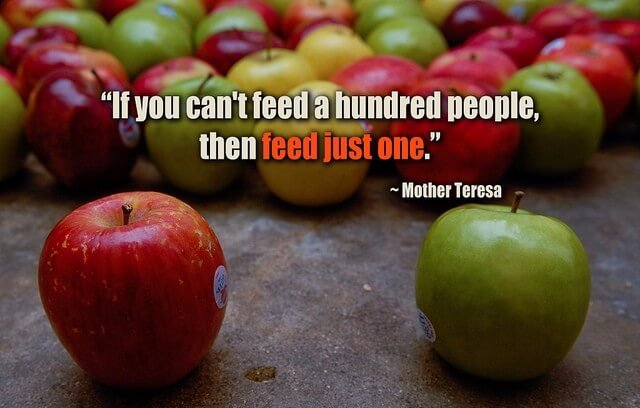
The great thing about serving others is that we never now how our support may impact their lives.  It might be a small act of kindness on our part, but could mean the world to the person on the receiving end.  Take a local soup kitchen for example.  They contribute their time to feed and comfort people that would otherwise go hungry.

feed hundred people mother theresa

Mental Health America (formerly the National Mental Health Association) writes an article that supports this concept:

“Research indicates that those who consistently help other people experience less depression, greater calm, fewer pains and better health. They may even live longer.

Consider some recent research:

  • Students who performed five acts of kindness a day increased their happiness
  • Providing emotional support to others significantly decreased the harmful health effects of certain kinds of stress among older people
  • People who donated money to charity got a boost in a feel-good part of the brain, as revealed in brain imaging research
Doing Good Can Make You Feel Good.  It might:
  • remind you that you’re relatively lucky
  • help you feel needed and effective
  • make you feel connected to others
  • take your mind off your own worries for a while
  • make you feel generous
  • add a sense of purpose and meaning to your life”
There are many ways you can volunteer, some of which take only a small investment of time.  Another important reason the Forte Strong family gives back to our community is that it provides more opportunities for our students.  Those dealing with failure to launch will find it much easier to talk to someone whom they’ve met, who has seen them work, and already has an idea of their potential.  These networks can and do lead to jobs, internships, leadership positions and many other opportunities which will help them succeed.  At Forte Strong we all do our part to help make OUR world a better place!  🙂


-The Forte Strong Family

About the Author

Matthew Arrington grew up in Southern California and has a deep fondness for the ocean and water in general. He’s lived in most of the western united states and attended school in Oregon, where he earned a few degrees in business including, marketing, leadership and organizational management and a Masters in Business. Matt has a huge passion for working with young men to increase their chances of success and credits his current success to the many positive male role models that helped him grow into manhood.