3 Ways to Help Your Son Achieve Independence: Part 1

growing up is too time consumingIn this day and age parents often find themselves at a total loss as to how to help their son achieve independence. In fact most Americans today measure independence in terms of financial security. Let us begin this discussion of achieving independence by clearly defining what it means to be ‘independent’. Is independence about owning or having things like a job, a car and money or does it represent specific steps toward adulthood like moving out of the house and paying bills? Though both of the above mentioned items are associated with independence, by no means does it define it. Over the years it has become increasingly more apparent to me that this sacred word is beginning to lose its true meaning and as a result its inherent value has been greatly diminished. I believe this epidemic of young Americans who are choosing to move back home to escape the woes of life will only worsen as society slips further and further away from the true meaning of independence. More and more frequently ‘independence’ is seen as an achievement or a milestone rather than what it truly represents… skill.

That’s correct, ‘independence’ at its core is a set of skills first and foremost. It’s in learning, applying and understanding these skills that we become more powerful and more capable of navigating through the storms of life that would otherwise blow us off course or sink us. The two most important and crucial skills of all are ‘problem-solving’ and ‘resiliency’. Being independent is more than dollar bills or even paying bills. It’s about being able to find a way when known exists (problem-solving) and having the ability to get back up after you get knocked down (resiliency). The sooner parents can begin to see independence for what it truly is (a set of skills) the faster parents  can regain control of their situation, take appropriate action and help empower their son.

This deep shift in how our current culture views and perceives independence (moving out, attending college, being employed, paying bills, etc) has caused many parents to become confused as to what went wrong with their son. Parents begin to wonder how their son could have ever fallen off course so drastically when he seemed to show all the signs of an independent young man after moving out, attending school or finding a job only to return home a few months later.

As parents you are fully aware of what lies ahead for your children who are trying to find their place in life. We are fully aware of the curves, corners, ups, downs, zig-zags and the myriad of unknowns that are always present these days. What we are not aware of is that our children are not as prepared as we might think and are not yet ready to meet these problems, obstacles, set-backs, and threats head on because they don’t possess the skills to do so. safe harbors quoteInstead these young adults retreat to the safe harbors of home, vowing never to venture out into the open ocean ever again. If your son has a job, has money, and can pay his own bills but doesn’t know how to adequately problem-solve or does not possess even a small measure of resiliency, then he is unprepared for the rigors of what lies ahead and therefore should not be considered as being independent. The above mentioned situation may depict an independent young man, but below the surface we begin to see the situation for what it really is, a dependent young man merely living an independent lifestyle.

I hope this post has given you new perspective on what it means to be truly independent. In my next post we will explore 3 techniques you can use to help your son achieve independence. Tune in next week for Part 2 of our series 3 Ways to Help Your Son Achieve Independence or better yet, subscribe to our weekly posts to receive informative and relevant tips on how to help and empower your son to achieve independence.


About The Author

Brook Price dedicated himself to helping others early in his life. He grew up in Sunny Orange County California, then joined the Marine Corps at the age of 21 serving five and half years as a helicopter crew chief and then as chief accountant. His journey with this type of work began when he volunteered as a Young Marines Instructor during his time in the Marines, helping kids get off the street, improve their lives and develop as a leader. After his tour Brook left the Marines to pursue a career in experiential therapy by attending Southern Utah University where he majored in outdoor recreation with a minor in psychology.

Brook has seventeen years experience working for a variety of different therapeutic and transitional programs across the nation. His thirst for knowledge drove him to learn and study successful therapeutic models and programs across the country, most notably Outward Bound. Brook has experience working with therapeutic, residential, military, wilderness and transitional programs for adults and adolescents.

You can also find me on

Failure to Launch: Focus on the Problem

grow upOver the years many parents have asked us what they can do to get their son who is struggling with failure to launch, out of the house and on their way to becoming independent.  Usually at this point parents are at their wits end and are confused as to what they may have done wrong and often ask themselves why their son doesn’t have a job, a social life or any motivation to move out on his own.  These are just a few of the many ‘side-effects” that parents often experience when dealing with a son who is experiencing failure to launch syndrome.


Giving him a free handout is not the answer

As a parent of a stay-at-home adult it can be extremely taxing when your son has no job or worse, no motivation to go out and get one. At this point parents are desperate and begin to focus on the symptoms rather than the root of the problem. As a result parents feel their only option is to literally do the work themselves by going out and finding their son a job. Often this involves parents handing their son an easy yet well-paid job working for the family business or asking friends and family if they wouldn’t mind sharing the risk of hiring an unmotivated, disinterested and unreliable employee as a favor. Finally he has a job! There’s often a slight improvement at first but as time goes on it becomes more and more apparent that the real underlying issue is still looming. Before long he begins to take the job for granted, shows up late or not at all, and performs at such a mediocre level that he’s eventually fired and is back at the same place he started… in his room.

This is an all to common scenario these days and ultimately results in parents feeling defeated and resentful in the end. Save yourself the headache and do things right from the beginning by focusing more on the problem and less on the symptoms. The more you practice the better you’ll get at identifying and addressing the real issue.


Failure to Launch Syndrome:

you’ll need more than just a few aspirin

To look at this from a different perspective, let’s use the analogy of a young man experiencing severe appendicitis.  How would he feel?  What would be his symptoms? His symptoms would probably include abdominal pain, diarrhea,  fever, chills, constipation, nausea or a combination of  these things.  Let’s also assume that this young man was unaware he was experiencing appendicitis and decided instead to reach for a few aspirin, an ice pack, and some much needed rest. Has this young man solved his problem? Of course not. The pain may have dissipated for a time but because the root issue was never addressed the pain will undoubtedly return again. In fact, his condition may even get worse or even become life threatening. The same can be said when dealing with a young man who is struggling to launch and achieve independence. That sad truth is this… very little improvement will be made with your son as long as the focus is on the symptoms and not on the root of the problem.

weed control

Treat it like a weed and get to the root of the problem!

May I give you another analogy? We can also look at this is from a gardening perspective. We all know that if we cut a weed down, it will only grow back.  It’s the roots of the plant that needs to be addressed.  What is the core reasoning behind this sedentary lifestyle for boys who are experiencing failure to launch?  Some say its depression, others say its pornography and yet others point the finger at video game addiction, often it’s a combination things, some of which I’ve already mentioned, but all of which usually point back to the root of the problem, low self-esteem and a severe lack of self confidence.  When parenting your adult son, try to approach this delicate situation from a different perspective and you’ll begin to discover the real underlying causes as to why he’s experiencing failure to launch, only then can long-term solutions be introduced.

Best,

The Forte Strong family


About The Author

Brook Price dedicated himself to helping others early in his life. He grew up in Sunny Orange County California, then joined the Marine Corps at the age of 21 serving five and half years as a helicopter crew chief and then as chief accountant. His journey with this type of work began when he volunteered as a Young Marines Instructor during his time in the Marines, helping kids get off the street, improve their lives and develop as a leader. After his tour Brook left the Marines to pursue a career in experiential therapy by attending Southern Utah University where he majored in outdoor recreation with a minor in psychology.

Brook has seventeen years experience working for a variety of different therapeutic and transitional programs across the nation. His thirst for knowledge drove him to learn and study successful therapeutic models and programs across the country, most notably Outward Bound. Brook has experience working with therapeutic, residential, military, wilderness and transitional programs for adults and adolescents.

The Boomerang Generation: Kids That Won’t Leave Home

boomerang kidsIt’s becoming increasingly clear why experts are beginning to call this ‘the boomerang generation.’ Now more than ever society is beginning to see a huge shift in the age of independence when young men and young women are expected to leave home and start their own lives. Unfortunately, it doesn’t take long before these sons and daughters are quickly returning home to Mom and Dad vowing to never venture out into great unknown ever again. Parents are beginning to see their sons quit or be fired from their job or multiple jobs, quit or fail out of school or leave a romantic relationship to pursue something less committal, less challenging and well… more easy.


The consequences of having no consequences

More and more young men are choosing the easy route… they quit, they give up, they throw in the towel. But what about the consequences you ask? Are there not inevitable consequences as a result of making such decisions? Good question. The fact is, there usually aren’t any consequences; and that is part of the problem. Consequences are a vital part of how we learn and grow and without them learning cannot take place and growth is thwarted.

A consequence is defined as “A result of an action or condition.”  Part of the reasoning behind why so many young men choose to return home is that it becomes a safety blanket of sorts.  They know they will be able to escape the consequences of their choices if they come home to a quiet room, where they don’t have to interact with peers, teachers, employers or anyone that might make them anxious. This is what we have come to know as Failure to Launch.


The reason why kids won’t leave home

While at home many if not all of these young men’s basic needs are being taken care by Mom and Dad. Food is provided for him at no charge and even in some cases, housekeeping! In many cases his bills are also paid for by Mom and Dad to include insurance, gas, cell service and maybe some spending cash every now and then. If young men are to learn to be truly independent, they must first face the consequences of their choices! They must first understand that life is not a free ride… it takes effort. The more effort the better the outcome. For things to change it will first involve Mom and Dad setting some serious boundaries and taking corrective measures. The longer parents wait to draw these boundaries the harder it becomes for both parents and children.


Helicopter parenting can inhibit social interaction

helicopter parentingParents may also be involved in over-protective parenting, doing everything possible to shield their son from heartache, loss, risk, and embarrassment. This is also known as helicopter parenting which is detrimental to any child who is transitioning into young adulthood. When mom or dad don’t maintain healthy boundaries and can’t keep their paternal instincts at bay the result is what I call the “silent killer”. Rescuing is the silent killer because parents don’t often see the devastating effects of helicopter parenting until it’s too late. When young men are rescued and coddled, they begin to lose their sense of identity as well as their confidence. Without intervention, it doesn’t take long before a once capable young man begins to avoid and shy away from what was once healthy and normal social encounters. If allowed to continue, social interactions at almost every level become uncomfortable and even family functions are avoided. But all is not lost. It’s never too late for parents to take action and begin to change things around for the better for both them and their family, but its not easy. It takes the right guidance, training and a lot practice for parents to learn how to empower their son to change and grow but it is possible. In time he’ll have the confidence to ask his professor for help in class or be able to confront a roommate about dirty dishes or even express his deep feelings toward a love interest.

These are all things that take effort, time and practice and can only be learned in an environment of natural and logical consequences. If parents take away the opportunity to allow their son to grow from his own decisions (even poor ones) they are hindering and stifling his development into becoming a confident young men. Natural consequences is a great teaching tool if parents take a few steps back and let them happen as intended… naturally.

The first thing all parents must understand is that their son is fully capable of not only achieving complete independence but becoming a successful, purpose-driven and a self-directed young man. So remember, when your son is struggling in life, the best things you can do is set healthy boundaries, let natural consequences happen unimpeded and express confidence in your son’s ability to solve any problem that comes his way. You have the power to help your son rise above this boomerang generation and become so much more. It’s never too late.


About The Author

Brook Price dedicated himself to helping others early in his life. He grew up in Sunny Orange County California, then joined the Marine Corps at the age of 21 serving five and half years as a helicopter crew chief and then as chief accountant. His journey with this type of work began when he volunteered as a Young Marines Instructor during his time in the Marines, helping kids get off the street, improve their lives and develop as a leader. After his tour Brook left the Marines to pursue a career in experiential therapy by attending Southern Utah University where he majored in outdoor recreation with a minor in psychology.

Brook has seventeen years experience working for a variety of different therapeutic and transitional programs across the nation. His thirst for knowledge drove him to learn and study successful therapeutic models and programs across the country, most notably Outward Bound. Brook has experience working with therapeutic, residential, military, wilderness and transitional programs for adults and adolescents.

Learn to Earn! Focus on Career Specific Goals

Many a struggling young adult has been confused about defining a career path. There are so many career choices out there, how can a young adult focus on getting into the industry that excites them and allows them to make a living doing what they love? The truth is, the earlier one can start on their career path, the better. Is it ever too late? No. But having the right approach can make a big difference.


Learn to Earn: More than knowledge, it takes action

intel-logoA recent study conducted by the Morrison Institute for Public Policy suggests that the earlier youth can define what they want to do, the more likely they are to become successful in their desired field. For example, a high school diploma used to be the standard level of application required to start at a company like Intel, but now, if you don’t have at least two years of post secondary education, you’re not likely to get your foot in the door. Knowing how times have changed and the job requirements needed for a specific career field can help youth get into the right places at the right times. But it takes more than just knowledge and know-how to get the job of your dreams… it takes action!


Learn to Earn: It all begins at home

If your son already has job but can’t seem to But you may be asking yourself, “But my son doesn’t take action with much of anything except for playing video games!” This rings true for many parents who have a young man at home who is struggling with failure to launch. So how do you get your unmotivated and complacent son to take action? First and foremost you must… let me repeat myself… must change the environment. To learn more about how to change the environment at home to foster change, read Independence: It Begins at Home. Once the environment has changed, whether at home or abroad, your son will begin to take action and once he takes action, it’s important he be given the right guidance through consistent and positive (male) modeling and plenty of opportunities to practice, practice, practice.


Learn to Earn: Get him involved in the process

job-applicationAt Forte Strong we practice the fundamentals of successful modeling every day, coaching our young men with a ‘can-do’ mentality while providing them with unique opportunities to practice what they see and learn. In essence, we teach by doing. With that said, it’s imperative that young men have positive male role models and mentors to model after. Dads, you can help your son by getting involved in the process. If your son is struggling to get a job, find out what he knows and what he doesn’t. If he doesn’t know how to get a job application, show him. Get in the car and go get one and have him watch you do it. Show him how easy it is and make it fun. You’ll be surprised at the impact such a small act can make. Not only are you modeling how to get a job but you are modeling what it means to be a Dad. I can’t emphasize enough how important modeling is for parents. It’s an extremely powerful tool for change if used correctly.

Learn to Earn: Let your purpose guide you

Studies consistently show that when a person outlines their career goals, their focus narrows and they are more likely to become successful in their career AND thus more likely to continue to set benchmarks and high goals that they’ll want to continue to achieve. For  some young men, knowledge and experience is not the main problem but rather a lack of ‘purpose.’ This is where Forte Strong really shines! We’re able to connect their academic studies with each of their personal strengths (Confidence Resume™) and then help them apply this powerful combination toward “real life” applications. We help these young men figure out what they want to do, why they want to do it and what actions they need to take to propel them forward. They key is to help these young men discover a career that is inline with their purpose. Our goal is to give our students the most opportunities to succeed in an environment built upon choice, challenge and most of all purpose. Isn’t it about time your son Learn to Earn?

Best,

The Forte Strong Family


About The Author

Brook Price dedicated himself to helping others early in his life. He grew up in Sunny Orange County California, then joined the Marine Corps at the age of 21 serving five and half years as a helicopter crew chief and then as chief accountant. His journey with this type of work began when he volunteered as a Young Marines Instructor during his time in the Marines, helping kids get off the street, improve their lives and develop as a leader. After his tour Brook left the Marines to pursue a career in experiential therapy by attending Southern Utah University where he majored in outdoor recreation with a minor in psychology.

Brook has seventeen years experience working for a variety of different therapeutic and transitional programs across the nation. His thirst for knowledge drove him to learn and study successful therapeutic models and programs across the country, most notably Outward Bound. Brook has experience working with therapeutic, residential, military, wilderness and transitional programs for adults and adolescents.

Lets make some mistakes!

Something that we talk about with failure to launch young men are the benefits of making mistakes.  Some struggling young adults are too scared to make a mistake which prohibits them from actually stepping outside of their comfort zones to try new things in life.  After all, society tells us that making mistakes are bad, right?

The online definition for mistake is “An error in action, calculation, or judgment, caused by poor reasoning, carelessness, insufficient knowledge, etc…”  Although this may be true in some cases, without affording ourselves the opportunity to make mistakes we inhibit ourselves from using a huge learning tool from our experience tool belt, so to speak.


Making mistakes = Learning

Diana Laufenberg, an experienced and prestigious Philadelphia high school teacher and a loud advocate for ‘learning by mistake’ was invited to present her unique ‘learning by mistake’ teaching platform at the 2010 TedTalks summit and her presentation has received over 1,000,000 views to date. Diana reiterates again and again how important mistakes are to the learning process and is quoted,

We deal right now in the educational landscape with an infatuation with the culture of one right answer that can be properly bubbled on the average multiple choice test. I am here to share with you, it is not learning.

Many children as they grow up often associate making mistakes to failure.  If you think this way, you couldn’t be more wrong!!  Making mistakes helps us to rethink, refine and refocus our efforts.  Think of mistakes as a sort of “checks and balances” in the learning process.  How many times do we make a mistake, and go through the consequences of it, and tell ourselves after all is said and done, “I’ll never make that mistake again!”  And the fact of the matter is, we usually don’t!  As a result our experience, wisdom and ability to make better decisions grows. Lets look at a few interesting things that would have never happened without making mistakes.


  • the light bulb (thanks to Thomas Edison and his over 1,000 “mistakes”)
  • chocolate chip cookies
  • cornflakes
  • the pacemaker
  • vulcanized rubber (thanks to Charles Goodyear)
  • radioactivity
  • plastic
  • penicillin

Making mistakes = Confidence

learn-by-making-mistakesThe reason why most young men who struggle with failure to launch don’t experience much success is not from a lack of intelligence or skill, it’s from a lack of confidence. Confidence is gained through small victories and small victories is a result of wise decision making and wise decision making is a result of learning from our mistakes.

That is the absolute wrong thing to ask, to tell kids to never be wrong. To ask them to always have the right answer doesn’t allow them to learn.

99% of the students that we work with on a continual basis were not stuck at home as result of making bad decisions as much as a result of making no decisions. The plain and simple truth is they were afraid of failure. Afraid of making mistakes, so they make the biggest mistake of all… they stop trying. So remember to get out there and make some mistakes!  Try, do, attempt, experiment and learn!  Because the worst mistake that anyone can make, is being too afraid to make one!

learning has to include an amount of failure, because failure is instructional in the process.

-The Forte Strong Family


About The Author

Brook Price dedicated himself to helping others early in his life. He grew up in Sunny Orange County California, then joined the Marine Corps at the age of 21 serving five and half years as a helicopter crew chief and then as chief accountant. His journey with this type of work began when he volunteered as a Young Marines Instructor during his time in the Marines, helping kids get off the street, improve their lives and develop as a leader. After his tour Brook left the Marines to pursue a career in experiential therapy by attending Southern Utah University where he majored in outdoor recreation with a minor in psychology.

Brook has seventeen years experience working for a variety of different therapeutic and transitional programs across the nation. His thirst for knowledge drove him to learn and study successful therapeutic models and programs across the country, most notably Outward Bound. Brook has experience working with therapeutic, residential, military, wilderness and transitional programs for adults and adolescents.

Achieve Independence: How do I get started?

starting-lineMany of the young men we coach have a strong desire to achieve independence but don’t know where to start. They’re unsatisfied with life and they understand that where they are at now is not where they want to be. They might have an objective in mind but they don’t know where to start.  This can stem from insecurity of not wanting to make a mistake, uncertainty over where to start or even stagnation because of the amount of work involved in meeting that objective or goal. No matter what the reason, a strong support network is crucial to helping these young men spring back and get back into the game of life.

Support is crucial to long-term change

How helpful is it to have the proper support when one is reaching a goal or objective? Unconditional support is absolutely necessary to a struggling young adult’s success, and that is exactly what we at Forte Strong provide. Support when a day is hard, when things get confusing, when there is doubt and unsurity. Support and confidence that one has the capability to make things happen for themselves, support and guidance on how to go about doing something that one has never attempted or accomplished before. Having support (much like a guarantee or warranty when purchasing something) is comforting and is crucial in the learning process.

Make some mistakes and gain valuable experience

Mistakes actually need to be made so that objectives can be rethought, refined and refocused.  Without mistakes there is no growth. How did you learn to walk or ride a bicycle or pretty much do anything in life? Exactly… through mistakes. Making mistakes is a part of life, and making a mistake by no means equals failure which we talk about in more detail in our post titled, Lets make some mistakes! Parents, if you look at mistakes as something that should be avoided or frowned upon then your son is going to do just that avoid them.

Take the first step and the rest will follow

mountain-climbing-quoteThe main thing that we coach our students on at Forte Strong is to simply take the first step.  We call it the mountain principle, which you may have heard before.  To answer the question, “How do you climb a mountain?”  The answer is simple.  One step at a time. 99% of the time the hardest part of the journey is taking that first step. Its very rewarding to see our students who are hesitant, take that first step and then realize, much to their surprise, how easy it was! It makes the rest of the journey not seem so daunting and insurmountable. The first step often turns into a few more steps which then turns into momentum, the ultimate goal! Momentum is where change, growth and progress happen at a more accelerated  and long-term pace which is exactly where you want your son to be. Although this ideology might seem a bit basic, it is solid advice. The most important thing is that you’re moving forward.

Quick Summary

So the next time you look at that ever-so-scary mountain lying ahead of you, replace fear with confidence. Take one step, look back at your support team, and take that next step! With the right guidance, in the right environment, with the right support your son can achieve independence and so much more. It always starts with that first step.


-The Forte Strong Family


About The Author

Brook Price dedicated himself to helping others early in his life. He grew up in Sunny Orange County California, then joined the Marine Corps at the age of 21 serving five and half years as a helicopter crew chief and then as chief accountant. His journey with this type of work began when he volunteered as a Young Marines Instructor during his time in the Marines, helping kids get off the street, improve their lives and develop as a leader. After his tour Brook left the Marines to pursue a career in experiential therapy by attending Southern Utah University where he majored in outdoor recreation with a minor in psychology.

Brook has seventeen years experience working for a variety of different therapeutic and transitional programs across the nation. His thirst for knowledge drove him to learn and study successful therapeutic models and programs across the country, most notably Outward Bound. Brook has experience working with therapeutic, residential, military, wilderness and transitional programs for adults and adolescents.

Find some motivation!!!

Parents, especially successful parents are baffled as to why their child can’t seem to find the motivation to get a job or even get out of bed, while other parents believe their child has been dealt a bad hand because of the economy or their ex-husband or their child’s depression, anxiety or lack friends. I’d be a hypocrite if I said I didn’t believe that same lie at times. Maybe it’s time to think differently. What happens when we turn that kind of negative thinking on it’s head? When we begin to think differently about our situation? Are you ready to change your mindset?

Watch the video below and then ask yourself whether you believe your life is controlled by fate or by choice… I dare you.

Get Motivated… not tomorrow, but right now!

Pep talk warning! (Yes..we do that from time to time)  Yes, I’m sure that video is hard to swallow, especially if you once thought like me, believing the world was against you and there was no way out. It’s been said that we create our own reality; if that’s true, whose to blame?  We always hear about how important it is to be motivated, and the crucial role that motivation plays in our ability to be confident, accomplish goals and succeed.  In fact, most of the individuals we talk to that have sons experiencing failure to launch stress how truly unmotivated their sons are.  So what do we do when we are not feeling motivated?  How can we get back on track?  Be more optimistic?  Forte Strong has a list of 10 easy things he can do to unlock his potential and get back into the game of life.  These tips may help if you find yourself in a bit of a rut.  The weird thing is that some of these tips may be so basic that we sometimes forget how important they really are in creating change.

So first, we need to make sure we’re doing the simple things.  Take sleep for example.  How are you going to feel if you do not get adequate rest?  Miserable of course. Studies prove that not getting enough rest can make you feel depressed, lethargic, unproductive, weak and even make you more prone to developing illnesses!  So make sure you’re taking care of the basic and simple things so you can find the motivation and accomplish your goals!

The biggest piece of motivational advice I give to parents is this, the most important thing you can do to better your life is to simply “show up”.  You’ve heard the term “fake it ’till you make it”? For the most part it’s true. We’ve found in our coaching that it does actually works.  Even if we don’t feel like going to school, work, the gym etc…, if we can just “show up”, chances are we will begin to slowly gather the motivation we need to become productive, especially when it becomes habitual.  The smartest most successful people in the world have a routine they follow each day, just like your son or daughter has their routine they follow every day. I bet if you compared those routines side by side you would see a big difference. My guess is that your son or daughter doesn’t always show up, whether that’s for work, school or at home. Showing up is literally 50% of the equation because if we are there, then we are more likely to make things happen.  So remember, attendance counts (even if at first nothing gets accomplished).

The last recommendation is to plan.  There are too many slogans out there to list that deal with the importance of planning. Ie.. fail to plan and you plan to fail, proper planning prevents poor performance, and the list goes on.  The core motive behind planning is that if a task is important enough to plan, it is important enough to accomplish.  And if we are accomplishing tasks on a regular basis, our follow-through improves.

So, to recap:

1. Do the simple things.  

2. “Show up”  

3.  Plan

These three easy things are not a cure-all, but they will get you started and your chances of success increases dramatically!  Check back soon for more great info on how you can help your son build the motivation he needs to unlock his potential, move out of the house and achieve independence!


About The Author

Brook Price dedicated himself to helping others early in his life. He grew up in Sunny Orange County California, then joined the Marine Corps at the age of 21 serving five and half years as a helicopter crew chief and then as chief accountant. His journey with this type of work began when he volunteered as a Young Marines Instructor during his time in the Marines, helping kids get off the street, improve their lives and develop as a leader. After his tour Brook left the Marines to pursue a career in experiential therapy by attending Southern Utah University where he majored in outdoor recreation with a minor in psychology.

Brook has seventeen years experience working for a variety of different therapeutic and transitional programs across the nation. His thirst for knowledge drove him to learn and study successful therapeutic models and programs across the country, most notably Outward Bound. Brook has experience working with therapeutic, residential, military, wilderness and transitional programs for adults and adolescents.

Becoming a Leader

Many people stress the importance of being a good leader.  But where does it start?  Are good leaders born or trained?  Whats the secret formula to becoming a good leader?  Many different people rise in the ranks of leadership through different paths, but at Forte Strong we teach our students the fundamentals of leadership.  Leadership starts inside and it is important to understand oneself before they can be an effective leader to others.

Dr. Nancy Huber, author of the book Leading from Within suggests four leadership traits (choices) that are essential to a leader:
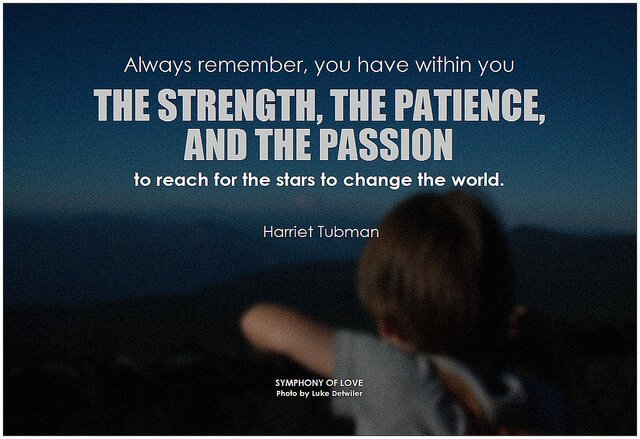
strength patience passion
Passion – Purpose and passion go hand in hand. To be an effective leader, you must first care. When you care deeply, you have a passion that is more than simply the spark that gets you started, it is the fire inside that will sustain you. It is a commitment so compelling that your whole self — body, mind, and spirit — are engaged. Passion is not the same as a single-minded determination to get what you want or to create the changes you think should be made. Rather, passion for a higher purpose is characterized by an openness to possibilities and the innate belief that people want to work together to create the best future imaginable. Passion plus possibilities gives you courage!


Authenticity – To be authentic is to be genuine. From my perspective, this means being who you are, all the time. To be authentic frees us to be everything we were meant to be! We admit our shortcomings to ourselves, recognize our strengths, and live who we are. When someone feels the need to behave in a particular way while at work and not be the person they know themselves to be at home or with friends, something has to give. The result is either an implosion or an explosion of the self. I believe that much of the disconnectedness we sometimes feel grows out of a need for authenticity. We long for genuine, trustworthy interaction where we live and work, and we experience fulfillment when our relationships with others are honest, grounded in the truth of who we are.


Credibility – If you are to have credibility, you must do what you say you will do. Your reputation as a credible person develops as a direct result of the trust others have in you to follow through, acting on what you have committed yourself to do. From my perspective, credibility begins with being authentic and is manifested in the actions you promise AND deliver. It is being accountable for what you say you will do. Whereas authenticity is grounded in personal integrity, credibility is grounded in interpersonal integrity.


Ethics – Ethical leaders have at the center of their belief system a high regard for human worth and dignity. They make decisions and take action in accordance with these deeply held values and beliefs. Service to others and a commitment to the greater good for more people is the essence of what it means to be ethical. Being ethical is a choice you make when passion, authenticity, and credibility are aligned with a belief system which is grounded in service to the global community.”

We coach our students to understand themselves and be comfortable in their own skin.  By understanding who they are, they’re able to communicate more effectively, make sound decisions, be an example to others and accomplish difficult tasks on their own. Being a leader is not something that only the few possess. It can be learned, developed and honed. Click Lead the Way to find out how.

-The Forte Strong Family


About the Author

Matthew Arrington grew up in Southern California and has a deep fondness for the ocean and water in general. He’s lived in most of the western united states and attended school in Oregon, where he earned a few degrees in business including, marketing, leadership and organizational management and a Masters in Business. Matt has a huge passion for working with young men to increase their chances of success and credits his current success to the many positive male role models that helped him grow into manhood.

Failure to Launch? Build Your Self Esteem!

One of the biggest things we see when dealing with the failure to launch epidemic is a correlation with low self esteem.  This is not always the case though.  Sometimes we see confident, bright young men just taking advantage of a good situation free of rent, utility, & food payments.  But lets say you fall into the first category, low self esteem.  It is not unusual to see good but shy young man afraid to leave the nest as result of being a tad unsure of themselves.  This is a normal situation that most have felt at some point or another during their transition into adulthood.

On top of all of that, society bombards these young men with the lives of the so-called “successful”;  movie stars, music artists, pro athletes and other elite lifestyles that they are expected to become if society is to deem them as successful.  The media tends to saturate us with ideas that inform us in a not-so-subtle manner that if we don’t meet certain criteria we are falling behind.  This can contribute to feelings of inadequacy in young men.  Dr. Barbara Becker Holstein, author of the book The Enchanted Self believes that “…each person has to document his or her own positive talents and strengths.”  Dr. Holstein further explains that what society tells us and shows us “… are external measures. Each of us needs to develop a sense of self-worth, a capacity for positive self-regard that comes from within.”

confidence

So how do we go about building one’s self esteem?  As we mentioned in a previous article, this can be done in a variety of ways.  At Forte Strong, we believe that the first step is to understand what one’s strengths truly are.  Our students receive a strength assessment upon arriving that is then used to build what we call a “Confidence Resume®”.  One of the important features this Confidence Resume® provides our students is a detailed list outlining and describing the unique talents and strengths that are particular to them.  This vital tool is then used to give them a clear understanding of what strengths and talents they can apply every single day to accomplish their goals, no matter how big or how small.  The Confidence Resume® is also used as a safety net of sorts to help prevent young men from spiraling into a depression when they become discouraged.  So, you didn’t get that job, that raise, that position… so what! Those things don’t define you nor do they decide your worth. Instead, we take a different approach… we take a step back, we see the situation for what it is and we revisit their Confidence Resume® reminding them once again of their potential!  This approach has been very effective at reestablishing the confidence and positive outlook these young men need to bounce back from the disappointments of life.

Remember, a clearer understanding of your strengths equates to a higher degree of self-esteem, self-respect and self-confidence which ultimately translates into success.  This is what we do at Forte Strong.  It may take time, but we can help you get there!


About the Author

Matthew Arrington grew up in Southern California and has a deep fondness for the ocean and water in general. He’s lived in most of the western united states and attended school in Oregon, where he earned a few degrees in business including, marketing, leadership and organizational management and a Masters in Business. Matt has a huge passion for working with young men to increase their chances of success and credits his current success to the many positive male role models that helped him grow into manhood.

Help Yourself by Helping Others

A large part of the Forte Strong program involves helping others.  Volunteering, community involvement, service, providing aid, etc…  There are many different terms for serving those in our community.  To understand why this is such an important aspect of our lives, or why it should be important, lets look at a local service capacity that you might be familiar with; your local fire station.  If you live in a smaller or rural town, chances are your fire response team is comprised of a group of local volunteers.  Although they might receive training from the state or federal govt. free of charge, it’s to assist their local community through hours of training and take time away from their own busy schedules.  You might not think this is a big deal…until your house catches on fire.  Think of how grateful you would be if a group of volunteer firefighters showed up at 3:00am in the morning to save you, your family and your possessions from harm!

The great thing about serving others is that we never now how our support may impact their lives.  It might be a small act of kindness on our part, but could mean the world to the person on the receiving end.  Take a local soup kitchen for example.  They contribute their time to feed and comfort people that would otherwise go hungry.

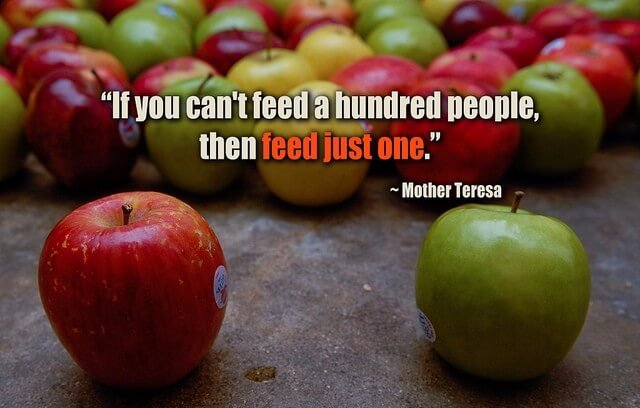
feed hundred people mother theresa

Mental Health America (formerly the National Mental Health Association) writes an article that supports this concept:

“Research indicates that those who consistently help other people experience less depression, greater calm, fewer pains and better health. They may even live longer.

Consider some recent research:

  • Students who performed five acts of kindness a day increased their happiness
  • Providing emotional support to others significantly decreased the harmful health effects of certain kinds of stress among older people
  • People who donated money to charity got a boost in a feel-good part of the brain, as revealed in brain imaging research
Doing Good Can Make You Feel Good.  It might:
  • remind you that you’re relatively lucky
  • help you feel needed and effective
  • make you feel connected to others
  • take your mind off your own worries for a while
  • make you feel generous
  • add a sense of purpose and meaning to your life”
There are many ways you can volunteer, some of which take only a small investment of time.  Another important reason the Forte Strong family gives back to our community is that it provides more opportunities for our students.  Those dealing with failure to launch will find it much easier to talk to someone whom they’ve met, who has seen them work, and already has an idea of their potential.  These networks can and do lead to jobs, internships, leadership positions and many other opportunities which will help them succeed.  At Forte Strong we all do our part to help make OUR world a better place!  🙂


-The Forte Strong Family

About the Author

Matthew Arrington grew up in Southern California and has a deep fondness for the ocean and water in general. He’s lived in most of the western united states and attended school in Oregon, where he earned a few degrees in business including, marketing, leadership and organizational management and a Masters in Business. Matt has a huge passion for working with young men to increase their chances of success and credits his current success to the many positive male role models that helped him grow into manhood.