What is Peter Pan Syndrome

Peter Pan Syndrome is a disorder in which individuals are unable to grow into maturity. While they physically grow up, they continue to hold onto childhood tendencies instead of taking on adult responsibilities.

People with this syndrome are essentially stuck in their childlike ways and refuse to grow up. A psychologist Dan Kiley, who published a book in 1983 called “The Peter Pan Syndrome: Men Who Have Never Grown Up,” first popularized this term.

Peter Pan Syndrome, also known as “Peter Pan Complex” or “Failure to Launch Syndrome,” is not clinically diagnosable in the Diagnostic and Statistical Manual of Mental Disorders (DSM-5); however, published evidence supports this condition that people struggle with. It is often exhibited by males but is not exclusive to men.

Forte Strong is a nation life coaching, therapy, and independent living program dedicated to treating men with Peter Pan Syndrome and a variety of other challenges that contribute to it. Coaches and therapists in the program have also treated men for social anxiety, avoidant personality disorder, depression impulsivity, defiance, ADHD, low self-esteem, video game addiction, and other dependency issues that hold them back.

Labeling someone as “Peter Pan”

You may know someone who exhibits signs of not having a desire to grow up. You may notice it with a co-worker, a friend or a loved one. You should first understand what you mean when you describe someone with Peter Pan Syndrome. The following are a few example questions that may resonate with you if you have someone in your life who you believe has the disorder.

Are you frustrated by his lack of emotional, social and mental development?
Do you feel that the attribute that you initially found attractive in your partner is now causing you to feel like he’s not responsible enough, such as a laid-back and fun-loving personality?
Do you feel like sometimes you are talking to a teenager rather than a grown-up when you having a conversation with them about their feelings or future?
Do you find their behavior to be immature, irresponsible and unreliable?
Do they have child-like reactions to things you say about their behavior, and you feel like you have to work extra hard to then comfort them?

Signs and symptoms of Peter Pan Syndrome

Symptoms of the disorder include behaviors you may expect from a child, and when confronted, the individual may be resistant and deny the behavior.

Due to the fact that it’s not clinically defined as a disorder, it may be hard to define someone with this disorder. Not everyone who exhibits one or a few of these behaviors will have Peter Pan Syndrome. It’s important to seek professional help if you notice these symptoms in yourself or someone you love to determine the root of the behaviors you note.

The following are potential symptoms of Peter Pan Syndrome:

Low motivation/lack of interest in work
Commitment issues
Substance abuse (drugs or alcohol)
Unreliable
Emotional instability
Lack of accountability and blaming others
The expectation for others to take care of them
Procrastination
Refuses to take constructive criticism
Struggles to get or keep jobs
Cannot manage finances on their own
Refuses to leave their childhood home
Prioritizes fun activities over adult responsibilities
Befriending children instead of individuals their age

The following are possible causes of the disorder:

Permissive parenting

Parents who allow their children to do whatever they choose to with minimal consequences are known as a permissive parenting style. It involves a lack of boundaries, expectations and rules. It leads to children yielding an entitled and unrealistic mentality when entering adulthood.

Overprotective parenting

On the other end of the spectrum is being too overprotective of your children. “Helicopter parenting,” as it is more popularly known, implies to children that the outside world is dangerous and they shouldn’t venture it alone. Children who grow up in a household like this may become overly attached and insecure; they may not develop the mentality or skills they need for a successful transition into adulthood.

Anxiety

Individuals who struggle with anxiety can have a more difficult time transitioning to adulthood. They may feel like they are left to fend for themselves to tackle life decisions, support themselves and others, and commit to employment. It can be more difficult for a person who struggles with anxiety to venture adulthood on their own, especially if the individual starts exhibiting these feelings near the end of adolescence.

Loneliness

Individuals who feel lonely by being forced into adulthood can lead them to regress into an earlier stage of life (childhood) in an effort to feel supported and loved again. It can be similar to feelings of anxiety that makes the individual want to avoid adult responsibilities and remain in their childlike ways for longer.

Fear of commitment

It is common for individuals with Peter Pan Syndrome to fear commitment, whether it be in a romantic relationship, at work or buying a home. Rather than taking chances, they choose the safe option of not committing to anything.

Narcissism

Individuals demonstrating narcissistic behavior believe they are entitled to “royal” treatment by others. In their minds, they are the only thing that matters, and they will manipulate others to get what they believe they deserve.

Enabling behavior

Peter Pan Syndrome only continues if another person, most likely loved ones, enable the behavior of the individual. By allowing their irresponsible and childish behavior to continue, the individual gets stuck in their ways.

Mental health diagnosis

The legal age for becoming an adult and leaving on your own is 18 years old. If someone is not independent by then and ready to move out of their childhood home, it creates a feeling of shame. If this is gone untreated, the feeling can result in a mental health condition, possibly leading to Peter Pan Syndrome or other issues like substance abuse and addiction.

Lack of direction

Not everyone knows what they want to do when they turn 18 and are expected to leave the house and gain an education. People who feel unclear about the direction they should take may find themselves stuck in a childlike state.

Relationship signs

If you’re in a relationship with someone who has Peter Pan Syndrome, you may notice your partner will:

Neglect household chores and childcare responsibilities
Let you plan the activities and make big decisions
Show little interest in planning for the future
Show signs of emotional instability, such as not wanting to label the relationship and make a commitment
Spend money irresponsibly and have trouble with their finances

Work-related signs

People with Peter Pan Syndrome may also struggle with work responsibilities. You may notice they:
Have a pattern of job loss due to lack of effort, tardiness, or skipping work
Make little effort to find a job
Leave jobs frequently when they feel bored, challenged, or stressed
Only take part-time jobs and have no interest in pursuing promotion opportunities
Move between fields of work instead of spending time developing a skill in one area

How to treat Peter Pan Syndrome

If you notice you or someone you love is showing signs of Peter Pan Syndrome, you should first determine the leading cause. Once you have determined this, you can decide whether to continue by yourself, seek help from loved ones, or find a therapist who can help you overcome the disorder.

An individual can overcome this disorder by learning the necessary life skills they need to take care of themselves. Forte Strong is a program that can help with this.

The coaches teach the men both hard and soft skills necessary to live the rest of their lives. The men learn how to cook, clean, and do basic maintenance. They will also learn how to care for themselves by planning and cooking healthy meals, following a hygiene routine, and learning about the importance of physical fitness. The men will learn how to budget their money, find and keep jobs, and set goals.

The men learn social skills, such as how to resolve conflict and effectively communicate, and emotional skills, such as how to manage their anger and stress and regulate their emotions.

The therapists and coaches work closely with the men to discover what skills will be most helpful for them to develop.

Fort Strong uses a 5-step approach in assisting men with Peter Pan Syndrome which goes as follows:

Connects with them to encourage trust, respect, and transparency
Discover their strong behaviors and uncover the motive that drives those behaviors
Coaches them the necessary skills to be successful
Challenges them to commit and gain the experience
Repeat the steps until they gain the skills and confidence to achieve independency

If you decide to pursue a solution as a family, it is crucial to stop allowing the behavior to continue and work toward a healthier and more balanced relationship. If a parent continues to allow their grown child to live at home with them for free, with no job, no motivation to find a job, and possibly struggling with an addiction, they are enabling the behavior, and it will be more difficult to put an end to.


Can the Dog Whisperer Stop my Son’s Negative Behavior? Part 4

LEADERSHIP…

Why it’s so important.

In my last post I talked about LOVE. This week I’m going to focus on the 4th fundamental in changing your son’s negative behavior: LEADERSHIP. Leadership is the last and most essential part of curbing your son’s bad behavior. Why? Because, just like dogs, people follow leaders.

The most important thing that we have to provide every day is that we are the pack leader, that we set the rules, the boundaries and the limitations, and then we love. Most people get a dog because they need somebody to love. So they are going after what they need, not what the dog needs. And that creates instability immediately and the dog sees the human as a soft energy. Dogs don’t follow the lovable leader or the spiritual leader; they follow the dominant one. -Cesar Milan

Of all the fundamentals, leadership has the tendency to be the most elusive and often difficult to put into action as a result of it’s perceived complexity. This is why leadership means so many different things to so many different people. But how does LEADERSHIP apply to parenting, specifically in relation to failure to launch syndrome or what’s being called the Peter Pan Syndrome? Let’s begin by covering a few things about leadership you may already know.

What You Already Know

We all know leadership is about doing the right thing for the right reasons even when it’s painful, scratch that… especially when it’s painful. Yet, human beings have a difficult time with pain and parents are no different. Parents who have a son or daughter who is struggling with failure to launch syndrome understand the gravity of the situation. They understand what’s at stake and they know all too well that their child’s future hinges on his or her ability to problem solve, push through obstacles and remain resilient in the face of life’s challenges. No matter how brilliant or talented your child may be, when the storms of life come and your child begins to falter, parents can lose sight of what’s most important. Some parents are instinctively aware that their son or daughter does not have the skills required to be successful without instruction and guidance and look to Forte Strong for help. Unfortunately, some parents find it too painful to watch their son wade through the hardship and adversity and as a result, step in at a crucial moment in their child’s transition to adulthood. Unfortunately, this type of rescuing only creates entitled, scared, unconfident and depressed children who are easily frustrated, easily broken, easily manipulated and easily distracted, most notably by drugs, sex or toys which includes gaming.

My heart really goes out to these parents. Why? Because these aren’t bad or incompetent parents, on the contrary, these parents are bright, educated and devoted mothers and fathers who want what is best for their children, but at some point they let worry and fear slowly control their actions. Before long these once capable parents become overly-protective and have a difficult time letting go, taking a step back and letting their child take on challenging tasks on their own without jumping in, rescuing and micromanaging their life. When you think of leadership… do you think of a hovering, rescuing and micromanaging parent? Of course not. So What’s the answer? What is a parent to do when there is so much going on and so much at stake? When there are so much to consider and so many variables? I can tell you from experience that overwhelming yourself with a ton of complicated or confusing opinions and filling your brain with more and more information is not always the answer. It would be wise to stop, take a step back and look at the bigger picture.

In cases such as this, less is indeed more. The truth is, “you already know the answer.” The parents I talk to on a daily basis aren’t asking me for advice, though it might seem that way, they are asking for reassurance… there’s a big difference. A parent who needs advice is saying, “I don’t know what to do, please help.” A parent who needs reassurance is saying, “I know what I should do, I’m just scared.”  For most parents, I say go with your natural instinct… go with your gut. Where parents usually go wrong is when they don’t stick to their gut long enough. It takes time, patience and an unwavering commitment to see things through… this is where LEADERSHIP is everything.

leadership_sign

WHAT LEADERSHIP REALLY IS.

Leadership in it’s purest form is the power to INFLUENCE others… period. Leaders have a unique ability to influence how others think, how they feel and how they act. Let me ask you a question… if you were to rate how much influence you have over your child on a 1 to 5 scale, 1 being no influence and 5 is a lot of influence, what would it be? Most parents I talk to tell me 1, sometimes ZERO!! Why such a low score? Why do some parents have little to no influence with their children when many of these parents are successful doctors, lawyers, business owners, and teachers, yet they come to me frustrated, bewildered and downtrodden, wondering why they have no influence over their children.

If there’s no influence in the home and leadership = influence, then we can surmise that there is a lack of leadership in the home. Tough to swallow, I know, but don’t throw in the towel just yet, it gets better. I’ve been able to help parents just like you change their situation and turn things around quickly. In the end, leadership is the answer. The good news is that leadership is a skill and a skill can be learned and honed. So, if you want to start having some influence over your kids, keep reading.


WHAT LEADERSHIP ISN’T.

Instead of covering what steps you can take to become a good leader, I thought it might be easier if I explained the steps that make a bad leader. Strange approach I know, but sometimes the best way to discover what works is by first understanding what doesn’t work. With that said, let me introduce you to the 5 Steps leaders should avoid at all costs… parents included.


strive for excellence not perfectionStep 1. Don’t be the perfectionist nor the victim

There are those who can’t admit they made a mistake and those who can’t stop admitting they made one. Neither approach creates influence. How you handle your mistakes is so important. Lean too far to one side or the other and you’ll quickly regret it. Most of us are painfully aware of our mistakes, parents included, yet too many try to hide them. Parents who can’t admit they’ve made a mistake give up their power while parents who admit to every single mistake do the same. Have you ever spent time around someone who thought they were perfect or went on and on about how they weren’t? Not fun. Leaders admit mistakes when it’s necessary… they don’t hide them nor do they showcase them.

Tip: Parents can use mistakes to their advantage by using them as an opportunity to teach their child a valuable lesson: how mature adults properly address mistakes. Leadership isn’t about avoiding mistakes, it’s about how we handle, react and respond to them when we do.

Step 2. Don’t let stress lead you to control others.

Parents can get desperate when the influence they once had with their children begins to wane or disappear. As a result, parents can resort to managing their son or daughter’s stuff as a form of influence or control, taking away their Xbox, Playstation, Wii, laptop, car, phone, TV or anything else that might give them some control over what seems a hopeless situation. What you need to know is that managing your child’s stuff doesn’t work; this approach only creates resistant, resentful or highly adaptable (not in a good way) children and that’s not the goal. The opposite end of the spectrum exists as well. When taking things away doesn’t work parents can resort to giving their children everything they want instead. I think you know the answer to this approach as well… giving your children everything as though they’re the center of your universe doesn’t work either. You need to find another way to influence your children without always turning to the carrot or the stick. If you want to gain influence, gain their trust first. You can do that by avoiding #3 on my list.


what we permit we promoteStep 3. Don’t end up negotiating. Stand your ground.

Ever been around someone who doesn’t follow through on what they said they would? Who makes promises they can’t keep… perhaps daily? Someone who says they’ll clean their room, do the dishes or promises to get a job but does not? Someone who cleverly disguises problems as something that exists outside their control? Who blames the weather, the economy, the government or possibly you for their unfortunate situation? Do you know someone like this personally? I’m assuming, yes. Question is, do you draw the line and hold him accountable or do you negotiate by giving him extra time… after all, one more day won’t hurt, right? But that day soon turns into weeks and those weeks turn into months and so on and so on. What’s lacking is leadership. Leaders hold others accountable for their actions or lack thereof. Leaders don’t bend the rules to suit themselves nor anyone else for that matter. They don’t negotiate every time someone has a problem or an issue about the house rules or the family structure. Leaders don’t concede or surrender to avoid conflict. They hold firm to their values and their principles such as honesty, trust, accountability, kindness, patience, respect and hardwork to name a few.

If you give only 80 percent leadership, your dog will give you 80 percent following. And the other 20 percent of the time he will run the show. If you give your dog any opportunity for him to lead you, he will take it.” – Cesar Milan

Step 4. Don’t kid yourself. Pretending things are OK doesn’t make them OK.

After years and years working with parents personally on a daily basis, I’ve come to learn one simple truth… parents have a limited amount of time, a limited amount of energy and as a result they often have a limited capacity to solve their child’s problems. Yet parents still continue to worry themselves to death with the limited amount of time, energy and capacity they do have by either overcomplicating the issue or even worse, ignoring it altogether. It’s no mystery as to why so many parents choose to turn a blind eye and go about their merry way… at least for a time. It’s the same reason why many of us don’t go to the dentist with a toothache until the pain is so unbearable that we have to. Why wait for the inevitable? Accept the situation for what it really is and then move to Step 5… look to the future.


leadership_visionStep 5. Don’t make choices for today, make choices for tomorrow.

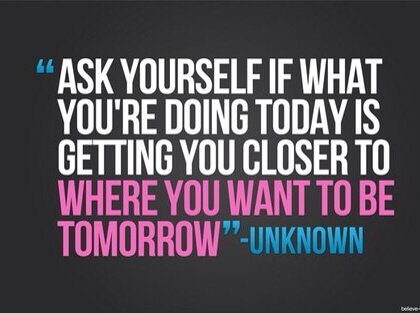
Vision is one of the most important parts of being a leader. Vision means being able to see into the future. Being able to clearly understand what choices you can make today that will create a better future for you tomorrow, regardless of the hardship, discomfort or pain involved. Parents sometimes make choices based on how they feel at the moment, but is that the right choice for your family’s future? Leaders understand the inherent benefits that come from adversity and hardship. They understand that a bright future might mean a dark present… but only for a time. Ask yourself: Do you understand the costs and rewards attached to your present course?


Let me summarize. YES… you can do this Mom and Dad! The question isn’t about HOW you are going to do it, it’s WHEN you are going to do it. Let me ask you a question. “What’s your gut telling you right now?!” No, that’s not your stomach screaming for a Cheeseburger or a Starbucks frappuccino. That’s your GUT telling you something important. What’s it telling you? It might be time to STOP, take a STEP BACK and LOOK at the BIGGER picture. My advice… Go with your GUT.


About The Author

Brook Price dedicated himself to helping others early in his life. He grew up in Sunny Orange County California, then joined the Marine Corps at the age of 21 serving five and half years as a helicopter crew chief and then as chief accountant. His journey with this type of work began when he volunteered as a Young Marines Instructor during his time in the Marines, helping kids get off the street, improve their lives and develop as a leader. After his tour Brook left the Marines to pursue a career in experiential therapy by attending Southern Utah University where he majored in outdoor recreation with a minor in psychology.

Brook has seventeen years of experience working for a variety of different therapeutic and transitional programs across the nation. His thirst for knowledge drove him to learn and study successful therapeutic models and programs across the country, most notably Outward Bound. Brook has experience working with therapeutic, residential, military, wilderness and transitional programs for both adults and adolescents.

Want to read more articles by this author? You can also find Brook Price on

SaveSaveSaveSave

Can the Dog Whisperer stop my son’s negative behavior? Part 1

Cesar Milan or the ‘Dog Whisperer’ has a knack for taking the very worst dogs and turning them into great dogs in a matter of minutes. But what is it about the ‘Dog Whisperer’ that makes him so special? How can one person experience so much success with such ruthless and vicious animals when others consider them unteachable, unreachable and unchangeable? More importantly, can those same techniques be used to put a stop to your son’s negative behavior? Join me as we probe this question and explore the fascinating world of ‘dog psychology.’

 WHY CESAR’S TECHNIQUES WORK.

Is it really  possible to take the very worst behaviors and turn them into great behaviors in a matter of minutes?  With dogs, yes. However, its a bit more complicated when it comes to human behavior, but not as much as you might think. In fact, there’s a lot Cesar Milan and his dogs can teach us. Cesar Milan is an expert in canine psychology with years and years of experience but Cesar himself is not the miracle, the miracle is in what he teaches. Cesar’s techniques work for 3 simple reasons: they make sense, they’re easy to understand and even easier to implement. It’s not difficult to uncover the secret behind Cesar’s secret formula because he has no secrets. Cesar shares his knowledge freely to anyone willing to listen, much like a Sunday preacher relentlessly repeating the same sermon, giving the same instruction, never deviating from the same fundamental lesson. Cesar’s focus has always been on the fundamentals and that is why they work and that is also why he has experienced so much success. The good news is, you can experience some of the same success, with a little practice.

dog_whispererNow I don’t want you to think I started watching the “dog whisperer” with the sole purpose of helping parents help their son behave better; I started watching it for the same reason most people watch it, I’m a dog lover. Yet, I was a sceptic. Considering the many unfortunate encounters I’ve experienced with vicious dogs throughout my childhood, I was sure the show was a fake, yet another part of me whispered, “What if this guy is for real? What if he really can rehabilitate these dogs into lovable companions in a manner of minutes?” Well, I had to find out for myself and with one episode I was hooked. Why? Because Cesar deals with real life issues! No gimmicks, no acting, no lines, no fabricated plots, just real people with real problems being taught simple techniques that not only worked, but were super easy! It was about the 10th episode when I realized Cesar was teaching his clients exactly what I was teaching my parents, only Cesar’s version was simpler, stripped down to its purest form and it was then that I began to make a connection… why should I not do the same thing… take a process as overly complicated and confusing as rehabilitating young men and making it even simpler, easier to understand and even easier to implement for parents who knew nothing about Forte Strong and our curriculum. That was when I decided… it was time to go back to the fundamentals.


FUNDAMENTALS ARE THE KEY

There are 4 basic fundamentals that I teach on a daily basis, very similar to Cesar’s approach, that will help put a stop to your son’s bad behavior. Remember,  focusing on the fundamentals is the key! Think about it, those who are the best at what they do focus on the fundamentals…  the top businesses do it, the top teachers do it, the top athletes do it, the top coaches do it, then why don’t we all do it? Well, because its hard. Because it takes discipline and consistency. Let’s face it, we’re human and as humans we want things to be easy and not only do we want it to be easy, but we want it to be new and different and shiny and cool. It’s human nature to be constantly looking for new ways to get things done easier, faster and cheaper but unfortunately that doesn’t always mean better. So ask yourselves, when it comes to dogs what is the easiest and fastest way to control a dog’s behavior? You could buy a video surveillance system to keep track of him when you’re away from home. You could give him special toys or gadgets to keep his mind constantly occupied so he doesn’t chew up the couch. You could even give him some special pills to help him be less anxious or depressed (yes, they make pills for dogs too). But do these gadgets and pills really solve your dog problems? The answer is no and the same can be said when it comes to your son; gadgets and pills and money and material things don’t solve the behavior problems and they never will. Yes, they may help a little but they don’t solve the real issue because these type of solutions are a quick fix solution rather than the long-term solution. Parents, especially those with busy and hectic schedules often rely on quick-fix solutions to solve long-term problems instead of long-term solutions for long-term problems. So, before we begin to look toward new drugs and new gadgets and new toys, we must first realize that bad behavior isn’t new… and neither are the techniques that can put a stop to it. Cesar doesn’t use the latest gadgets or special treats to get his dogs to change their behavior or any kind of quick-fix solution; instead he uses a bit of discipline at the right time and in the right way to drive his success and it starts by practicing the fundamentals each and every day… yes, the fundamentals!

“Dogs have integrity. But many humans measure integrity materially, with money. That’s how disconnected and unbalanced we have become.” – Cesar

I’m really excited about this blog series because I believe Cesar’s approach can help parents feel more confident and more empowered when dealing with their son and his bad behavior. Although ‘rehabilitating’ a dog is much different than rehabilitating a young man who is exhibiting signs of entitlement, manipulation and/or defiance, the techniques are surprisingly similar and best of all, they’re… you guessed it, easy. In fact, parents can implement these techniques today, but mastering these techniques will take time. These techniques will be easy to implement early on but remaining consistent and resilient when things get tough won’t be and that’s where discipline comes in. Now, are you ready to start learning how to put a stop to your son’s bad behavior? Then let’s begin.


THE 4 FUNDAMENTALS: Balance, Integrity, Love & Leadership

BALANCE: Balance is the first fundamental step crucial to your son’s success. It sounds easy but make no mistake, it’s not. Cesar will be the first to tell you that when he enters a home with an out-of-control dog it’s always the result of a severe imbalance within the home. In essence, Cesar’s job is to quickly identify the cause of the imbalance and then educate and train the owners how to bring the home back into balance. Of course, this isn’t always an easy process.

“Just because a person goes to Harvard doesn’t mean he’s balanced when he graduates, and just because a dog knows how to obey doesn’t mean he’s balanced, either.” – Cesar Milan.

Every parent who has a son who’s struggling with failure to launch syndrome has a home that is out of balance. In most out-of-balance homes, honesty, respect and gratitude are replaced with their opposites: dishonesty, disrespect and entitlement. Many parents are at a loss as to how to deal with this and often wonder how it all happened to begin with. They wonder why their son lied about doing well in college, or why he quit his job, or why he moved back home expecting his mom to do all the chores while he quietly regresses further into the dark corners of his room, unwilling to go outside. Over the years I’ve heard many mothers exclaim in desperation, “My son used to be in college, he used to get good grades, he used to work and then all of sudden something happened and he came home and hasn’t left!” This is a common scene with failure to launch young men and one of the key reasons is a severe lack of BALANCE, both in and outside the home.

Let’s talk about where the imbalance begins… at home. Truth is, most of these young men know how to be a good indian (when the chief is around) but have no idea how to be a chief. What do I mean? I mean they rely on others to tell them what to do, how to do it, when to do it and why to do it… but when they leave home for the first time and mom and dad (chiefs) are now out of the picture, they are utterly lost. Simply put, these young men are dependent on others to navigate their way through the rigors of life. They depend on others to make decisions for them, to solve their problems, to overcome their obstacles and to fight their battles. This causes a huge IMBALANCE.

balance_your_life - EditedThis failure to launch phenomenon has nothing to do with a lack of intelligence. The reality is that these same young men are usually top of their class when it comes to academics. They’re extremely smart, extremely talented and are often considered by others as extremely gifted. But you ask, “If that’s true, why do they lock themselves in their room wasting their lives away?” Because in the game of life, it takes much more than brain power to succeed. Yes, these young men have a desire to succeed, but unfortunately don’t have the “problem-solving” skills nor the confidence to achieve success on their own; in essence these young men need to learn how to be chiefs not indians. They must be taught how to grab the reigns, take charge and make decisions that involve “healthy” risks. In too many cases, well-intentioned parents have jumped-in and have rescued their son at this crucial and pivotal time in his life when he’s just beginning to learn how to be a man, in turn destroying any real chance of him gaining any kind of confidence he may have had obtained in the process. When this happens parents not only resume their role as the chief but reinforce his role as the indian, leaving their son with no skills, no experience and no confidence. This endless cycle of rescuing only creates more dependence, not independence. It creates more doubt and anxiety, not confidence. It creates weakness not strength. If you want your son to be balanced, you must be balanced and that means mom and dad need to take a few steps back and let their son make some mistakes and in fact, allow him to fail.

“Humans are the only species that follows unstable pack leaders.” -Cesar Milan

The question still remains. How do you teach your little indian how to be a chief? Well, it’s easy; indians learn how to be chiefs in three ways. The first way is through ‘example’, whether it is by a good chief or a bad one. What do I mean by that? Well mom and dad, if you’re not around to teach him how to be a chief, then your son has two options, he will either hide away into the deep recesses of his room and remain an indian for the rest of his life or he will turn to his friends for guidance and you had better hope he has good friends because if he doesn’t, you will have a lot more to worry about than getting your son to launch successfully. The second way to teach an indian how to be a chief is through ‘expectation’. Being a good example is not enough, you need to have clear expectations for him. Expectations like house chores, going to work, paying bills while gradually taking on more responsibility and accepting full accountability for the outcome, good or bad. Being fair, honest, and respectful are traits that go along way. I know you have these expectations for yourself, then why not have them for your son as well? The third way indians learn how to be chiefs is through “experience!” Gaining experience is a vital part of the learning process and your son cannot and will not become a man if this process is thwarted by a rescuing parent. Take a step back and let life do some teaching. Bottom line… lead by example with clear expectations, then take a step back and let experience help you do the rest.


A Quick Summary:

It’s not complicated, so don’t make it so. Cesar’s techniques work because they’re simple! Parents only have so much time in the day or in a week. If you want to make the biggest impact with the time you do have, focus on the fundamentals. There are 4 fundamentals: Balance, Integrity, Love, and Leadership. Balance is absolutely essential if you want your son to launch successfully. If you expect your son to be balanced then you as the parent must be balanced. Many young men who fail to launch need to be taught how to be a chief not just an Indian. Three ways you can teach your son how to be a chief are through personal example, clear expectations and gained experience.


Coming up next week:

Next week in Part 2 of this series “Can the Dog Whisperer stop my son’s negative behavior?” you will learn the 2nd Fundamental: INTEGRITY! Integrity is the bedrock for any great relationship and for any great society. From the outside it may seem as though you might have this  2nd fundamental (integrity) in the bag, but you might be surprised at what you find. Join me next week and discover whether or not your integrity is in good shape or whether it’s in need of some major repair.


About The Author

Brook Price dedicated himself to helping others early in his life. He grew up in Sunny Orange County California, then joined the Marine Corps at the age of 21 serving five and half years as a helicopter crew chief and then as chief accountant. His journey with this type of work began when he volunteered as a Young Marines Instructor during his time in the Marines, helping kids get off the street, improve their lives and develop as a leader. After his tour Brook left the Marines to pursue a career in experiential therapy by attending Southern Utah University where he majored in outdoor recreation with a minor in psychology.

Brook has seventeen years experience working for a variety of different therapeutic and transitional programs across the nation. His thirst for knowledge drove him to learn and study successful therapeutic models and programs across the country, most notably Outward Bound. Brook has experience working with therapeutic, residential, military, wilderness and transitional programs for adults and adolescents.

You can also find me on

Find some motivation!!!

Parents, especially successful parents are baffled as to why their child can’t seem to find the motivation to get a job or even get out of bed, while other parents believe their child has been dealt a bad hand because of the economy or their ex-husband or their child’s depression, anxiety or lack friends. I’d be a hypocrite if I said I didn’t believe that same lie at times. Maybe it’s time to think differently. What happens when we turn that kind of negative thinking on it’s head? When we begin to think differently about our situation? Are you ready to change your mindset?

Watch the video below and then ask yourself whether you believe your life is controlled by fate or by choice… I dare you.

Get Motivated… not tomorrow, but right now!

Pep talk warning! (Yes..we do that from time to time)  Yes, I’m sure that video is hard to swallow, especially if you once thought like me, believing the world was against you and there was no way out. It’s been said that we create our own reality; if that’s true, whose to blame?  We always hear about how important it is to be motivated, and the crucial role that motivation plays in our ability to be confident, accomplish goals and succeed.  In fact, most of the individuals we talk to that have sons experiencing failure to launch stress how truly unmotivated their sons are.  So what do we do when we are not feeling motivated?  How can we get back on track?  Be more optimistic?  Forte Strong has a list of 10 easy things he can do to unlock his potential and get back into the game of life.  These tips may help if you find yourself in a bit of a rut.  The weird thing is that some of these tips may be so basic that we sometimes forget how important they really are in creating change.

So first, we need to make sure we’re doing the simple things.  Take sleep for example.  How are you going to feel if you do not get adequate rest?  Miserable of course. Studies prove that not getting enough rest can make you feel depressed, lethargic, unproductive, weak and even make you more prone to developing illnesses!  So make sure you’re taking care of the basic and simple things so you can find the motivation and accomplish your goals!

The biggest piece of motivational advice I give to parents is this, the most important thing you can do to better your life is to simply “show up”.  You’ve heard the term “fake it ’till you make it”? For the most part it’s true. We’ve found in our coaching that it does actually works.  Even if we don’t feel like going to school, work, the gym etc…, if we can just “show up”, chances are we will begin to slowly gather the motivation we need to become productive, especially when it becomes habitual.  The smartest most successful people in the world have a routine they follow each day, just like your son or daughter has their routine they follow every day. I bet if you compared those routines side by side you would see a big difference. My guess is that your son or daughter doesn’t always show up, whether that’s for work, school or at home. Showing up is literally 50% of the equation because if we are there, then we are more likely to make things happen.  So remember, attendance counts (even if at first nothing gets accomplished).

The last recommendation is to plan.  There are too many slogans out there to list that deal with the importance of planning. Ie.. fail to plan and you plan to fail, proper planning prevents poor performance, and the list goes on.  The core motive behind planning is that if a task is important enough to plan, it is important enough to accomplish.  And if we are accomplishing tasks on a regular basis, our follow-through improves.

So, to recap:

1. Do the simple things.  

2. “Show up”  

3.  Plan

These three easy things are not a cure-all, but they will get you started and your chances of success increases dramatically!  Check back soon for more great info on how you can help your son build the motivation he needs to unlock his potential, move out of the house and achieve independence!


About The Author

Brook Price dedicated himself to helping others early in his life. He grew up in Sunny Orange County California, then joined the Marine Corps at the age of 21 serving five and half years as a helicopter crew chief and then as chief accountant. His journey with this type of work began when he volunteered as a Young Marines Instructor during his time in the Marines, helping kids get off the street, improve their lives and develop as a leader. After his tour Brook left the Marines to pursue a career in experiential therapy by attending Southern Utah University where he majored in outdoor recreation with a minor in psychology.

Brook has seventeen years experience working for a variety of different therapeutic and transitional programs across the nation. His thirst for knowledge drove him to learn and study successful therapeutic models and programs across the country, most notably Outward Bound. Brook has experience working with therapeutic, residential, military, wilderness and transitional programs for adults and adolescents.