11 Tips To Find Your Purpose & Achieve Independence in Your 20’s

Find your purpose

Having a life of purpose & fulfillment is key to maintaining happiness. “Maintaining” is the important point to keep in mind, as happiness must be cultivated, nurtured, and developed over time. There’s no one-stop shop for joy, and it’s crucial to acknowledge that it takes time and effort to figure out how to maintain your personal happiness. There’s no “one size fits all” for this kind of stuff. Your twenties are a pinnacle time in your life, if you find yourself struggling to decide what to do, wondering, “What’s the point of life?” Don’t worry, you’re not alone.

According to 2019, Gallup poll on personal happiness, 86% of Americans report being “very” or “fairly happy”. However, this number is actually at its lowest in the 71 years they’ve been polling this topic. We’re all in the same boat. Don’t worry if you feel aimless, or if you are failing to launch. You have the power to change, and these 11 tips will help you figure it out! So, let’s get started, and take this first step:

1. Read:

I get it, books aren’t for everyone. Everyone reads in some way, though. Do you scroll through Reddit? Check out the lore for your favorite games? Maybe you peruse the latest tech news? That still counts. As long as you’re absorbing information, and spending time analyzing and thinking about it. Whether it’s news, novels, or forum posts, reading will expand your horizons and knowledge, as well as help you relax, and reduce stress. Of course, it doesn’t hurt to try an epic fantasy series or a critically acclaimed piece of nonfiction, instead of just scrolling through your newsfeed… So, keep on reading!

2. Sit down, breathe & envision what your perfect life is like:

It may sound silly at first, but visualizing does a lot to help you manifest your goals and dreams. If you take the time to think about exactly what you want in life, you can build the stepping stones of the path to achieving your dreams. Consider how to figure out what to do with your life. And if you’re wondering, “How do you know what your purpose in life is?” You’re already on the right track. You probably won’t find answers right away, but don’t worry. Take a breather, and just think.

3. Cultivate gratitude:

Maybe you’ve heard of gratitude journals before, maybe you’ve even scoffed at the idea. It’s basically a diary, right? Who needs that? Journals might not be for everyone, but gratitude is. It seems like a weird idea, but gratitude helps keep us grounded, improves our mental and physical health, and can improve our relationships with others. Simply saying “thanks” to someone will make them more receptive to you. Saying “thanks” makes them feel good, and makes you feel good, too! Gratitude has an inherently positive effect. Go ahead, just acknowledge what you’re grateful for in your life, even the smallest things will add up.

4. Define your principles – what’s really important?

Now this one is pretty straightforward. What do you value in life? What beliefs do you hold deep down in your very core? Is there a particular philosophy that appeals to you? Maybe you’ve asked the question of how to find meaning in life. We all have different purposes, maybe you don’t know yours yet, and that’s OK! Just like with working towards happiness, figuring out your values is an ongoing process. It’s subject to change, especially at this point in your life, when change is all around you. Like with everything else on this list, it’s a matter of sitting down and taking the time to think.

Defining what matters to you will help you figure out how to lead your best life. Do you value adventure? A balanced life? Do you seek challenges? Is it important to you to be a leader? A collaborator? Do you want to give back to your community? Help others? Do you lean towards logic, or are you more of a creative thinker? If you establish principles, they will guide you through how you interact with the world at large, the kinds of goals you set, and how you’ll achieve them. 

5. Create goals:

Speaking of goals, SET GOALS. The definition of purpose is “something set up as an object or end to be attained,” in other words, a goal. The simple task of organizing your general wants and needs into a list of goals is immensely helpful. How do you do this? It’s simple. Like with everything else, think first. What do you want to do? What do you want to work towards? This can be a small thing like “I want to go for a walk every day,” or something bigger, like where you want to be in 5 years. Write your goals down, and the steps to achieving them. Be very specific and be realistic. Talk to someone about your goals, so that someone else can hold you accountable, and even help you figure out how to achieve them. Keep trying, and don’t be afraid to reassess and make changes along the way. Celebrate your victories, no matter how small!

6. Get out there & do it:

The first step is the hardest. Change can be scary, and maybe you feel like you’re not up for the challenge. Maybe it’s difficult to achieve your goals, and the idea of putting in all that work doesn’t seem worth it. Maybe you’re afraid of failure. You won’t know until you try. Once you get the ball rolling, you’ll keep going and naturally pick up momentum. If you approach “getting out there” with a clear plan in mind, it’ll be easier than you think. Even if it feels uncomfortable or forced at first, those feelings won’t last. Building blocks don’t naturally come together, someone has to conceptualize, plan, put the first one in its place, then another, and another… Nobody’s perfect when they’re starting out.

7. Embrace your failures and learn from mistakes:

Just like how nobody’s perfect… everybody fails. No question about it. What’s important is how you move on from that failure, and what you learn from it. Acknowledge your mistakes and do things differently next time. Assess the situation. Why did you fail? How can you do better next time? Don’t pretend the mistake never happened, but don’t dwell on it. Try, try, try again. If you’re self-aware, you’ll recognize where you went wrong, and learn from it. It’s OK to admit when you’re wrong, because that’s the first step to making things right. Remember, everybody fails!

8. Accept change as a good thing:

The only constant in life is change. It is inevitable. Like with failure, if you acknowledge and embrace change, it’ll be easier to deal with the uncertainty it brings. It can be difficult to accept, especially when things don’t seem to be going your way. Your perception is key to handling the stresses of a life in flux. It can be challenging not knowing what’s coming tomorrow. 

It can feel like you’re not in control. It’ll be easier if you accept what you are in control of: yourself. You get to decide how you’ll adapt to new situations. You just need to accept that good and bad things will happen in life, not all change is bad. As the ancient Greek philosopher Heraclitus said, “You cannot step into the same river twice,” and “everything flows.” The waters of the river are constantly changing, just as the world changes around us, no matter what we do. Resistance is futile!

9. Always keep getting better:

Humans are always “works in progress,” and it is up to you to continue improving yourself. It’s not about perfectionism, it’s about understanding that with personal development, there isn’t a clear end in sight. It’s a continuous process of growth and change. There’s always room for growth, so it’s important to let yourself be open to it. Keep learning. Keep reassessing. Keep getting better.

10. Create even more audacious goals:

Humans are always “works in progress,” and it is up to you to continue improving yourself. It’s not about perfectionism, it’s about understanding that with personal development, there isn’t a clear end in sight. It’s a continuous process of growth and change. There’s always room for growth, so it’s important to let yourself be open to it. Keep learning. Keep reassessing. Keep getting better.

Take a leap of faith! Think big. No goal is too ambitious, too bold, too crazy. There’s nothing cliché about the saying, “Shoot for the moon. Even if you miss, you’ll land among the stars.” It’s the simple truth! If you aim high, and keep putting effort in, you’ll always be at least one step further than you were yesterday.

11. Find a small group or community of like-minded individuals:

Find your tribe! If you surround yourself with people with similar aspirations, it’s only natural that friends will encourage and help each other along their individual journeys. Hanging out with like-minded people will cultivate great conversations, ideas, and partnerships over time. Are you wondering how to make friends? You can meet people through shared activities and interests, whether it’s a monthly D&D meetup, an axe-throwing group, or a neighborhood basketball team. It’s important to make connections, and easier now than ever, with online communities for pretty much all fandoms and hobbies. There are many ways to build a community. Online or IRL, there’s surely at least one person out there you can relate to.\

There you have it, 11 tips to help you get started in discovering what makes you tick. Where do you find your fulfillment? What do you want in life? How can you achieve independence? Above all else, identifying what’s important to you and figuring out how to stay true to that is the real first step to leading a life of purpose. 


How Disney Created an Entire Generation of Lost Boys and Destroyed the Heroic Male

The Disney blockbuster Frozen is the most successful animated movie of all time. Yay for Disney but what does that mean for the rest of humanity, particularly men? Is this just harmless entertainment or is there something more sinister at work here?

Disney has been the beloved purveyor of fantasy through animation for decades and wields a great deal of cultural power. The question we should all be asking ourselves is if Disney is using that power responsibly. Most of us were brought up on Disney. Who doesn’t have fond memories of their favorite childhood movie, Disney-inspired toy or character? Disney is such a household name that it’s hard to associate it with anything other than the warmest of feelings.

And therein lays the problem. Most of us assume that our children will be safe when parked in front of an animated movie made for children, marketed to children, and served up in child-friendly way. However, whatever ideology Disney is peddling gets soaked right into the innocent minds of children everywhere. The fact is Disney’s biggest audience is also the most vulnerable and we should not underestimate the influence Disney movies have on the emotional, social and psychological development of our children. When there is a pervasive theme saturating a growing number of movies and then reinforced through multiple avenues of merchandising, that theme becomes the accepted reality for a child. 

What reality am I talking about? Since the late 70’s, Disney has created more and more animated films depicting the demise of men. No longer is a man considered the hero or even heroic for that matter, but rather a “necessary evil”. Today’s Disney films are a far cry from Cinderella, Sleeping Beauty and the Sword in the Stone. As much as Disney’s animations have become ever more spectacular and sophisticated, its treatment of men has become ever more warped, jaded and outright duplicitous. Just about every male Disney character today is now shoehorned into three cleverly disguised archetypes that depict men in the worst way possible.

You’re Not Needed Anymore

So what are these archetypes? There’s the egotistical sexist criminal, the bumbling moron and last but not least, the greedy capitalist. Take a hard look at the Disney films your kids are watching today and you’ll begin to understand why we have an entire generation of young men who are completely lost and confused, if not terrified about how they will be judged by today’s society. The elephant in the room is that men are portrayed as superfluous. Disney’s war on boys has now pushed past the limits of animation and into the realm of live action. The new Star Wars films is a great example and have done a superb job at communicating a strong message to all men across the galaxy – you’re not needed any more. In fact, the galaxy would be better off without you. Is there any wonder why we have an entire generation of young men who are deciding to opt out of life? Failure to launch anyone? 

Frozen and Brave are two of the best examples of reverse sexism you’ll ever see if you’re really willing to read between the lines. Frozen has been hailed as progressive “One reason for its success is its huge divergence from other Disney films, particularly in its depiction of modern people, problems and ideas that resonate with millennials.” Really?

A Spoonful of Sugar Help the Medicine Go Down

If you read the newspapers, this new dare I say “hip” way of looking at modern society today sounds fantastic, until it doesn’t. Disney’s mainstay is princesses and fairy tales and the Disney Princess is first and foremost a marketing franchise. Disney is one of the world’s most powerful brands, so we have to accept that the anti-male trend is not accidental, it’s monetary. Eric Jenkins, from the University of Cincinnati, has studied the role of media, specifically animation, in the evolution of consumerism. He says, “What I’m suggesting is that the type of animation perfected by Disney over his ‘golden age’ not only promotes consumerist behavior, but trains us in the habits of consumerism,”

Back to Frozen. Sure, it’s great to have a heroine portrayed as independent and able to save herself instead of waiting around to be rescued by Prince Charming. But why must it be done at the expense and dignity of men? Instead of making the Prince a worthy equal, the message is – no prince required at all. Frozen has been wildly successful and little girls everywhere have Frozen-themed birthday parties and love to dress up as the ice queen Elsa. Where does that leave little boys and who can they aspire to? The nose-picking, dim-witted, and smelly Kristoff or the verbally abusive, manipulative, deceitful and psychopathic Prince Hans? What a dismal choice!

As mother of young boys, Allison Hull asks, “Why Does Disney Hate Boys So Much? All Their Male Characters Are Losers.” She has noticed the bewilderment and frustration felt by her children because of Disney’s unbalanced focus on getting girls to “Dream Big” whilst hanging the boys out to dry as if they don’t deserve to dream big too. Hull says,Women and men should be alarmed at this ongoing trend and take a stand. My boys are of value, and they need to be told they are special too. They also need to be told that they can save the day, just like the women. Disney, listen up: I’m watching you. Give my boys something tangible, something for them to emulate that’s real. Don’t push boys to the side to build up the girls. Why can’t we build and strengthen both?”

A Zero Sum Game

Why not indeed? Just as it was unfair for women to be stuck barefoot and pregnant in the kitchen, it is equally unfair for the media to perpetuate the negative stereotypes of men that have crept into adverts, TV shows, memes, and movies. Bp. Robert Barron (auxiliary bishop of the Archdiocese of Los Angeles)says, “One of the distinctive marks of films and television programs the last couple of decades has been the Homer Simpsonization of men.”They are either the incompetent dad or the bumbling husband. “It is not enough, in a word, to show women as intelligent, savvy, and good; you have to portray men as stupid, witless, and irresponsible. That this savage contrast is having an effect especially on younger men is becoming increasingly apparent.

Treating all this as a zero sum game is helping no one, including those who think that demeaning men is somehow beneficial to women. It isn’t. If we don’t find some way to right the pendulum that has swung from one extreme to the other, the marginalized young men of today will not grow into the healthy and productive husbands, partners, teachers, leaders and fathers that this world needs and that would be a crying shame. Boys deserve better and so do our girls.


About The Author

Brook Price dedicated himself to helping others early in his life. He grew up in Sunny Orange County California, then joined the Marine Corps at the age of 21 serving five and half years as a helicopter crew chief and then as chief accountant. His journey with this type of work began when he volunteered as a Young Marines Instructor during his time in the Marines, helping kids get off the street, improve their lives and develop as a leader. After his tour Brook left the Marines to pursue a career in experiential therapy by attending Southern Utah University where he majored in outdoor recreation with a minor in psychology.

Brook has seventeen years experience working for a variety of different therapeutic and transitional programs across the nation. His thirst for knowledge drove him to learn and study successful therapeutic models and programs across the country, most notably Outward Bound. Brook has experience working with therapeutic, residential, military, wilderness and transitional programs for adults and adolescents.


Building a Culture of Self Reliance


Self-reliance means freedom for yourself as an individual and freedom for others. It frees you from dependency on others and in turn frees them from the burden of having to look after you. Self-reliance builds confident, resilient, independent and productive members of society but in today’s world of instant everything, from messaging to puddings, pain relief and gratification, it is an endangered species.

Why? Because self-reliance comes at a cost and it is one that both parents and educators alike seem unwilling to let the young pay. That cost involves risk and failing. Helen Keller said, “Character cannot be developed in ease and quiet. Only through experience of trial and suffering can the soul be strengthened, vision cleared, ambition inspired, and success achieved.”


Parenting is a second career

Parenting has taken on a whole new meaning in the past few decades. Instead of having a career and children, some parents have built a second career around their children. These parents hold themselves responsible for the success or failure of their children and in the process, have robbed them of any accountability and its natural by-product self-reliance. They put their kids in the center of their lives, do their homework for them, fight their battles for them, rescue them from every difficulty, give them whatever material goods they want, and some even accompany them to graduate school interviews. The parents of many Millennials want to bubble wrap their children so they won’t have to suffer the same hardships as they did, like walking 20 miles to school in the snow, uphill, both ways.

Most of these parents are well-meaning, trying to give their children what they never had or whatever they perceived they lacked in their own childhoods. They are trying to create the perfect formula for success and curate the perfect child. Unfortunately, they don’t recognize the fact that while hardship is unpleasant, it is in fact, valuable. The route to achievement is often via hardship, not in spite of it. Self-made billionaire and founder of Oracle, Larry Ellison, sums it up when he says, “I have had all of the disadvantages required for success.” Ellison never met his biological father and his adoptive one frequently insisted he would never amount to anything. He grew up on the South Side of Chicago in a lower middle class Jewish ghetto, dropped out of college twice and taught himself programming. He had none of the advantages of status, money or doting parents, yet he is the third richest man in the US.


Rock-solid foundation of failure

JK Rowling was poor and a divorced single mother who built her success upon the rock-solid foundation of failure. She talks about the benefit of failure as: “a stripping away of the inessential”, which set her free from the fear of failure because it had already happened and it didn’t kill her. There was no other direction to go but up.

The importance of self-reliance and autonomy has been replaced with the altogether more fragile concept of building self-esteem. Nassim Nicholas Taleb, author of Antifragile, tells us, “This is the tragedy of modernity: as with neurotically overprotective parents, those trying to help are often hurting us the most.” He says we need “the right amount of stress and disorder”. Where indulgent parenting finishes off, education takes over because it teaches us to fear failure whilst rewarding mediocrity. Nobody wants to get zero on a test but we don’t learn anything from the wins, the path of least resistance or playing it safe.


The affluenza generation don’t do hard

It’s not difficult then to see why kids of the affluenza generation don’t know how to do hard anymore and why a significant percentage fail to launch. In The Vanishing American Adult, Ben Sasse decries how the word ‘adult’ has morphed into the verb ‘adulting’ as if it is something you can choose to do, or not, instead of something you become. He is also critical of how our society tends to wrap children in cotton wool to protect them and he suggests,We should be running in exactly the opposite direction; we should be figuring out how to help build them a menu of really hard tasks to tackle. They need to know in their hearts and in their bones that suffering is not something to be avoided, but conquered.”

Taleb agrees. In an interview in Singapore, his advice was, “You have to make sure the next generation doesn’t get too comfortable. Don’t over-educate them. Push them harder. Don’t be too nice to the next generation. Progress comes before education. The causality is inverse. If you increase education in a country, you lower the progress. It inhibits risk taking.”

So there we have it. If we want the next generation to start acting like adults, we have to stop treating its members like delicate hot house flowers. We need to expect more of them, demand more of them and give in less to them and then they will surely rise to the occasion.


About The Author

Brook Price dedicated himself to helping others early in his life. He grew up in Sunny Orange County California, then joined the Marine Corps at the age of 21 serving five and half years as a helicopter crew chief and then as chief accountant. His journey with this type of work began when he volunteered as a Young Marines Instructor during his time in the Marines, helping kids get off the street, improve their lives and develop as a leader. After his tour Brook left the Marines to pursue a career in experiential therapy by attending Southern Utah University where he majored in outdoor recreation with a minor in psychology.

Brook has seventeen years experience working for a variety of different therapeutic and transitional programs across the nation. His thirst for knowledge drove him to learn and study successful therapeutic models and programs across the country, most notably Outward Bound. Brook has experience working with therapeutic, residential, military, wilderness and transitional programs for adults and adolescents.

How to keep Boomerang Kids from coming back


Now a boomerang is a bit like karma because what you put out into the world comes back to you, good or bad. Basically, you reap what you sow. If you raise your kids as helpless, entitled victims, when the rubber meets the road and they can’t cope, they will surely want to come back home to the comfort and safety they are accustomed to. So, if you want to make sure your “Boomerang Kid” doesn’t return (pun intended) unexpected, you’re going to need to change some things now.


Be Prepared

This simple Boy Scout phrase has been uttered zillions (yes, that’s a word) times and is older than your great great great great (need I go on?)grandmother. In short, it works. Life is hard on your own but not quite so difficult if you are prepared for it and the fact is that we all have to get comfortable with being, well uncomfortable.

With more young adults living at home with their parents than during the Great Depression, it might seem like there is a lack of opportunities in the workplace, but perhaps it is really just a lack of preparation. Young adults need a load of preparation, completely apart from what they might get in school. They need to be prepared emotionally, mentally and practically. They need people skills, money skills and street smarts to take on life as productive members of society. If you are hoping the school system is going to do this for you, your wrong.


We make so few demands on children these days

Author of The Anthropology of Childhood and professor emeritus at Utah State University, David Lancy, said in a 2016 interview, “At every level of the economy today, there are shortages of adequately trained workers. Part of the blame is that we make so few demands on children, remove all the obstacles from their lives, and keep telling them how wonderful they are.”

If we let our children loose in the world without being able to manage their finances and time, feed themselves, do their own laundry and get themselves together to meet important commitments, on their own, how can we expect them to survive, much less thrive? Add to this the totally unrealistic expectations that some parents have foisted upon their kids and you have a recipe for disaster. The message for every generation since the second world war has been the same — go to school, get good grades, go to college, earn a degree, get a job and your future is secured. Unfortunately, it does not work that way in real life as good grades and a college education do not guarantee anything of the sort, confirmed by the growing number of graduates who have enormous debts but are either unemployed or underemployed.


Is CTE the answer?

So what’s the solution? Many people are in favor of CTE (Career Technical Education) in high school, which is sorely lacking in the US compared to many countries in Europe. Will getting hands-on, work-based and real-world experience while still in school prevent your child from landing up back home in your basement? It seems like the perfect answer, especially as there are jobs for the taking in technically oriented positions, but there’s a catch.

A new international report published in the winter 2017 issue of the Journal of Human Resources shows that while vocational education might get you into the job market easier and sooner than a general education, over time this lead diminishes and then reverses. “Individuals with vocational education tend to have a higher employment rate than individuals with general education for the youngest cohorts. For older cohorts, though, individuals with general education are more likely to be employed than those with vocational education, and this is most pronounced at the end of the work lifecycle.”

The researchers point out that, “[V]ocational training should not substitute for providing strong basic skills because this and other analyses underscore the necessity in modern economies of developing general cognitive skills.” These general cognitive skills, along with critical thinking skills and the ability to adapt to change are the traits that will ensure success in any field. The world of work is changing at such a fast pace that none of us can afford to see education as a one-time fix or a magic pill.

“Opportunity is missed by most people because it is dressed in overalls and looks like work.” ~Thomas A. Edison


Be cruel to be kind

What we need are innovative, creative, and flexible thinkers who are willing to be life-long learners and do the work necessary to keep moving forward. Entitlement kills all of this because it makes you focus on what you think you deserve and of course, this then makes you blind to all the opportunities that are there. If you want to avoid having a boomerang kid, you have to lay the groundwork sooner rather than later. You have to do less for your kids while expecting more from them. Make ’em suffer a little bit. Allow them to take some healthy risks and fail when it is still relatively safe to avoid having to deal with catastrophic failure later. Hand over responsibility early and often, make your kids accountable, and make sure they get used to starting at the bottom and working their way up, without Mum or Dad pulling strings. In short, make their lives uncomfortable enough that the big bad world is not quite so scary and the prospect of bouncing back home not quite so attractive.

About The Author

Brook Price dedicated himself to helping others early in his life. He grew up in Sunny Orange County California, then joined the Marine Corps at the age of 21 serving five and half years as a helicopter crew chief and then as chief accountant. His journey with this type of work began when he volunteered as a Young Marines Instructor during his time in the Marines, helping kids get off the street, improve their lives, and develop as a leaders. After his tour, Brook left the Marines to pursue a career in experiential therapy by attending Southern Utah University where he majored in outdoor recreation with a minor in psychology.

Brook has seventeen years of experience working for a variety of different therapeutic and transitional programs across the nation. His thirst for knowledge drove him to learn and study successful therapeutic models and programs across the country, most notably Outward Bound. Brook has experience working with therapeutic, residential, military, wilderness, and transitional programs for adults and adolescents.

Tired of Living With Parents: 7 Tips for Moving Out On Your Own


Change your life, move out!

It’s Time to Move Out!

Moving out when you’re used to living at home with your parents may seem like a challenge, but it’s actually easier than it looks.

Sure, there are challenges to be met (it wouldn’t be exciting otherwise!), but you’re an adult now, free to choose your own path and nobody and nothing can keep you from it now that you’re ready to take the next step.

Whatever your personal reasons are for your decision to change your place of residence, you’re finally at a place where you’re ready to just do it!

Still, you might want to consider these 7 Tips to make the transition a little easier.

1. Write Down What You Want and Why

You probably have a general idea what you want. But have you really nailed it down?  Can you say specifically what you want? Just as important as writing down the specific result you see in your mind, is writing down why you want it. Knowing why you want it gives you the energy and determination to get it done!

Knowing why you want to move out gives you as sense of purpose, your future is in your hands, you feel empowered, you feel powerful and that feels good. Knowing why you want it and telling your story on paper reminds you why you’re excited to do it! This isn’t something you feel like you have to do, this is something you want to do and wanting to do it is what makes it so exciting. When you move out, clearly defining what you want out of it and your reasons for wanting it takes you to a whole new level of motivation to just do it!

2. Focus On One Thing at a Time

As Greg McKeown in his book Essentialism explains, focus is not really a thing, it’s an action. Not only is focus an action, it’s an action that influences the way you feel. Try a little experiment. Close your eyes and focus on a time when you were as felt overwhelmed. Remember what you saw, what you heard, where you were and everything in as much detail as you can for the next 5 seconds. How do you feel? Now close your eyes and do the same thing, but focus on a time when you felt incredibly powerful and confident for 20 seconds. Now how do you feel?

Feeling overwhelmed? Take it one thing at a time.

One of the reasons young adults feel overwhelmed by anxiety when they think about living on their own, is they try to put the focus on everything they have to do all at once. They get stuck because it doesn’t work that way.

If you happen to find yourself feeling anxious and overwhelmed, remember to focus on an action that you take right now. By switching your focus to make a decision to act right now, you will 100% change the way you feel. Your power to change the way you feel just by changing what you focus on is incredible.

For instance, if the thought of filling out apartment applications seems to feel overwhelming, focus on filling out just one application. If the thought of filling out just one application seems overwhelming, focus on filling out just the first line. When that’s done, focus on the next line.

When you focus on breaking down tasks into smaller, actionable bits and that you just do one at a time, you naturally feel confidence because you feel like you have options available for getting what you want and you see yourself move toward your desired outcome. Now that you have successfully completed a small task that moved you towards your goal, you have every reason to tell yourself to be confident and then feel confidence grow into the place where the anxiety used to be in your life. The great thing is that creating confidence in one area of your life bleed over into other areas where that old anxiety used to be.

3. Own Your Decisions

Change starts with you!

Part of this whole living your own life thing means owning your decisions. Even if other people do things that you find frustrating and temporarily require you to adjust your plans, it’s still your responsibility to change your life, so own it. Don’t wait for them or anyone else to make changes for you.

Other people will do what they do and if you live with your parents, they may or may not support you in what you want. But you decide what is important to you, whether they like it or not. Focus on the opportunities that you have to gather your own resources and meet your own needs, focus on what you want and take action to get it. With your own resourcefulness, you have now have created options for yourself that you get to decide on. Having decided what you want, go get it!

The instant you commit and take charge of your own life, instead of waiting for others to make your life better, you give yourself the power to choose what you want to do and how you want to live it. While you may decide to rely on your parents financial support for the time being, owning that decision puts you back in the driver’s seat of your own life.

4. Make a Plan

Write down what you have that you can use to get you what you want. Then write down what you need to get and what you need to do to get it so you’re ready move out. Think about what you need to have when you are out living on your own. Here’s a few things to think about getting:

  • a job (if you don’t already have one)
  • enough money for a deposit, first month’s rent and utilities
  • an apartment
  • transportation
  • a budget
You don’t want to be caught without a budget!

You’ll need income so finding work that pays is your first step. You will need to create a budget. A budget is simply a way to keep track of how much you’ll need for living expenses each month. To do that, add up how much food, gas, internet etc. will cost you each month.

If you don’t have any idea how much they cost, ask your parents or someone who has been out on their own for awhile. Adding up your monthly expenses will tell you about how much you need to save up before you move out.

Finding an apartment. Do a google search to get an idea of how much rent is in your area. To get an apartment, you will need to fill out an application. Once you’re approved, you’ll need enough money to cover a deposit and your first month’s rent before you can move in. Since deposits are usually close to the same amount as rent you can double the number and that will tell you about how much money you will need in the bank before you apply.

You will also need a way to get around. If your job is close to your apartment, you can get away with walking or biking, but if it’s further away, you will either need a vehicle or access to public transportation. When you’re making your plans, don’t forget to take transportation costs into account.

5. Do Something Different (and Feel Better)

Get outside!

If you feel a moment of anxiety or a little blue, its not unusual, but you have the ability to change the way you feel. If you’re having a hard time motivating yourself, do something different today from what you did yesterday. Do something that feels good and is outside your normal routine. You’ll want to do something proactive and positive, so watching Netflix probably doesn’t qualify (but that doesn’t mean you can’t give it to yourself as a reward). Get up, get out and do something outside your normal routine; move your body and notice how when you do it for even a short amount of time you feel more energetic and positive about life.

Even the slightest change in your routine can help you feel better. If you normally get up and lounge around the house in until noon before getting dressed for the day, try getting dressed right after you get up. Pay attention to how it makes you feel.

If you usually sit on the couch and watch TV or play video games after breakfast, take the dog for a walk, go for a bike ride or enjoy a good swim and you will notice that you feel better. Keep doing the things that make you feel energetic and empowered. Once you have some momentum, pick just one thing to help you move out. You don’t have to make big changes to make progress, you just need to consistently do the small things to see improvement.

6. Focus on What You Can Control 

Just like focusing on everything you had to do all at once doesn’t work, when you focus on all the things that are going wrong with your life, you’ll probably experience feeling frustrated, angry or depressed. Yes, it’s important to recognize why you want to move out so that you will motivated to change it, but if you focus solely on what you don’t like about your current situation you’ll feel stuck. It may seem hard to have to deal with all the problems in your life, but it’s easy to shift your focus.

At least you have a car!

Think about it this way. If you owned an old beat up car, but wanted a new one, what would be more productive to focus on: the fact that you don’t have that new Mustang GT or the fact that you have a car to get you to and from work so you can save for a down payment on that new Mustang?

So if you find yourself feeling frustrated or stuck, shift your focus away from the situation to what you really want instead and then ask yourself what options you have to change it.

By shifting your focus to solutions and away from problems, your mental and emotional energy is freed up and available for getting you what you really want.

7. Ask for Support

Even Einstein needed support and he was a genius!

Moving out on your own can feel overwhelming, but the good news is, you don’t have to do it on your own.

There are lots of people who want you to succeed and be happy, starting with your parents. Whether you are struggling with bigger issues like social anxiety or depression, or you just have a hard time getting a job or figuring out what the next step is, asking someone to support you as you work through it can get you on the right track.

One thing that might stop you from asking for support is feeling embarrassed or ashamed that you need “help”. This may be especially true if your friends or classmates are living on their own and you compare yourself to them. But here’s the reality, nobody got to success without support, nobody.

While admitting that want or need support may seem to be difficult or scary, people who accept that enlisting the support of another, even if it’s just to ask them to listen to you while you talk, people who do this are pleasantly surprised by the relief they feel when they do acknowledge. Contrary to their expectations, their requests for support is met with acceptance. You do want to be smart about it; don’t ask a jerk, do find someone who will be supportive. If this is something you struggle with and you just can’t bring yourself to ask your parents or friends for support, consider finding a good therapist or counselor to talk to.

Bonus Tip: Commit!

Once you know what you want and you commit yourself to getting it, hold nothing back, put everything into doing it! The world will seem like a different place and you will be amazed out how the world changes to make your dream possible. Of course it isn’t the world that changes but you. True commitment is a powerful thing and you can harness it when you’re ready to take action. Commit, apply these 7 Tips and take the next exciting step in building the life you want to have.


About the Author

Eric Hatton has spent most of the last six years working as a field staff in wilderness therapy where he coached students on primitive fire skills, making and setting traps and other important wilderness skills. He also coached staff as they learned leadership skills and as they learned to disrupt dysfunctional behavior in the students. Eric loves brainstorming with people. He loves to help people organize their thoughts and change their dreams and desires into tangible, achievable goals. He loves to help people to discover their passions and to help them find ways to use their passions to realize their goals. He is passionate about building great teams and organizations and helping others succeed.

How many therapists does it take to change a light bulb?

Have you ever heard the joke:

HOW MANY THERAPISTS DOES IT TAKE TO CHANGE A LIGHT BULB?

The answer:

JUST ONE, BUT THE LIGHT BULB HAS TO WANT TO CHANGE!

light-bulb-therapist-joke

There is a nugget of truth embedded in that idea, the idea that before someone will change, they must want to change. One might ask, how many treatment programs does it take to change a person? If that person really wants to change, it only takes one. Parents may send their son to a variety of programs to push him to change, but until he actually wants to, it’s of little value. If someone wants to change badly enough, they will, and at times with little to no outside help. Their success, of course, depends on their level of commitment and their desire to change. If the ability to change is really up to them, then what exactly does Forte Strong do?

At Forte Strong, we provide a specialized curriculum within a highly interactive environment that accelerates our son’s ability to take on more and more responsibility. But that means nothing if your son is not willing to change. We see a lot of young men today who say they want to create a life for themselves: at least that’s how it appears on the surface. The reality however is that too many young men say they have a desire to be autonomous, independent and self-reliant, but deep down, they really don’t. What these young men really want is anonymity. They want to be left alone, to remain in the shadows to maintain their old lifestyle without any interference from Mom and Dad. They avoid any work or responsibility associated with an independent lifestyle while proclaiming to want more out of life. What they really want is autonomy with no responsibility and that is a formula for dependency or codependency.

For many young men, the attractions of living “independently” are outweighed by threats to their sense of well being. And their sense of well being is attached to their ability to maintain the status quo. As a result they are motivated to maintain the status quo and they are darn good at it! The responsibility of taking care of their own needs is something they typically feel inadequate to bear, so they refuse to do it. They may pay lip-service to the idea of living successfully on their own, but the proof is always in the pudding: hence they continue to resist any outside attempt to make them change.

chameleon-failure-to-launch

At times, a young man will come through Forte Strong and on the surface look like he is doing very well. He will conform to the rules of the program. He will satisfy the minimum requirements to graduate but he in no way is considered a stalwart member of society. Rather, he is the quintessential chameleon, the master of invisibility through conformity, yet remains committed to the lifestyle he had before he came, quickly returning back to it as soon as opportunity allows. In other words, he is the master at creating the appearance of change, while desperately clinging to his previous life of ease and excess. Metaphorically, it’s the rubber band effect; you can make it stretch, but as soon as you release it, it snaps back into it’s old shape.

Setting Healthy Boundaries.

The key to helping anyone who is seriously considering making a change, is by setting healthy boundaries first. Setting healthy boundaries creates leverage and leverage is what drives human nature. Just to be clear, we are talking about healthy leverage, not coercion or manipulation. Here’s an example of healthy leverage applied in a real world setting: A boss warns a habitually tardy worker who is only interested in maintaining a steady paycheck, that if he shows up late again he will be fired. The boss clearly lays out healthy boundaries of what’s acceptable and what is not. This provides the leverage this worker will need to change and adjust his behavior accordingly, without it the worker would undoubtedly continue his self-destructive behavior. It may not be easy, but if the pain of losing his job outweighs the pain and effort it will take to get to work earlier, the likelihood of him keeping his job will increase exponentially.

The challenge with all of this is that sometimes, leverage to help move someone to change is not available to you or the leverage you do have simply is not working and the people you’re trying to help refuse to change regardless of what leverage is applied. What can you do? Parents who have a son who has “Failed to Launch” often find themselves in this exact position. This is where healthy boundaries are absolutely essential. While parents have little to no control over what their son will do, they have full control over what they can do. Parents have the power to change the relationship with their son by changing the conditions.

What are conditions?

“Healthy boundaries” are a set of conditions that foster healthy relationships. Conditions are simply rules of conduct between two people within a relationship. These rules are subject to change, according to the needs and circumstances of the those within the relationship. If a son consistently takes advantage of his parents, it’s simply because the conditions allow it. When toxic conditions are allowed to exist within a relationship, dependency and codependency is the result. Setting firm boundaries doesn’t have to be arduous or hard. Start simple. For example:
“I am willing to talk about last night, but I will not discuss it when you are yelling and swearing at me.” This is a statement laying down a boundary.

For parents who have a “Failure to Launch” son, who is a constant drain on their emotions, their energy, their time and their money; they have both a right and a responsibility to change the conditions of their relationship with their son to one in which both parent and son are empowered. “Son, you can’t stay here anymore, it’s not good for you or for us. We will give you 30 days to find a place of your own.”

This is the most difficult boundary for parents to draw with their son, yet at some point in his life it needs to happen. Who your son chooses to become is ultimately his choice and beyond your control, but there is one thing you can control, the conditions of your relationship. Let them be healthy ones.


ABOUT THE AUTHOR

Eric Hatton has spent most of the last six years working as a field staff in wilderness therapy where he coached students on primitive fire skills, making and setting traps and other important wilderness skills. He also coached staff as they learned leadership skills and as they learned to disrupt dysfunctional behavior in the students. Eric loves brainstorming with people. He loves to help people organize their thoughts and change their dreams and desires into tangible, achievable goals. He loves to help people to discover their passions and to help them find ways to use their passions to realize their goals. He is passionate about building great teams and organizations and helping others succeed.

Is Your Son On Developmental Vacation? This is how to find out.

Happiness_is_up_to_you

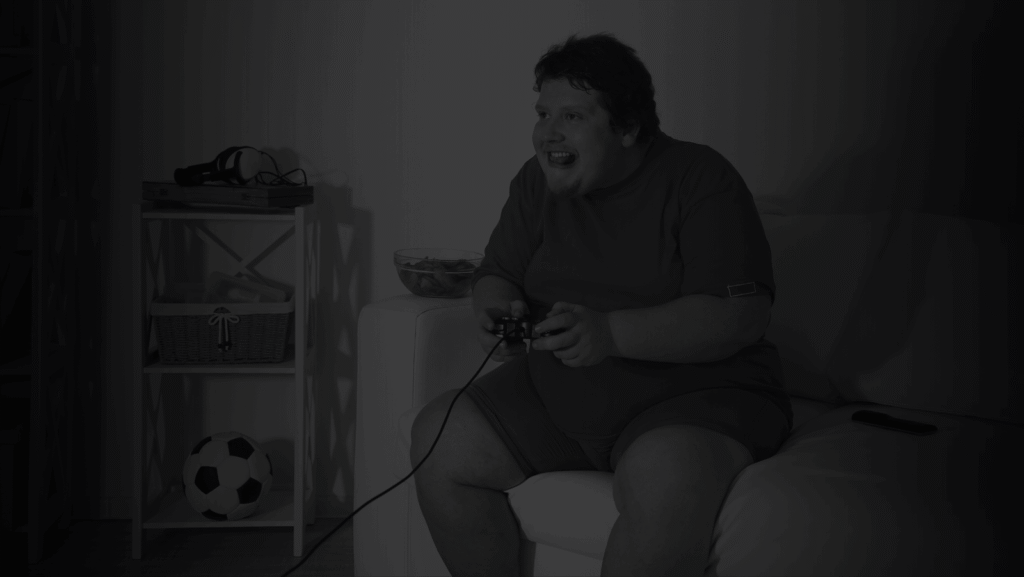
Many families have at least one member who is content to just let life happen to them instead of letting life happen for them and that means taking personal responsibility for the direction of their own life. Often this family member is a son or daughter who just doesn’t seem to be engaged, focused and present; they don’t seem to be living life at all, they seem to be avoiding it. It isn’t that they are unintelligent or lack gifts, skills and talents, often it’s the reverse. This leaves families scratching their heads wondering “What happened?” Content to allow others to dictate the pace and quality of their life, these young people drift aimlessly, looking forward to the next “big thing” released by XBox or PlayStation or the next big movie blockbuster. Often, they withdraw from their friends, their family and from the world in general as they drift into the age of what most consider to be young adulthood yet not progress as a young adult should.

If this describes your child, he or she has probably gone on a developmental vacation according to Dr. Dan Sanderson – “a vacation from his own life”

In our childhood and adolescent years, we normally go through a series of developmental tasks that go way beyond the physical changes we experience at puberty. Part of maturing and becoming an adult means working through these psychological tasks and coming to certain milestones that give a young adult a foundation to launch into adulthood. One especially crucial milestone in this ongoing human development, is establishing an identity. Our identity helps us to understand where our thoughts and emotions originate and who is responsible for them, as opposed to getting our thoughts and emotions confused with other people’s thoughts and emotions.

Children_need__parentsThat may sound strange: how could anyone mistake someone else’s emotions as their own? To really understand this, we need to understand it as a child would understand it. In a child’s world, parent’s are their universe and they are the center of it. When a child cries, falls down or makes a mistake, Mom and Dad are quickly there to make things better. Without that sense of safety and well-being a child would certainly die if left to their own devices. As a result, a child’s security and well-being are tied up in the security and well being of their parents. Mommy and Daddy are their sole caretakers, providing for their needs and wants and that is how it should be, when a child.

Eventually that child must grow up and if that child is to become a healthy adult, both emotionally and mentally, they’ll need to build their own identity; an identity strong enough to take on the challenges and demands of life. In other words, they have to figure out how to meet their own needs instead of relying on their parents.

GI generationTo build that identity, they must first experience themselves working through hard and challenging things that they may not want to do in order to get their needs met. The G.I. Generation called this “building character”. Milking the cows, pulling weeds, taking out the trash, cleaning your room and returning that stolen candy and then apologizing were and still are part of building character. These experiences slowly add up and help guide adolescents and young adults to believe they have the capacity to do the hard things that are necessary for them to have the kind of life they want.

So what happens if someone doesn’t eventually build character or forge an identity out of doing hard things?

The answer is they continue to see themselves as powerless and helpless human beings and in turn rely on those around them, namely Mom and Dad, to meet their needs and make everything ok. The result is a young adult that is unwilling and unable to take responsibility for their own life and who continue to depend on others to meet their basic needs. Instead of investing their time and energy to meet the demands of their own life these grown-up children spend the majority of their time and energy trying to manipulate others to do it for them. They are masters at knowing what emotional buttons to push in order for someone else to take the wheel so they can return to the back seat and get comfortable while someone else takes control.

developmental vacationWhen someone gets frozen in this childlike state, they have gone on a Developmental Vacation. In other words, they are not doing the life tasks they need to in order to learn, grow and mature into adulthood. Developmental Vacation is not reserved for adolescents only. This Developmental Vacation is the main reason why many young adults experience failure to launch. People may live a long life, even into their 50’s and 60’s and still be emotionally frozen in a childhood like state, not necessarily from disease or illness but from a lack of challenges, commitment and follow-through. The good news is, no one needs to remain in this frozen state. With a little bit of encouragement, some direction and yes, tough love, you will be surprised how many “helpless” adults quickly become productive and contributing members of society. It’s up to us as parents to make sure we hold them accountable.


ABOUT THE AUTHOR

Eric Hatton has spent most of the last six years working as a field staff in wilderness therapy where he coached students on primitive fire skills, making and setting traps and other important wilderness skills. He also coached staff as they learned leadership skills and as they learned to disrupt dysfunctional behavior in the students. Eric loves brainstorming with people. He loves to help people organize their thoughts and change their dreams and desires into tangible, achievable goals. He loves to help people to discover their passions and to help them find ways to use their passions to realize their goals. He is passionate about building great teams and organizations and helping others succeed.

3 Powerful Planning Habits That Improve Your Health and Save You Money

The Big 3: Budget, Menu Plan and Shopping List

When you have a Budget, a Menu Plan and a Shopping List in place, you don’t have to make decisions in the moment. The human brain is an amazing instrument that has an incredible ability to learn and then routinize what it has learned. Put in another way, it has the ability to form habits. This works in our favor most of the time because it allows us to accomplish tasks without hardly thinking about it. Since we’ve learned how to walk and run, we just decide to do it and our brain takes over and does it for us. If that wasn’t the case, we would never be able to play basketball or football or any other sport because we would be too busy deciding where to put our feet.

dunkin-donutsBe Careful: Habits can work against you though, like texting for example. It is very easy to get into the habit of looking at your phone immediately when you get a text, even when you’re driving. That’s a habit that can easily lead to tragedy. Not every habit is immediately dangerous, they always start out innocent at first. When it comes to shopping, most of us have routines that have become habitual. We could get in the habit of buying breakfast at McDonald’s or Dunkin Donuts every morning, without realizing the damage we are doing to our health or our budget.

I’m not suggesting that eating at McDonald’s or Dunkin once in a while will have a significant impact on your wallet or your health, but if you get in the habit of eating fast food twice a day every day, you’re logical brain is not in charge any more and you’re no longer thinking about what you’re putting into your body or how much it will cost you, physically or financially. Habits such as these will have a devastating impact on your life.

The same goes for shopping. You can walk into a store and “wander” randomly through the aisles without realizing that in fact you are being directed by your habits. You may be buying lots of food (whether healthy or not) without realizing just how much food your actually buying. You may also find that you are constantly spending more and more money on items that you don’t really need or don’t end up eating.

The reason that Budgeting, Menu Planning and shopping strictly from a Shopping List are such powerful habits is they raise your awareness of what you are eating and where you’re spending your money. The Big 3 (budgeting, menu planning and a shopping list) bring back the power of conscious choice to your eating and spending decision making process. By cultivating these new habits, you can disrupt older, less effective habits that are keeping you from enjoying better health and more financial stability. Let’s start by making a budget.

budgeting

#1 Budget.

A. First calculate how much you make a month on average. Take the last three months and add up how much you got paid for those three months; if you want more accuracy, add up the last six months. Divide the total amount by three (or six if you’re adding up the last six months) and that will give you your average monthly income.

B. Next sit down and add up your recurring monthly bills. These tend to be the bills you just can’t live without; like Rent, Insurance and Netflix. Once you’ve added up your recurring monthly expenses, subtract the total from the your average monthly income. The amount that is left-over is your flexible spending. Flexible spending is where you will have the most control. In this spending category you have food, clothes, entertainment, recreation, cleaning supplies and so forth. It is at this point that you will decide how much you will spend on food for the month. How do you stick to that budget… use a Menu Plan!


#2 Menu Plan.

A. Now that you know how much you are going to spend on food for the month, it’s time to decide what you want to eat. This planning stage is your best opportunity to really improve your health and dial down your spending. Planning ahead will improve your self control over your eating habits, by keeping unhealthy food options out of your house. If you are prepared in advance with a menu plan that is made up of healthy (and tasty!) meals, you will find it much easier to avoid unhealthy foods while sticking to your budget!

B. There are a number of different ways to plan out your menu. You can plan meals for each day of the month, it’s a trifle tedious, but it will give you the most control over your diet and spending. This is probably the best plan for the detail oriented. You can also plan your daily menu week to week. This option is much less daunting because you are planning in smaller chunks; the downside is you have to remember to plan every week.

C. I have found the easiest way to create a menu plan is to plan the meals for one week with a food theme for each day, then I just use the first week’s menu as the template for the rest of the month. For example: Mexican Monday, Italian Tuesday, Waffle Wednesdays, this makes it easy to change things up, like switching Mexican food to Thursday instead of Monday, without needing to re-plan everything on your menu. It might be a good idea to build in some snacking options, especially if you have kids. Once you have Breakfast, Lunch and Dinner planned out for every day of the week you’re done. But with some many choices… what do I buy?

shopping-list
#3 Shopping List.

A. Using your menu plan, write down the ingredients you will need for all the meals you are planning to cook for the week. Now is a good time to do some price checking; check the price on various items you are planning to buy for each day keeping in mind that the price of certain foods fluctuate throughout the year depending on the season. With your budget in mind, begin to write a shopping list. For your budget and menu plan to work, it is absolutely essential that you stick to your shopping list. You will be tempted to buy extra things, be resolute and adamantly stick to your guns, no matter how loud that chocolate fudge sundae ice cream is calling you name. If necessary leave your kids at home so you can focus on shopping instead of trying to ignore their pleas for sugary treats. Lastly, you may want to eat before you go shopping for groceries! You will have much greater control if you aren’t suffering hunger pangs every time you see something you like.

Follow the “BIG 3” for at least 30 days and make it a habit! Before you know it you’ll be healthier, happier and have more money in the bank. Isn’t it time for you to train your brain instead of your brain training you!


ABOUT THE AUTHOR

Eric Hatton has spent most of the last six years working as a field staff in wilderness therapy where he coached students on primitive fire skills, making and setting traps and other important wilderness skills. He also coached staff as they learned leadership skills and as they learned to disrupt dysfunctional behavior in the students. Eric loves brainstorming with people. He loves to help people organize their thoughts and change their dreams and desires into tangible, achievable goals. He loves to help people to discover their passions and to help them find ways to use their passions to realize their goals. He is passionate about building great teams and organizations and helping others succeed.


Changing Habits

What is a Healthy Habit?

the power of habitThefreedictionary.com defines a healthy habit as, “A behavior that is beneficial to one’s physical or mental health, often linked to a high level of discipline and self-control.”  According to Charles Duhigg, best-selling author of the book The Power of Habit and award-winning reporter at the New York Times explains that habits contain a three step loop consisting of a cue, a routine, and a reward. In fact, this cue, routine, reward loop (habits) shapes each and every day of our lives and we don’t even know it. Why? Because habits are gradual, instinctual and subconsciously under our radar, controlling our daily routines; when we eat, where we go, what we wear and how we behave. Habits are like breathing… we all know we do it, but how often are we aware of it?

Why do habits affect my life?

Habits affect every part of our lives, but how can we identify them?  Whether you are conscious of it or not, habits are beneficial to you in one form or another because, ultimately, they provide you with a specific outcome or a “reward”.  Even negative habits provide a benefit, but at a cost.  Many habits are formed as a way of coping with stress. People find stress relief in different ways, smoking, eating, exercising, etc.  A stressor is what triggers people and as a result people engage in a behavior that rewards them with relief from that stress.  In some cases the habit/behavior creates a full relief, whereas in others it is only temporary.  A great example of a habit that gives only temporary relief is drugs.  The drug user gets stressed (the cue), they use drugs (behavior/routine) and they get relief from stress for as long as the effects last (reward).  Any habit becomes ingrained because of this unique cue, routine and reward cycle that is continually repeated.  Because the drug use cycle leads to only temporary relief and does not address the underlying need in a healthy way, it would be classified as a bad habit.

How can I create healthy habits?

“To change ourselves effectively, we first had to change our perceptions.”

Stephen R. Covey, The 7 Habits of Highly Effective People: Powerful Lessons in Personal Change

Before we go about creating healthy habits, we need to change our perception of how habits work. The golden rule of habit change is that “you cannot extinguish a bad habit, you can only change it” (Duhigg).  Cues or triggers are going to happen and rewards stem from basic needs, so the only thing people have control over is what they do in response to the cues that come their way.  What actually needs to change is not reward or the cue, but the routine.  This can be a difficult thing because habits are learned behaviors that have been handed off to our subconscious mind where we don’t have to think about doing them because our subconscious is doing the routine for us. In other words, habits are just routines that are automatic.

bad-habits-good-habitsLet me give you a good example. A man, we will call him Pete, who gets home from work (cue), is seeking to relax (reward).  Pete gains relaxation by eating Hot Pockets and an ice-cold Mountain Dew each night.  Pete wants to change this habit because he’s gaining a lot of weight and not feeling good about himself.  Pete decides he will go home and instead of eating to relax he will hold his baby to relax.  With the occasional fast food pitfall here and there, eventually over time Pete sticks with this routine and soon holding his baby is what gives him relaxation (reward) as opposed to eating to get it. As you can see, the reward stayed the same but the routine is what changed. The habit itself has not been extinguished, it’s only been changed.


Steps you can take to change your habits!

Step 1: Identify the habit loop.

This is the biggest step.  You can’t change what you don’t know.

Step 2: Create a plan to change the habit.

In this step, you will be creating a plan and replacing the routine you already have in place.  It’s a good idea to write this plan down in order to look back on it often.  In important point is to keep the plan simple.  If it’s too complicated, it will be to hard to follow.

Step 3: Implement the plan.

This step will take the longest time.  You are trying to change something that you do automatically without thinking.  Expect to make some mistakes.  Look back on your plan and keep working at it.  You will need to maintain it and implement the plan time and time again until the new routine takes over the old routine and you have formed a new habit.

Step 4: Repeat

Using these steps is best when working on one habit at a time.  You can’t expect to fix every habit all at once.  Take the time to work on one then repeat the process to work on the next.

So, if you want to address a bad habit, don’t stop it, change it by following the 4 steps!

Resources

Covey, S. The 7 Habits of Highly Effective People: Powerful Lessons in Personal Change. Simon & Schuster, NY, 1989.

Duhigg, C. The Power of Habit. Random House, LLC, NY. 2012

Healthy Habit. Thefreedictionary.com. Available at:http://http://medical-dictionary.thefreedictionary.com/healthy+habit.


About The Author

Brook Price dedicated himself to helping others early in his life. He grew up in Sunny Orange County California, then joined the Marine Corps at the age of 21 serving five and half years as a helicopter crew chief and then as chief accountant. His journey with this type of work began when he volunteered as a Young Marines Instructor during his time in the Marines, helping kids get off the street, improve their lives and develop as a leader. After his tour Brook left the Marines to pursue a career in experiential therapy by attending Southern Utah University where he majored in outdoor recreation with a minor in psychology.

Brook has seventeen years experience working for a variety of different therapeutic and transitional programs across the nation. His thirst for knowledge drove him to learn and study successful therapeutic models and programs across the country, most notably Outward Bound. Brook has experience working with therapeutic, residential, military, wilderness and transitional programs for adults and adolescents.

4 Reasons Why Physical Fitness Relates To Mental Fitness


“Take care of your body. It’s the only place you have to live.” – Jim Rohn

There is no doubt that the mind and the body have an unalterable tie. When our body is not living up to its capability, our mind suffers. Likewise, if our mind is not in balance, or we give way to self loathing, doubt and stress, our body can be negatively affected. When talking about how physical fitness can affect our mental fitness, we must come to grips that the two are directly correlated and need to maintain a symbiotic relationship. Many philosophers argue that the body is the vessel for our spirit or soul. I’ve even heard some scholars define the word “soul” as both our body and spirit together. Whatever your definition, lets take a quick look-see at how maintaining a fit physique can help you to succeed and prosper.

1. The Better We Look, the Better We Feel. Think of the advice that people give you when you go in for an interview. “Dress for the job you want!” or “You have only one chance to make a good impression!”. These are invaluable pieces of advice, so why not keep your permanent “suit” looking good all the time? Everybody has had that experience where they’ve put on a nice tux, evening dress, or uniform and felt like a million bucks. Having a body you feel good about (being comfortable in your own skin, so to speak) will help you naturally keep your shoulders back, head high and also give you a high level of confidence that you carry with you regardless of what attire you may have on! This confidence not only creates a desire for others to be around you, but it can also help you to attract other confident, individuals into your life.

2. It Challenges Us. It’s no mystery that we can only grow from conflict. That is to say, its the contest itself, the challenge, that forces us to call out our talents, skills, and energies that lead to growth. To often, people have a tendency to make a mountain out of a molehill. It can be beneficial to put our challenge(s) into the proper perspective and see it for what it is. The key is to get accustomed to these challenges so it becomes a part of our regular routine. At Forte Strong, we call this “normalizing” or “normailization”. What are some things that you may have previously thought were big deals, but have learned to normailze and introduce into your life? Maybe it was working out? Cooking? Resolving conflict?

3. Attitude. “Most of us think we don’t have enough time to exercise. What a distorted paradigm! We don’t have time not to. We’re talking about three to six hours a week – or a minimum of thirty minutes a day, every other day. That hardly seems an inordinate amount of time considering the tremendous benefits in terms of the impact on the other 162 – 165 hours of the week.” – Stephen Covey

forte strong, how working out makes you feel
Find your inner Strength!

Regular exercise helps us to have a much better outlook on the rest of our lives. It changes our attitude from a “That’s too hard” mindset to a “What else can I do or what else can I accomplish?” mindset. Additionally, I have heard many people say that physically, their daily workout is the “toughest” part of their day which helps them to look at the rest of their day as no big deal, because the “hardest part of their day is already done!” This is especially helpful for those who workout early in the morning. If you only have time later on in the day or evening, look for your workout as a time to de-stress and center yourself as day winds down.

4. Routine. It’s no surprise that humans are creatures of habit. Incorporating exercise into part of your daily regimen allows you to form a routine. Routine’s make life easier for us, and allows us to mentally set “benchmarks” or “triggers” so that we know what comes next. What’s a good example of this? Have you ever left work, to commute back home and it seems that all of a sudden you’ve arrived? You barely remember the drive! The more you do something, the easier that task becomes for your brain to complete because the neural pathways are stronger and more developed, and your brain can put itself into a sort of “auto pilot” so that you can concentrate on other tasks. It helps you to create a flow for your daily activities. Likewise, by working out at the same time everyday, your brain will start to make that task easier for you, and it will allow you to focus more on other tasks throughout the day. Pretty cool, right?

“No citizen has a right to be an amateur in the matter of physical training… what a disgrace it is for a man to grow old without ever seeing the beauty and strength of which his body is capable.” – Socrates


Whatever your reason may be, try incorporating 30 minutes to an hour of exercise at least every other day into your life. It will make you more physically fit, and will directly translate into a happier and healthier state of mental being. Any thing I left out? Let me know in the comments below!


Matthew Arrington


Additional pages you may be interested in:

Failure to Launch Programs – Are all created equally? What you should know > Click Here

10 Reasons why Forte Strong is a Notch ABOVE all other Failure to Launch Programs > Click Here

 Failure to Launch Program Curriculum > Click Here

Meet Nick, Mike, Danny and others that have experienced Forte Strong’s Failure to Launch Program > Click Here

You’ve got questions, we have answers in our Frequently Asked Questions page (FAQ) > Click Here


About the Author

Matthew Arrington grew up in Southern California and has a deep fondness for the ocean and water in general. He’s lived in most of the western united states and attended school in Oregon, where he earned a few degrees in business including, marketing, leadership and organizational management and a Masters in Business. Matt has a huge passion for working with young men to increase their chances of success and credits his current success to the many positive male role models that helped him grow into manhood.